Velvet and Crimson: Roe Deer in Summer
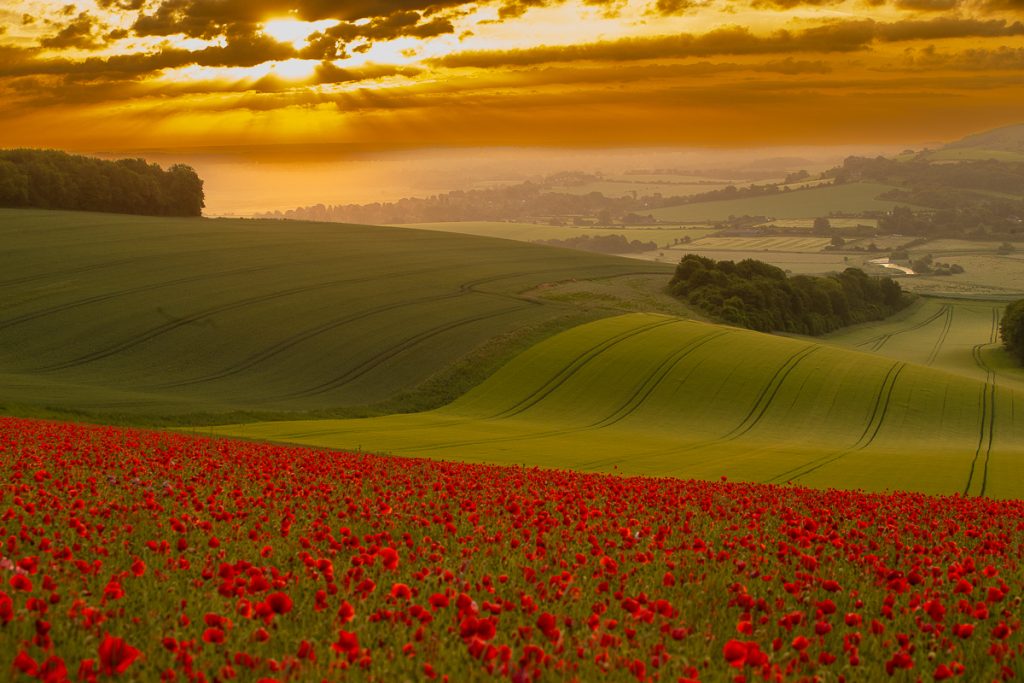
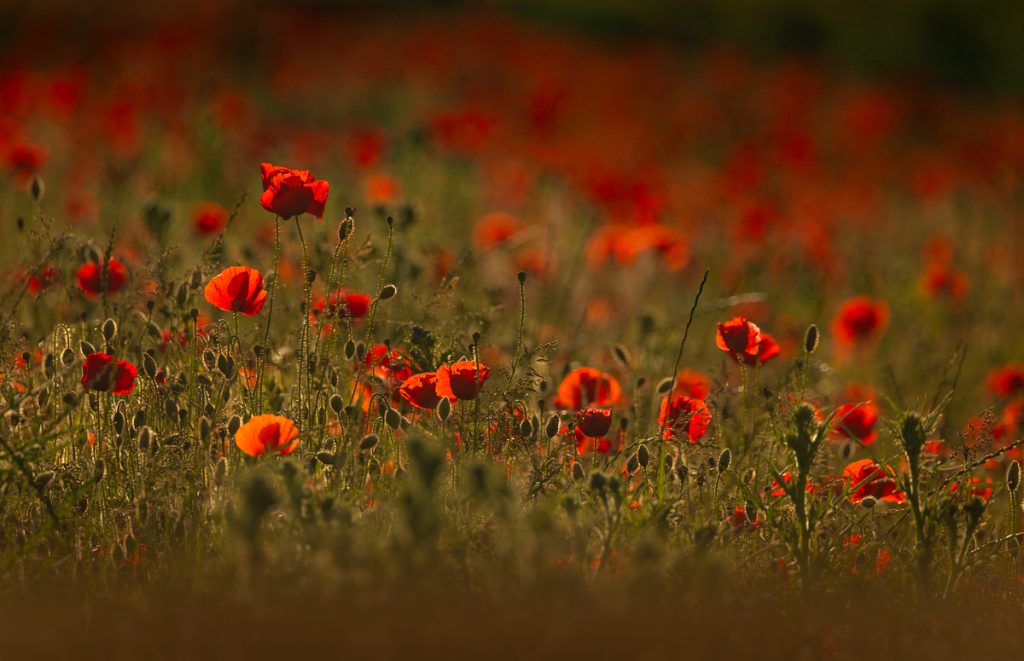
There is a quiet magic in Nature’s calendar that belongs only to the month of June. The countryside reaches its fullest expression at this time of year, as the first light of day gently awakens the landscape. For a few precious weeks, fields are scattered with scarlet poppies, their delicate petals swaying in the cool morning breeze, glistening with dew. It is a fleeting display, both fragile and beautiful because it lasts for such a short time.
It is in these early hours, that the roe deer (Capreolus capreolus) are most at home.
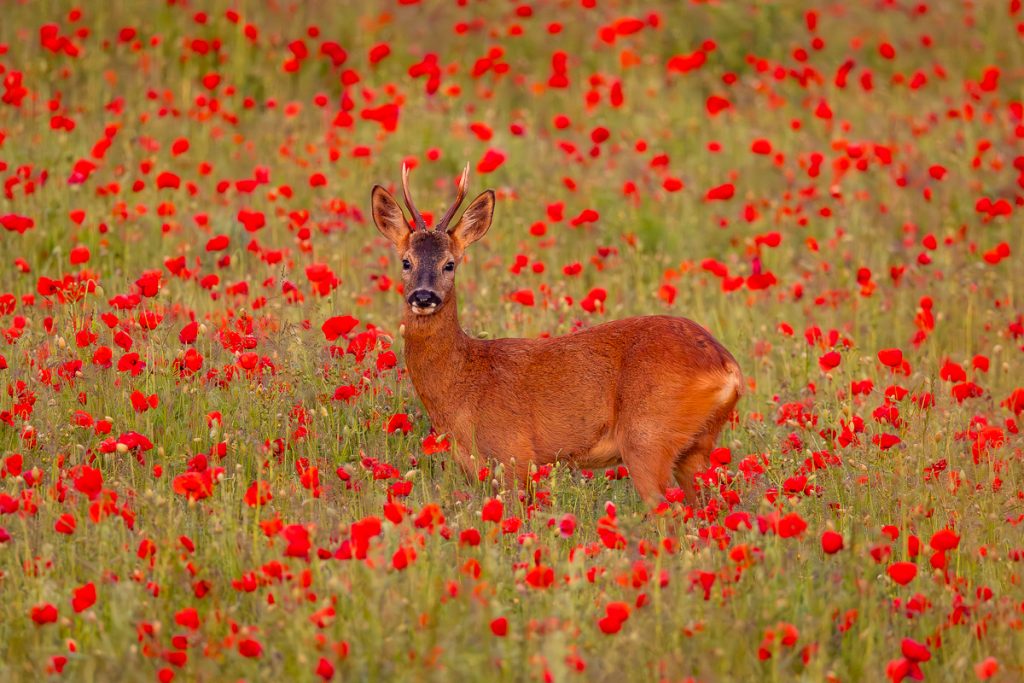
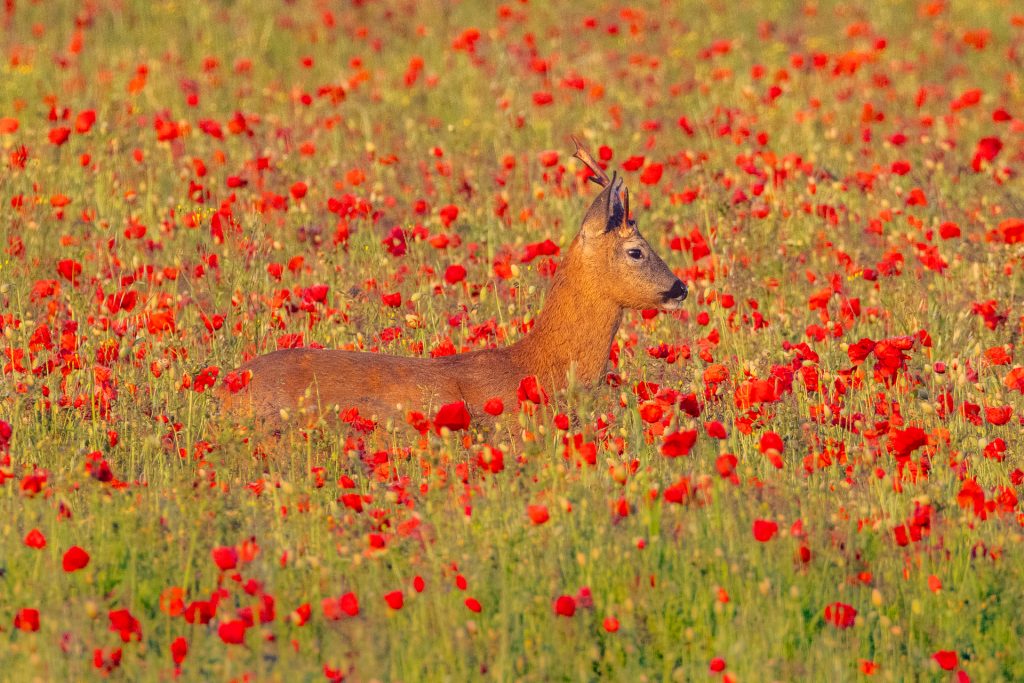
As dawn breaks, a roe buck steps cautiously from the shelter of the woodland. He pauses, ears attuned to every distant sound, before drifting into the sea of crimson blooms. With quiet confidence, he browses among the fresh grasses and wild flowers, his chestnut brown coat glowing softly in the first rays of sunlight.
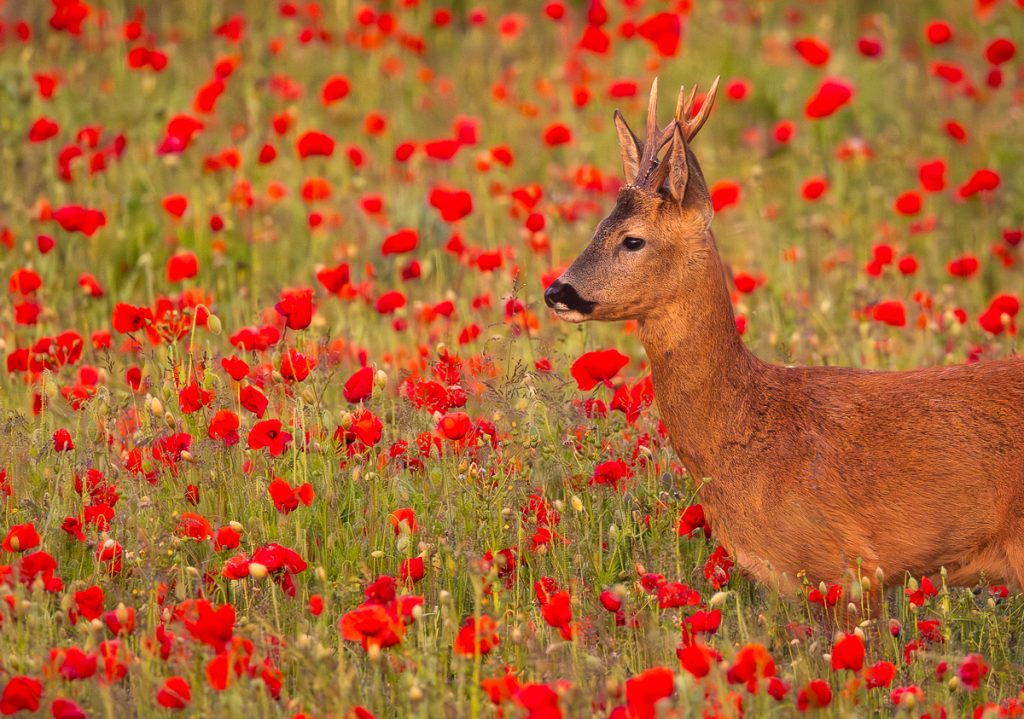
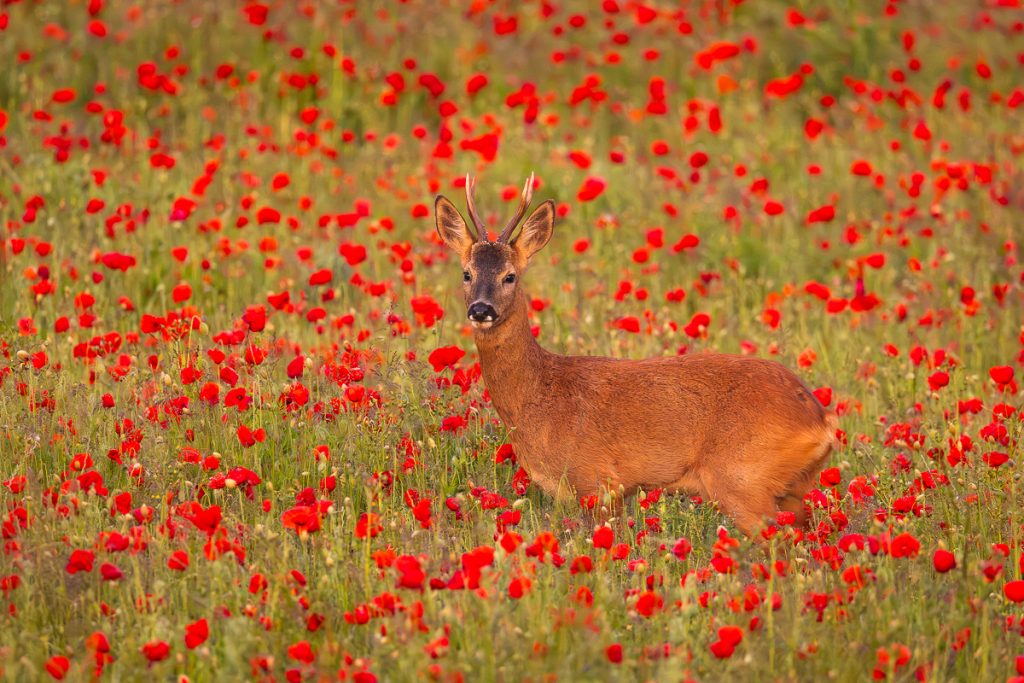
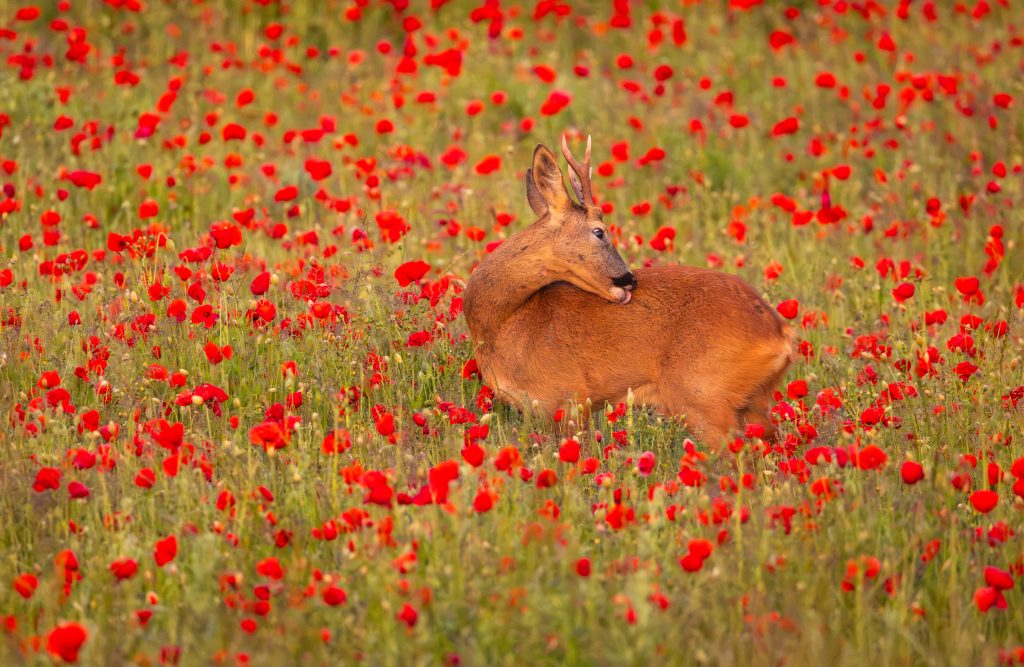
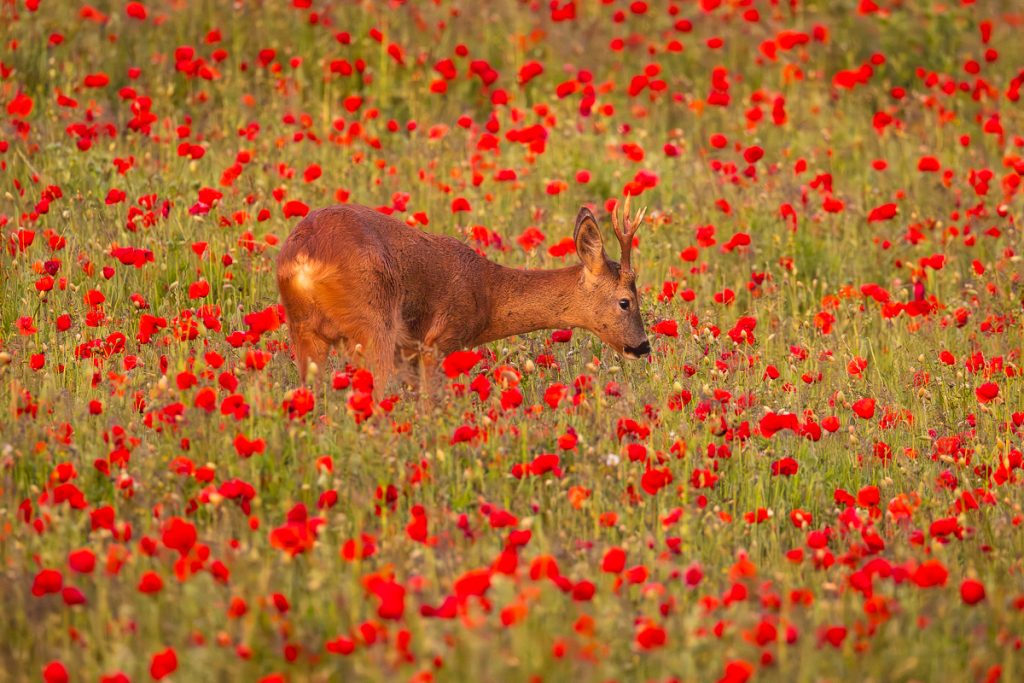
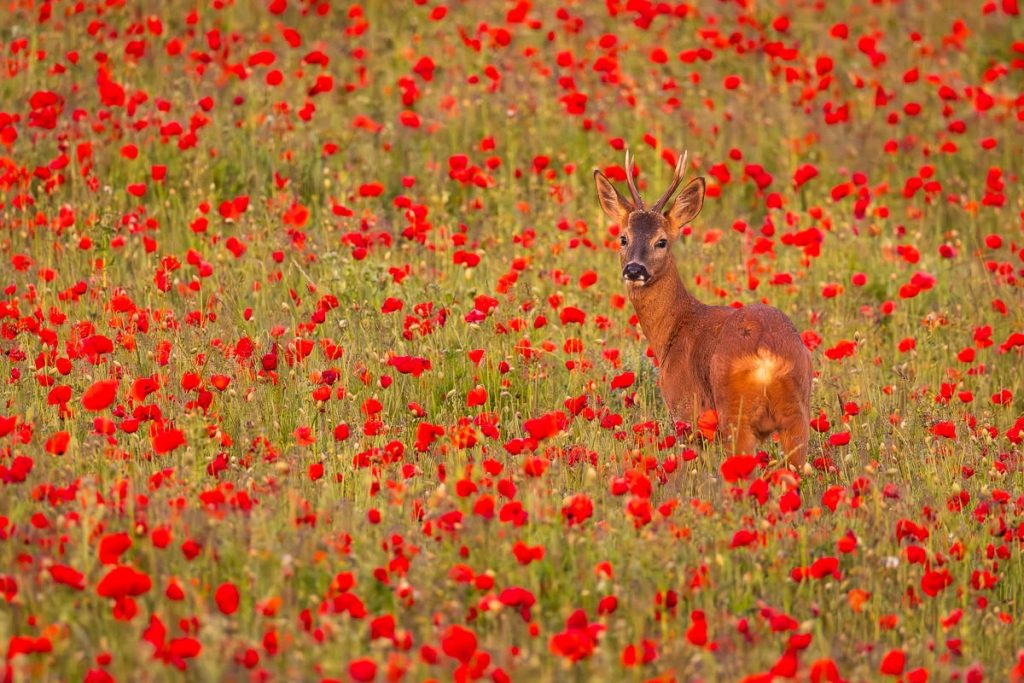
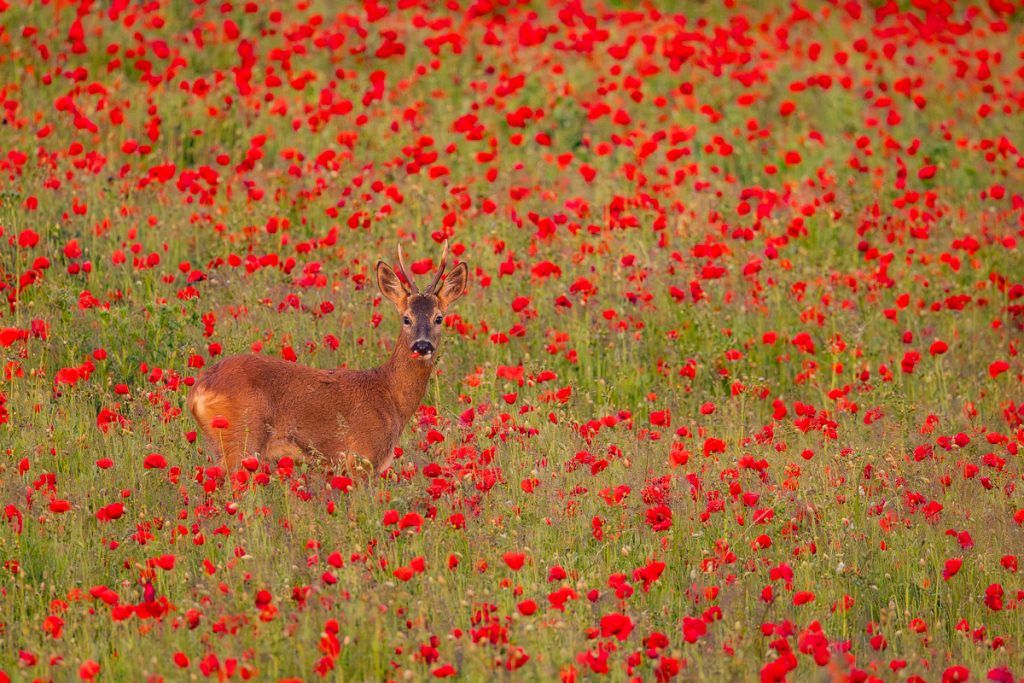
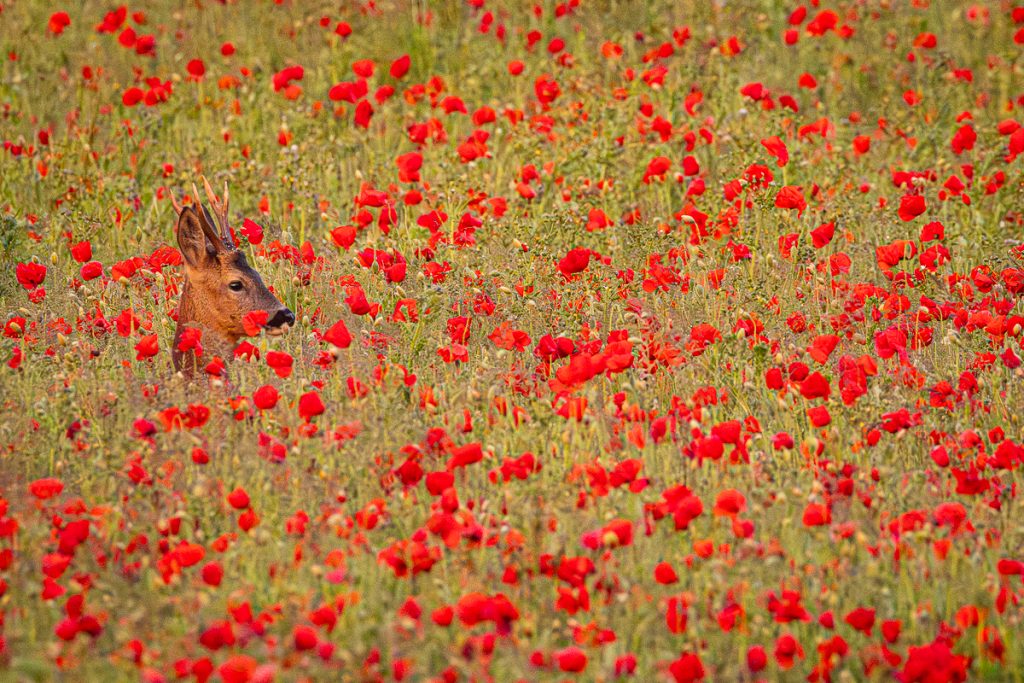
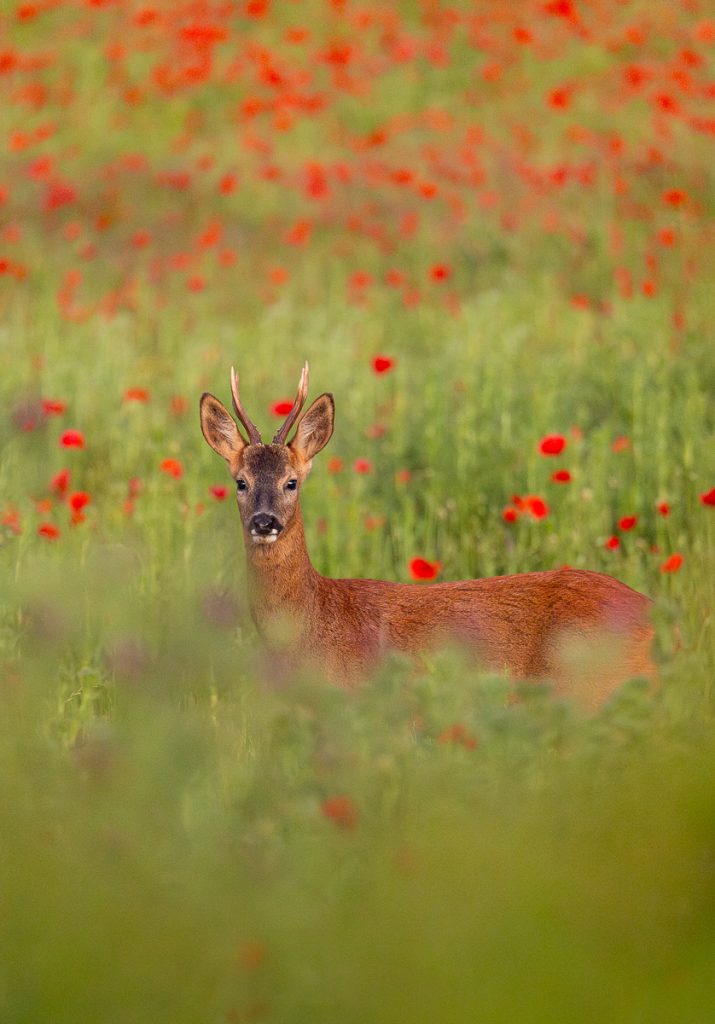

June is also one of the most fascinating months in the roe deer calendar. Although the rut is still a few weeks away, the drama of the breeding season has already quietly begun. Roe deer society is matriarchal and revolves around the doe. Adult females occupy remarkably faithful home ranges, often remaining within the same familiar landscape for years. It is these established territories, rich in food and shelter, that shape the lives of the deer around them.
The bucks know exactly where the does live. Throughout June they establish breeding territories that overlap the home ranges of one or more resident does, patrolling their boundaries tirelessly from first light. As they move through hedgerows and meadows, they leave invisible messages behind, rubbing the scent glands on their foreheads against young trees, brambles and tall stems. They also paw the ground and leave scent from glands between their slotted hooves, creating a network of territorial markers that create boundaries and warn neighbouring males to keep their distance.
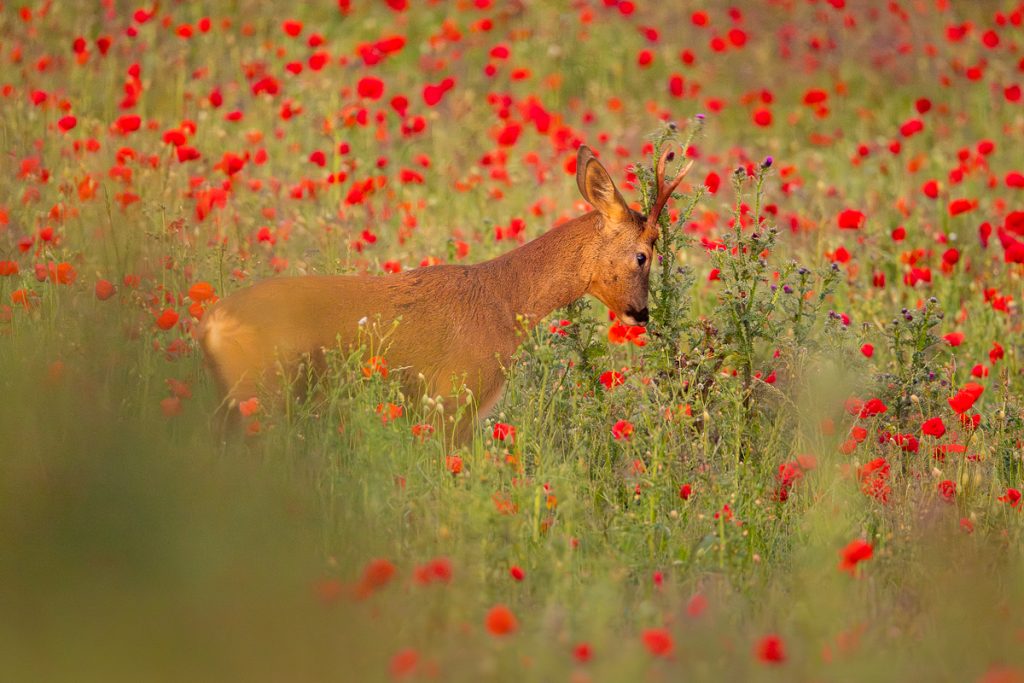
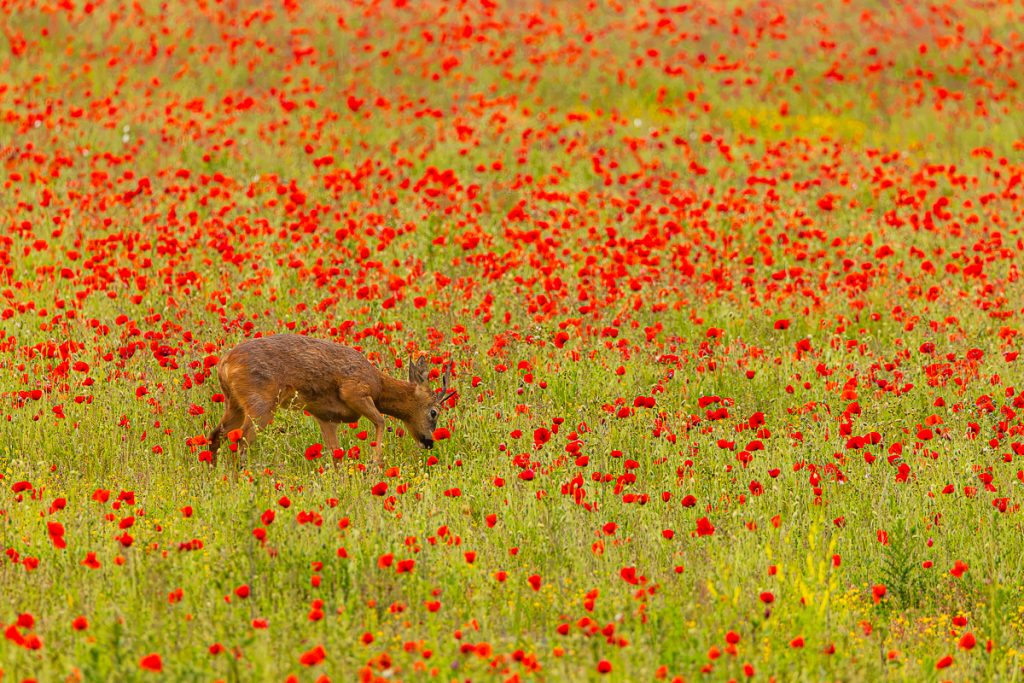
But boundaries are constantly challenged. Rival bucks quietly patrol the edges of these territories, each hoping to gain access to the does before the rut begins. When two evenly matched males meet, ritual displays can suddenly erupt into fierce antler battles. Locked together, they twist and push with surprising determination until one finally yields and retreats. These contests are rarely about aggression alone—they are contests for the opportunity to breed with the does whose home ranges lie at the heart of each territory.
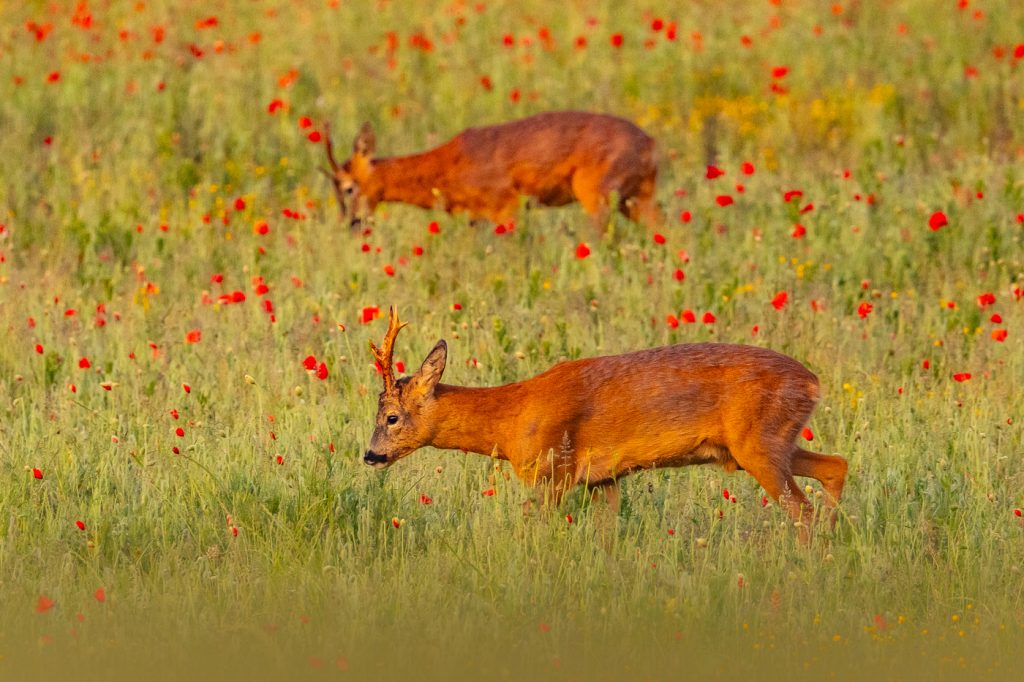
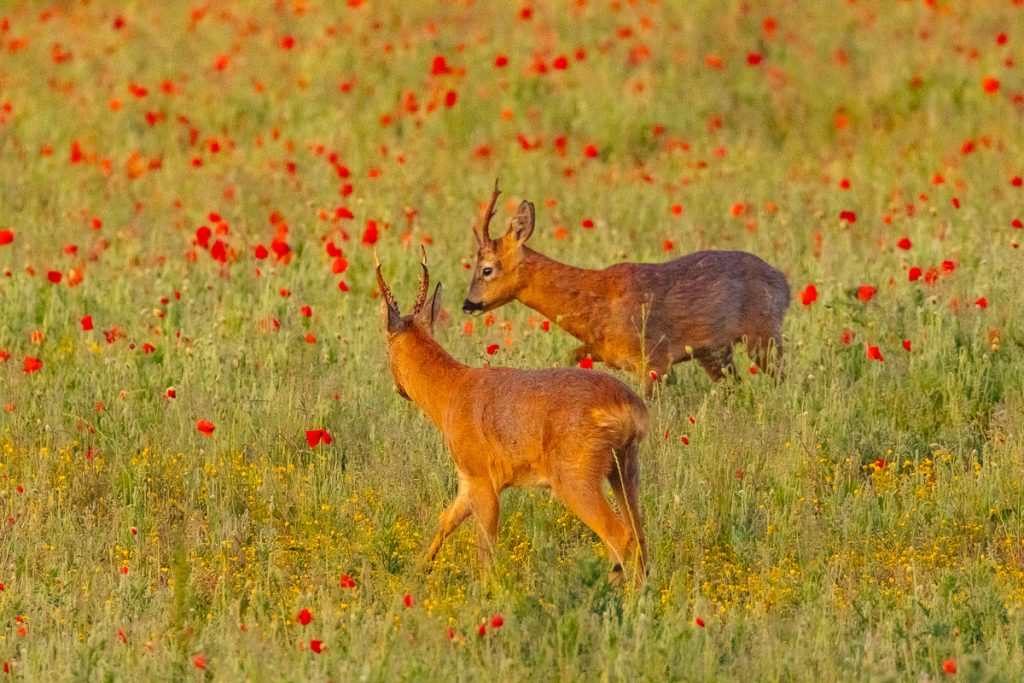
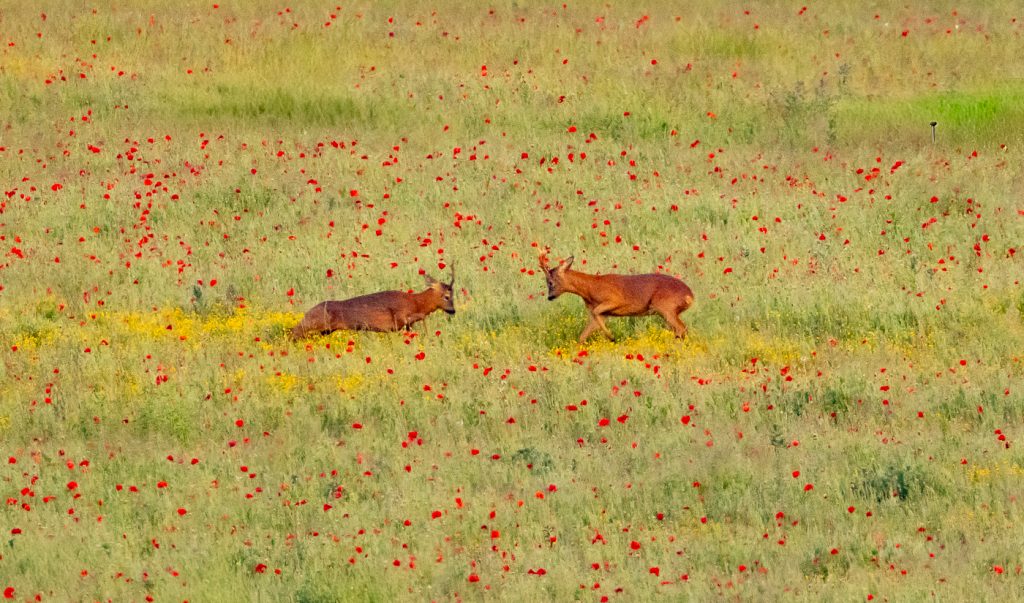
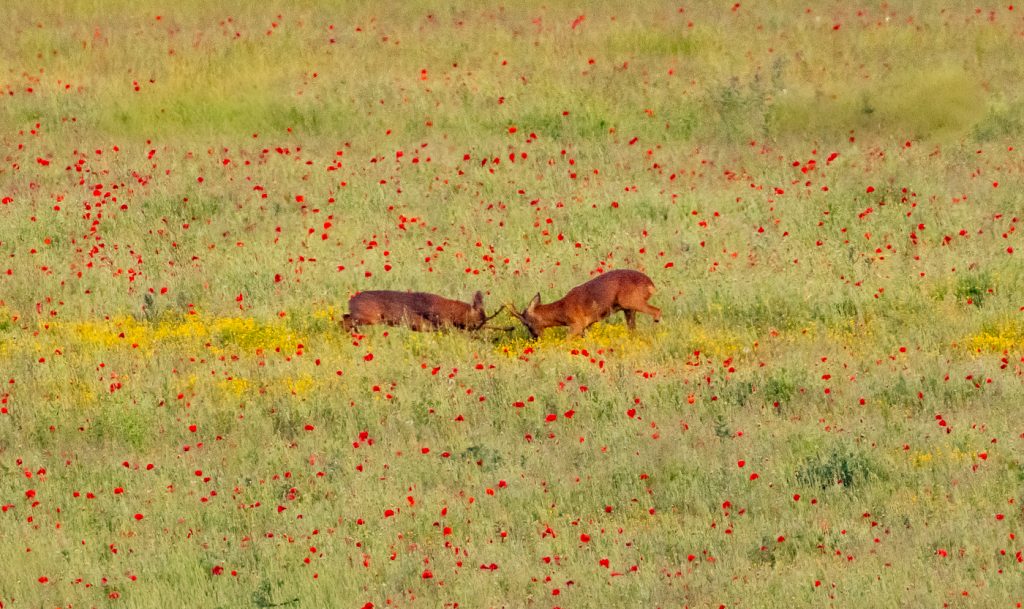
Having seen off his rival, the dominant buck chases the resident doe across the wildflower meadow. The doe remains firmly in control though. A successful buck is rarely accepted immediately. Instead, she leads him on prolonged chases through meadows, woodland rides and flower-filled fields, testing his stamina, strength and determination. Only a buck in peak physical condition can maintain the relentless pursuit, proving he is fit enough to father the next generation.
These remarkable courtship chases often leave behind one of the most celebrated signs of roe deer behaviour—the famous ring of eight. As the doe repeatedly follows the same looping route, with the buck close behind, their hooves gradually wear a distinctive figure-of-eight track into the grass or standing crop. Long after the deer have disappeared, these looping paths are a testiment to one of Britain’s most captivating wildlife spectacles, a ritual that has been repeated across the countryside for countless generations.
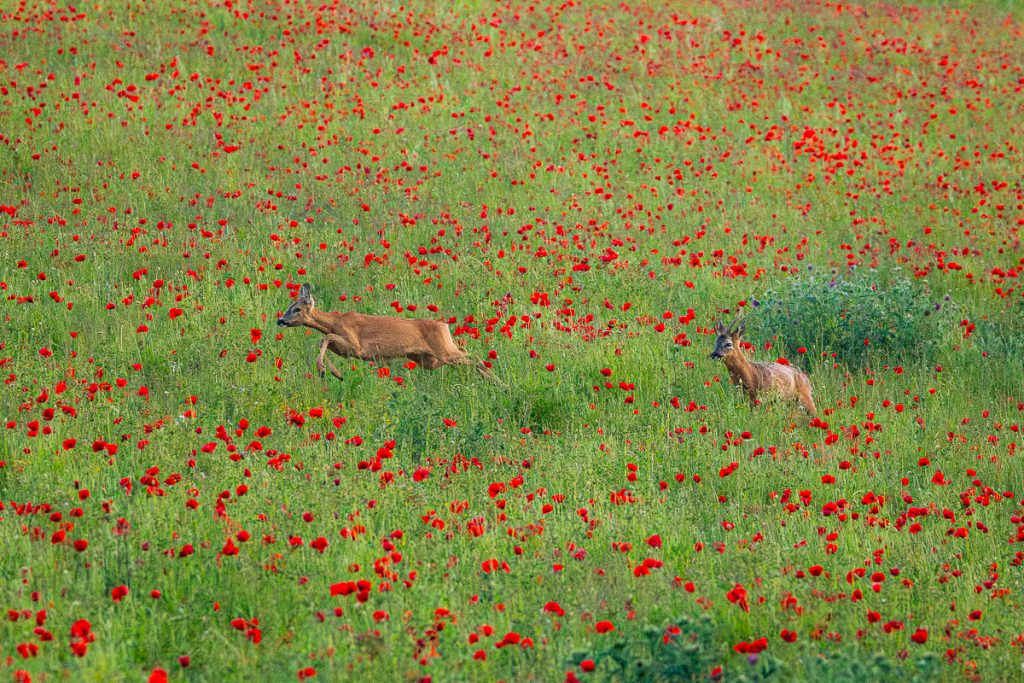
If the buck is the guardian of the territory, it is the roe doe who is its quiet soul. There is a timeless elegance about her that often goes unnoticed. Smaller and more delicately built than the buck, she moves with effortless grace through the poppies, every step measured and almost silent.
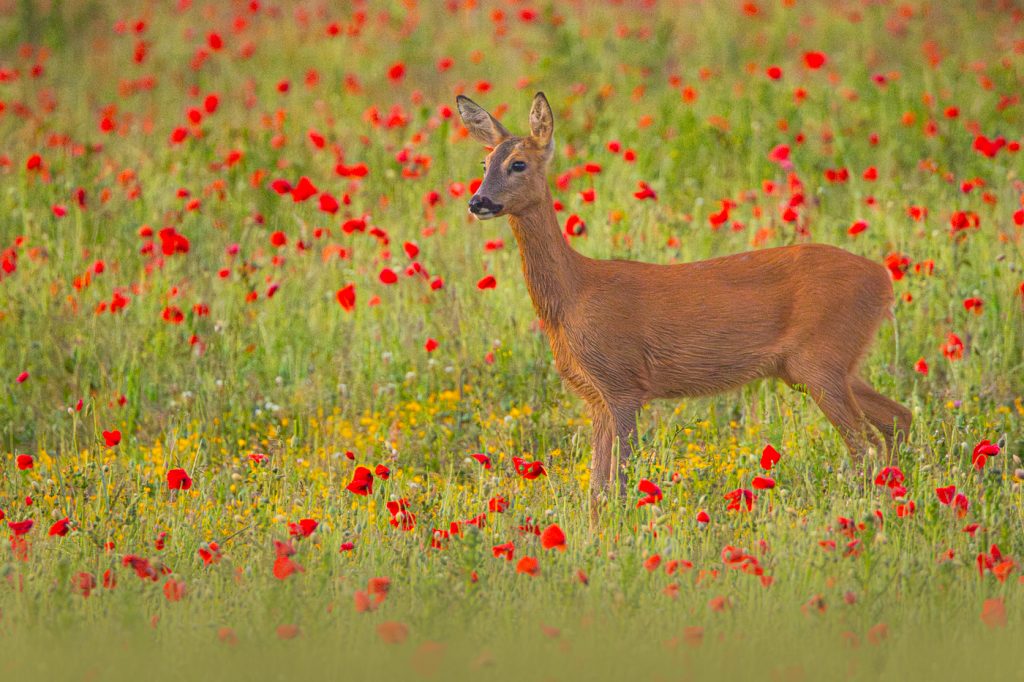
Her soft russet summer coat glows in the first light, while her large dark eyes and alert ears reveal a constant awareness of the world around her. She pauses often, lifting her head to test the morning breeze before continuing to feed, her gentle confidence born from an intimate knowledge of every corner of her home range.
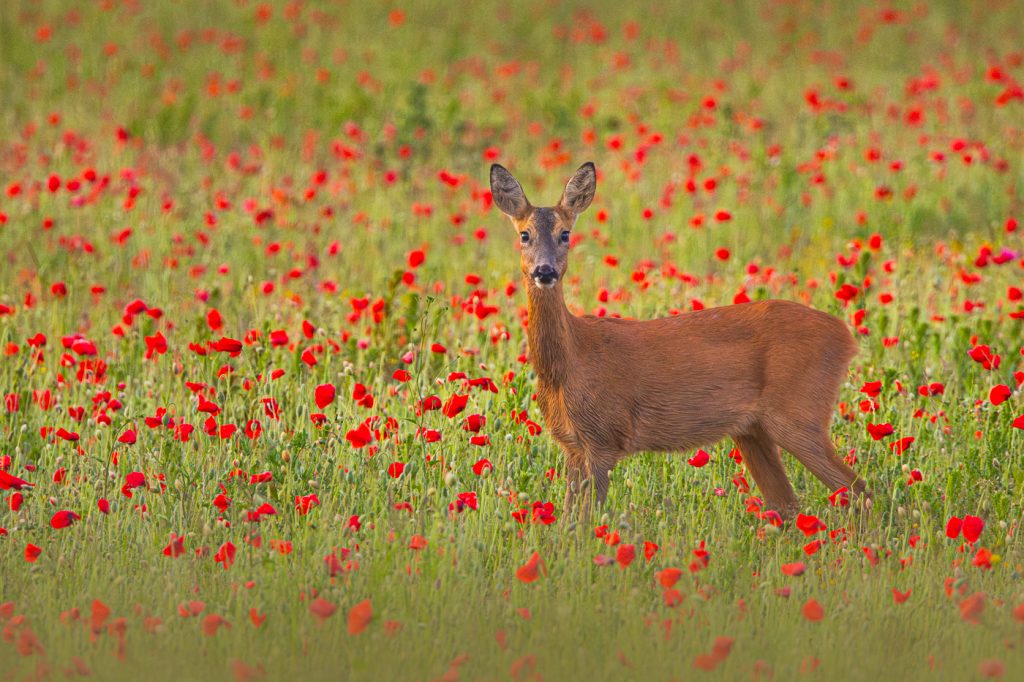
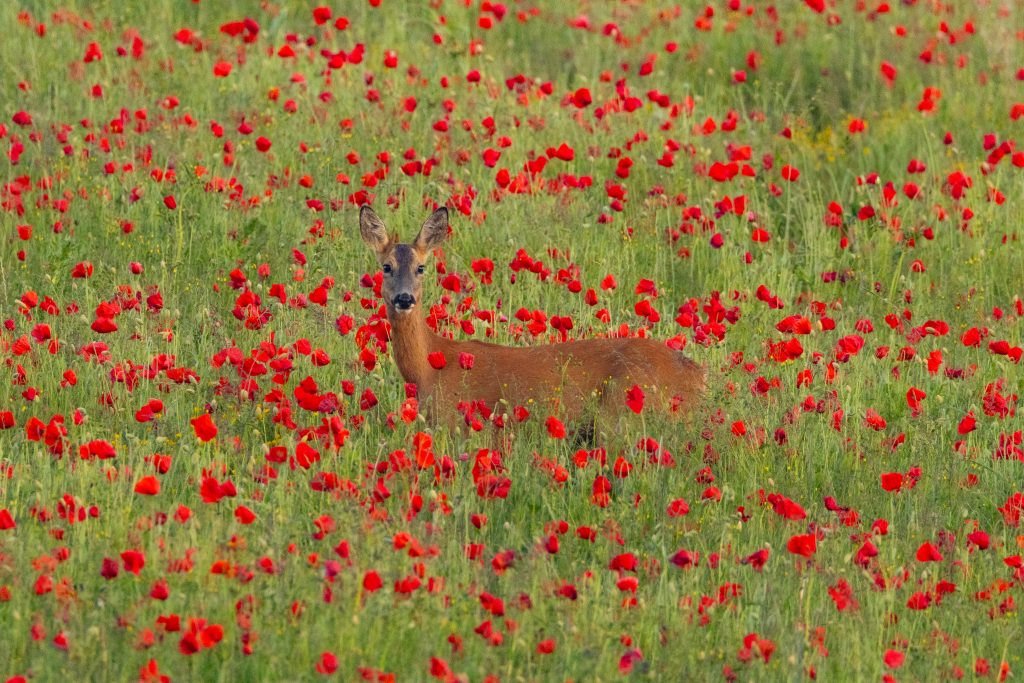
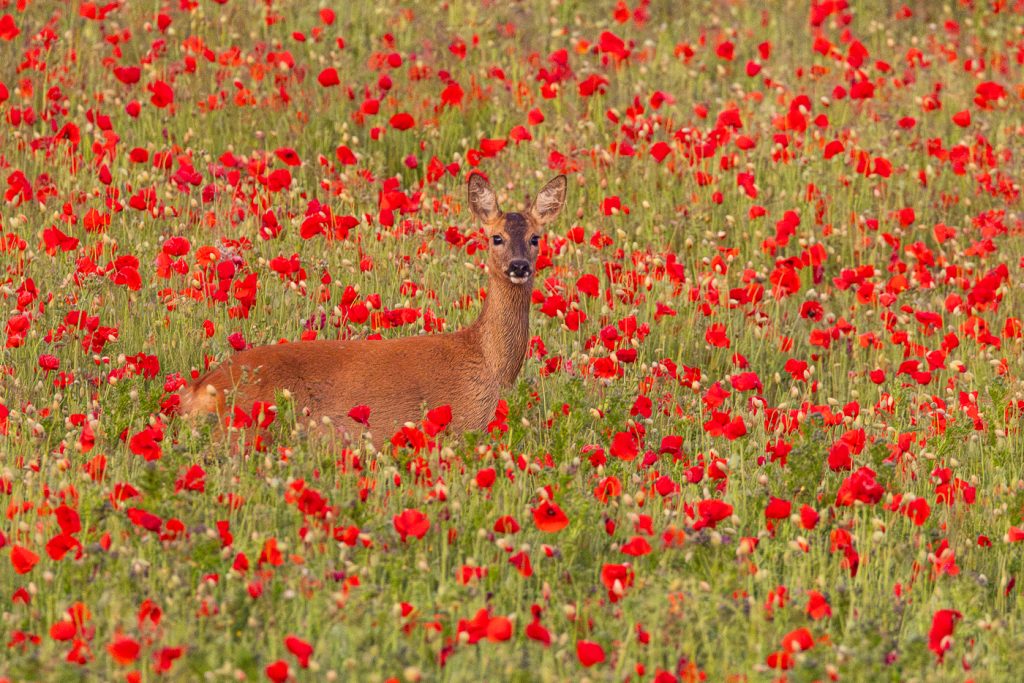
It is easy to understand why the rival bucks are drawn to her, for she is far more than the object of their attention—she is the enduring heart of this landscape, the quiet matriarch whose presence shapes the rhythm of life in the meadow.
Not every buck that wanders the meadow is young and ambitious. Occasionally, there appears an older buck whose very presence commands respect. His face is flecked with silver, his neck thickened by years of surviving hard winters and countless battles, and every movement carries the quiet confidence of experience rather than youthful bravado.
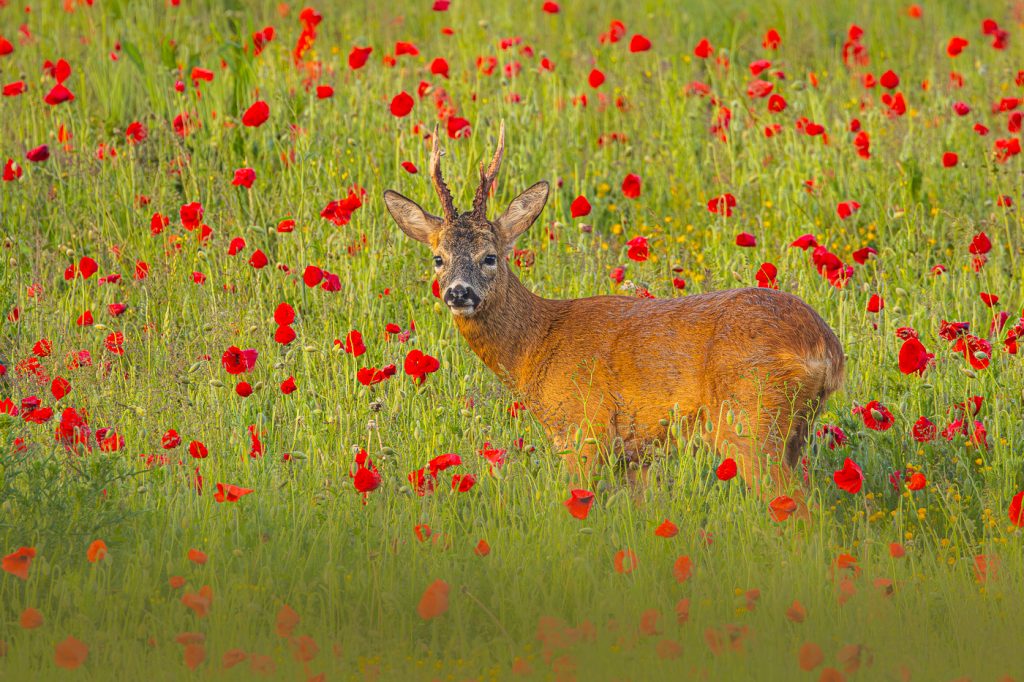
His antlers are longer and heavier than those of a younger rival, richly sculptured with deep pearling along each beam—a testament to maturity and the seasons he has endured. Every scar tells a story of territories won and defended, of rivals driven away and breeding seasons survived. He has no need to advertise his strength with reckless displays; his reputation is already written across the landscape. To the younger bucks he is an opponent to be avoided, while to the resident doe he is a proven survivor.
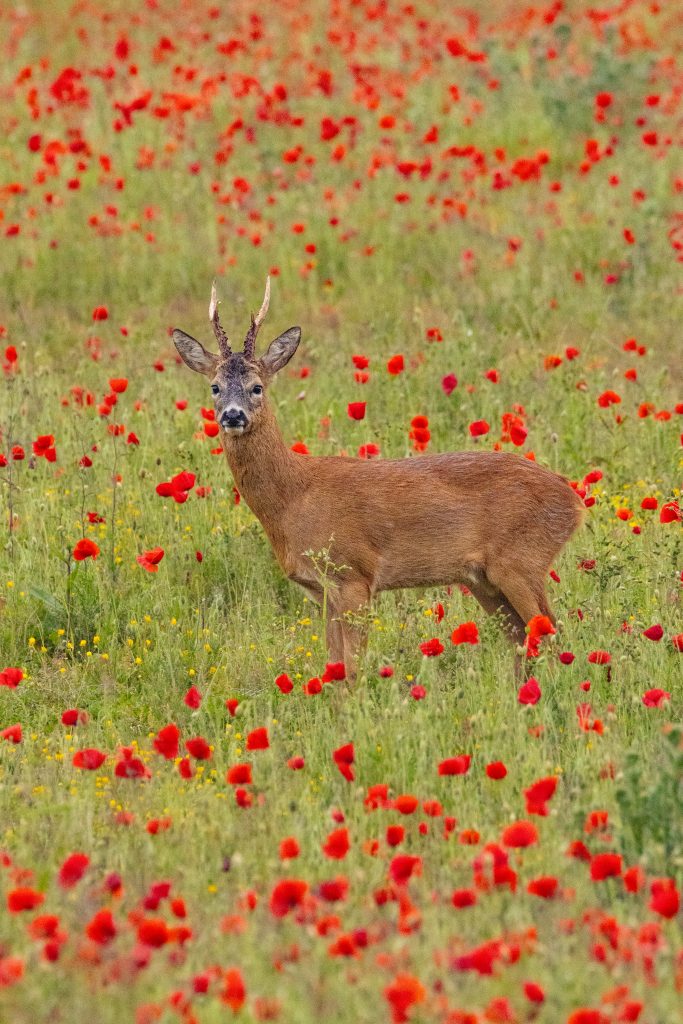
As he walks slowly through the sea of scarlet poppies at first light, pausing only to browse or renew the scent marks that define his domain, he seems less like a visitor and more like the true king of the meadow—a magnificent wild animal whose reign has been earned through resilience, wisdom and the unyielding rhythms of nature.
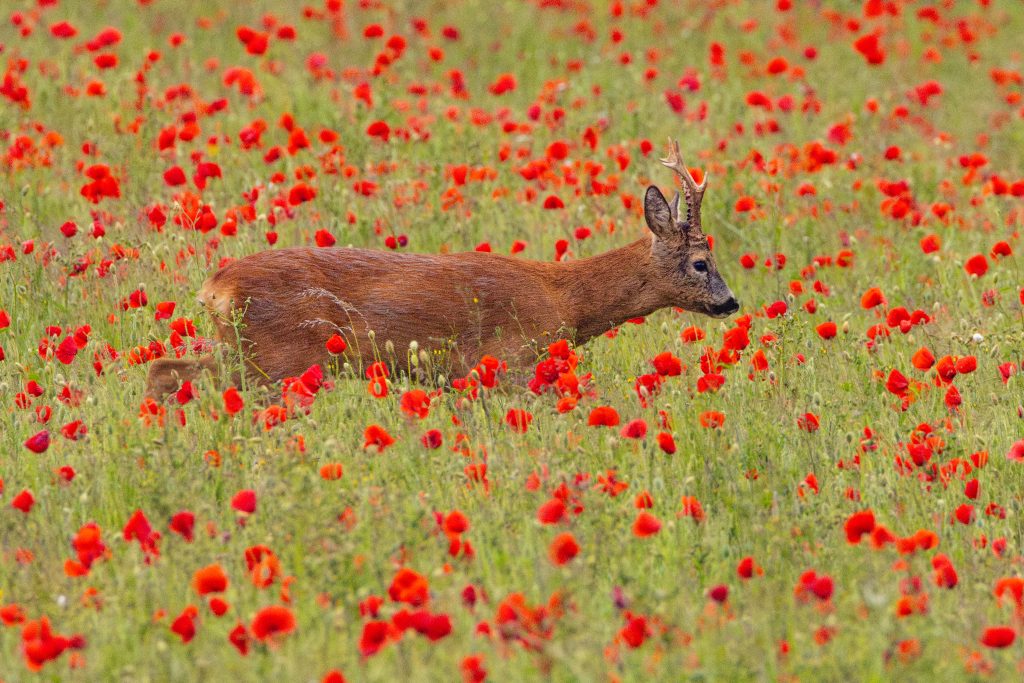
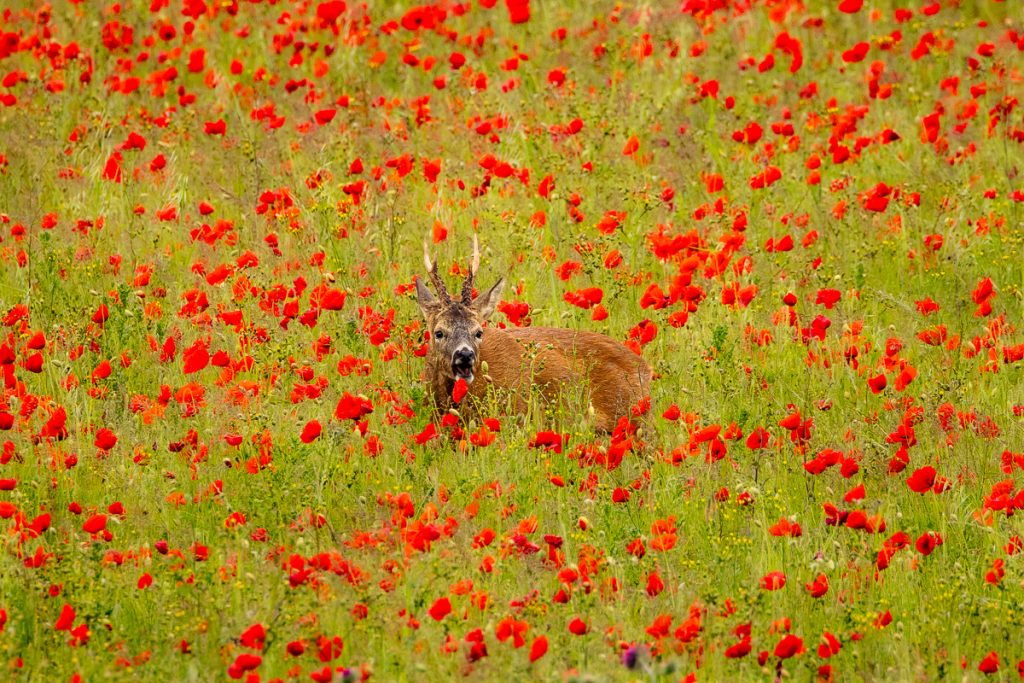
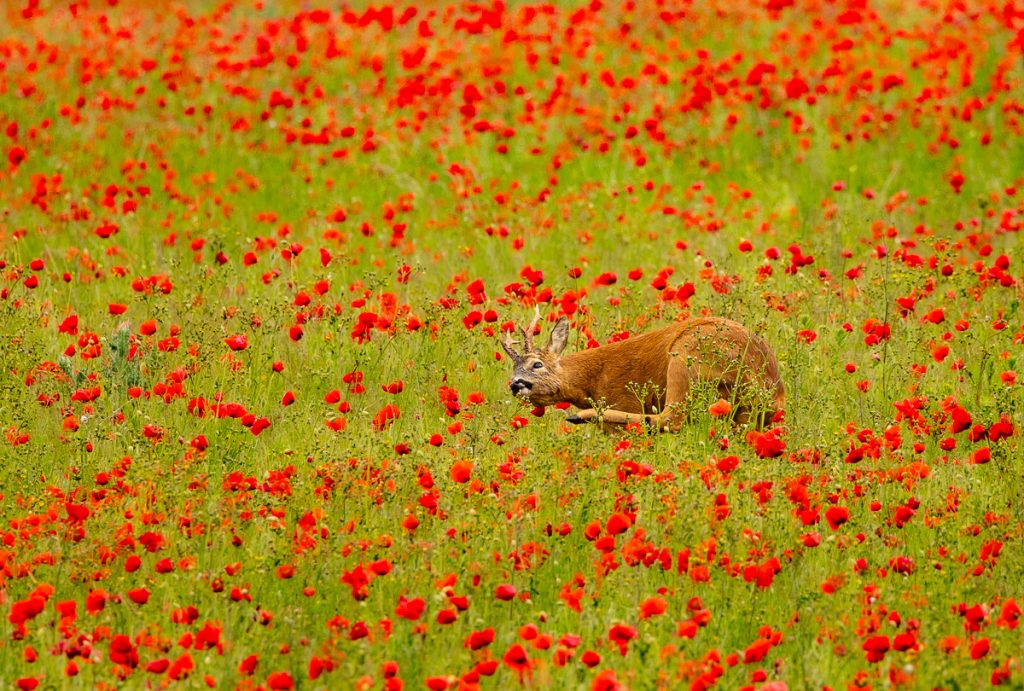
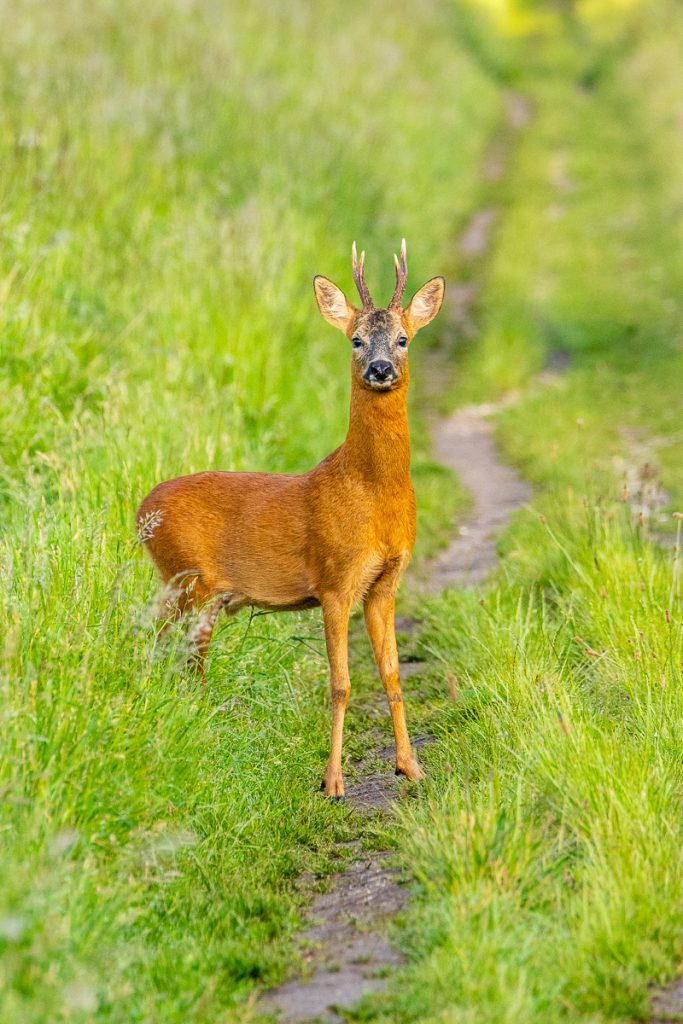
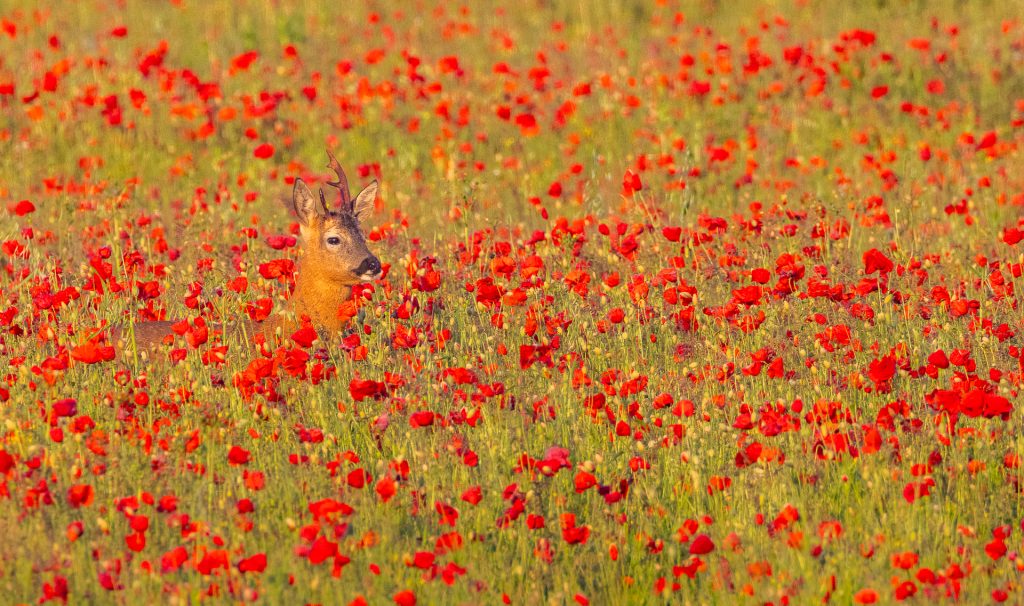
Among the younger challengers though there is one buck that even the King is wise to avoid, the Murder Buck.
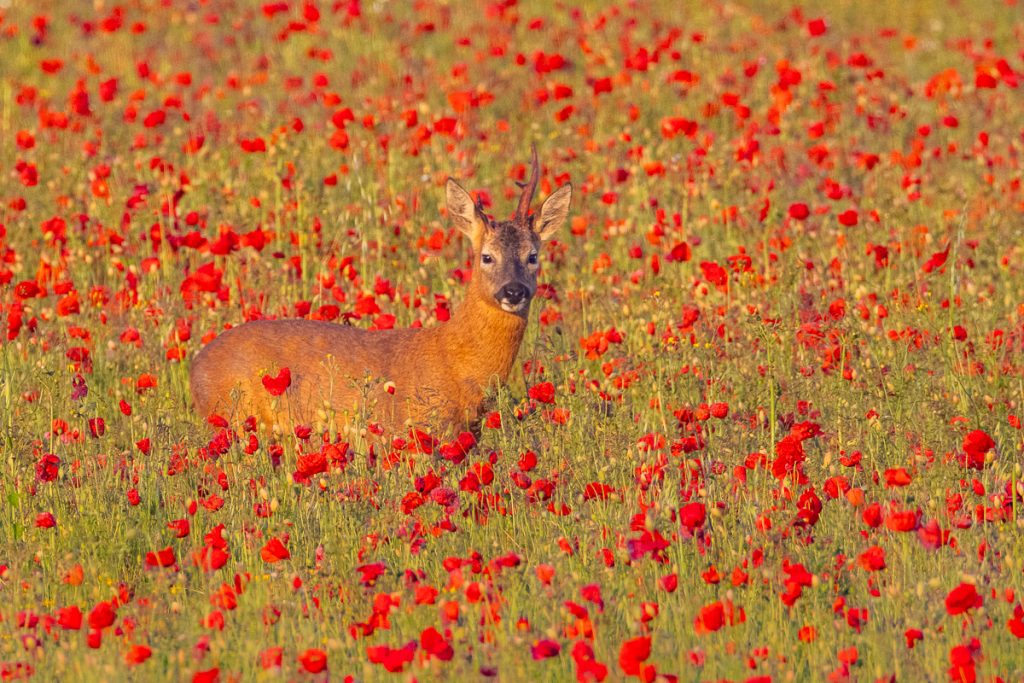
This is a buck instantly recognised by his unusual headgear. One antler has been lost to injury, leaving him with a single long spike. Deer managers and stalkers often refer to such animals as “murder bucks” because they can pose a serious danger during territorial fights. Unlike two evenly matched bucks, whose antlers usually lock together as they wrestle for dominance, the lone spike has nothing to engage against. Instead, it can drive forward with devastating force, risking deep puncture wounds to a rival’s head, neck or body. Most bucks instinctively avoid prolonged combat with such an unpredictable opponent, for a single misjudged clash can end in catastrophic injury. In the quiet hierarchy of the meadow, even the old king treats this scarred warrior with a measure of caution, a reminder that nature does not always favour symmetry over survival.
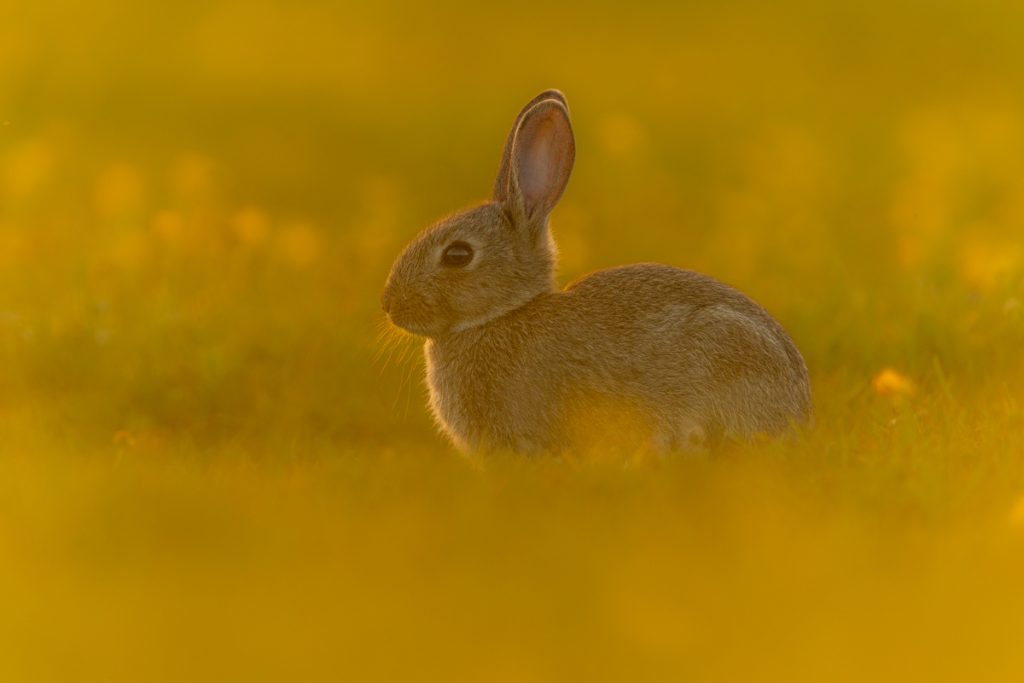
The meadow itself is bursting with life. Tiny rabbits venture nervously from their burrows for the first time, their first tentative journeys into a world filled with both opportunity and danger. They pause beneath the shelter of grasses and wildflowers, learning to forage while remaining close enough to dart back underground at the first sign of trouble.
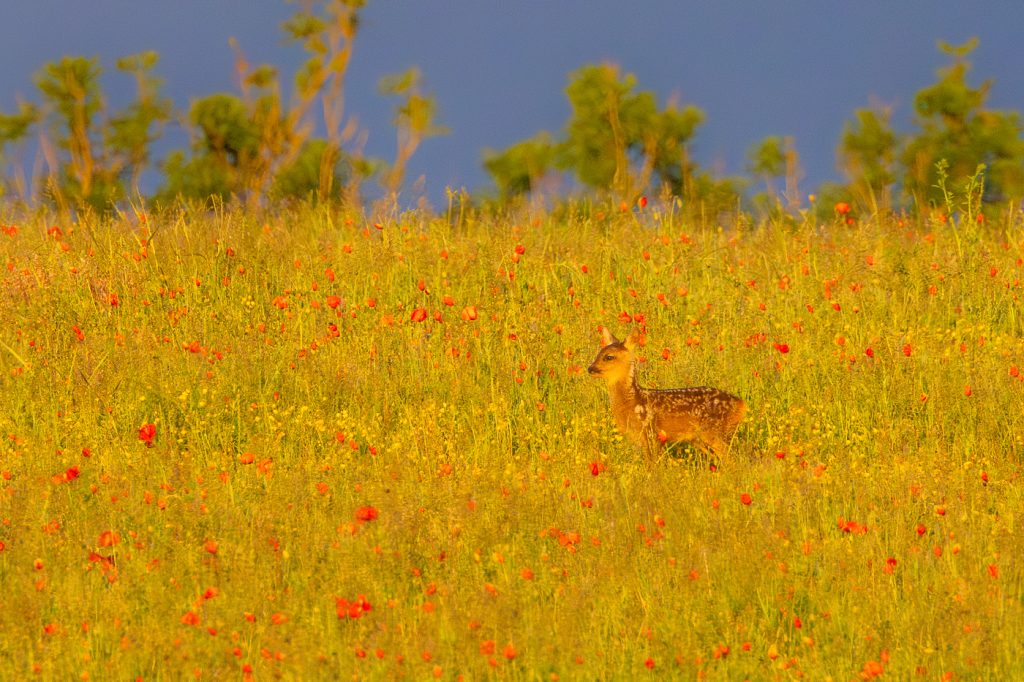
They are not the only youngsters though to occupy the meadow. A baby roe deer, just a few days old, takes its first steps amongst the wild flowers, pausing to take it all before quickly being called back by its protective mother.
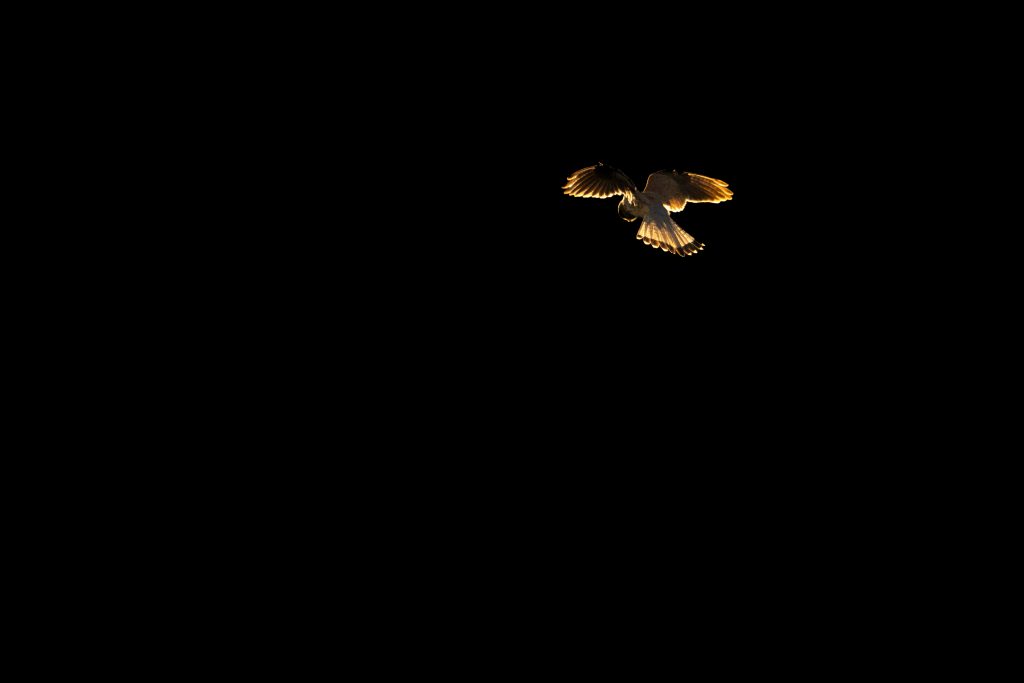
High above, a kestrel hangs effortlessly in the still morning air. Suspended on rapidly beating wings, it studies every movement below before folding its wings and plunging into the meadow. For unsuspecting voles hidden among the grasses, the arrival of daylight brings both promise and peril, each creature playing its part in nature’s delicate balance.
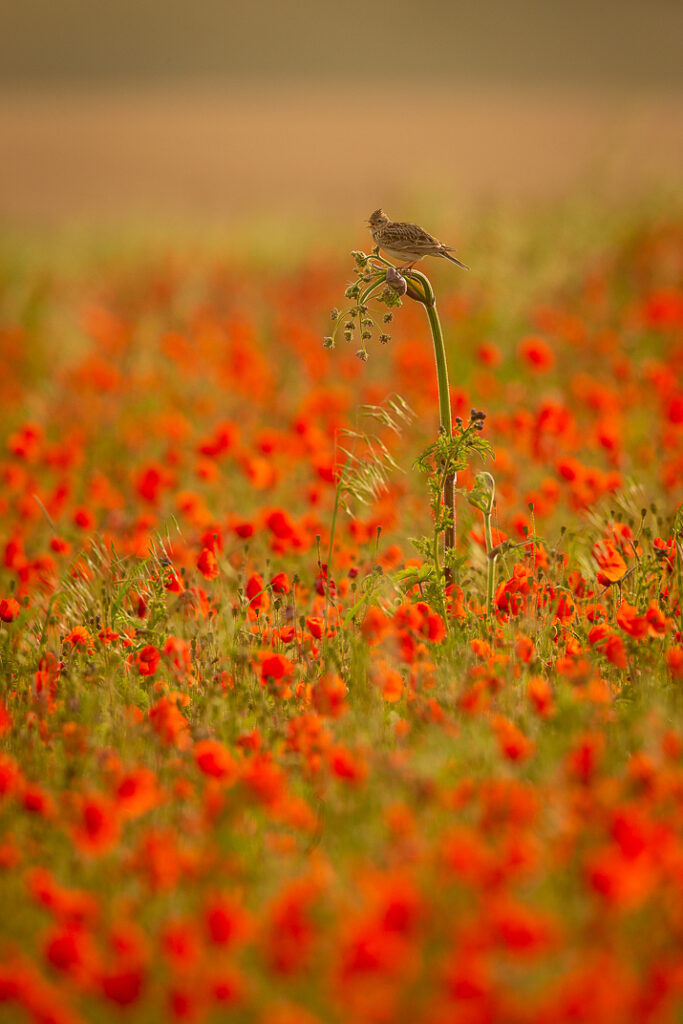
This is a landscape that feels suspended in time. Scarlet poppies ripple like waves across the field, skylarks pour their song into the morning sky, and the matriarch moves almost silently through the flowers, pausing only to feed. She is the heart of this territory and it is her constant presence in her beautiful landscape that she calls home that has shaped this corner of the English countryside as the matriarchs before her.
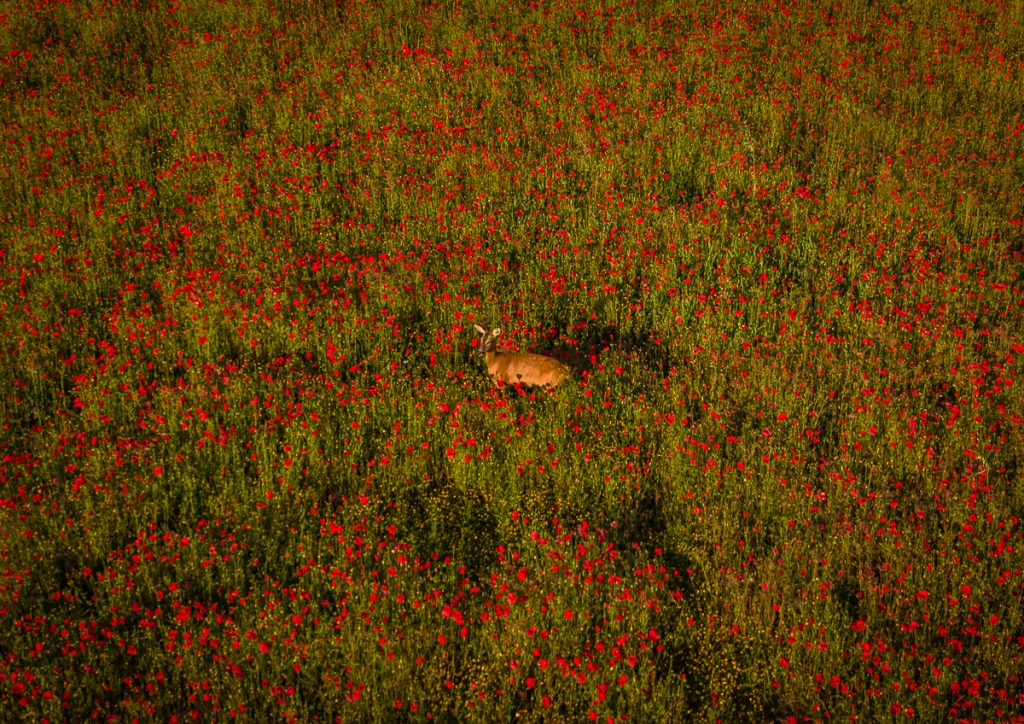
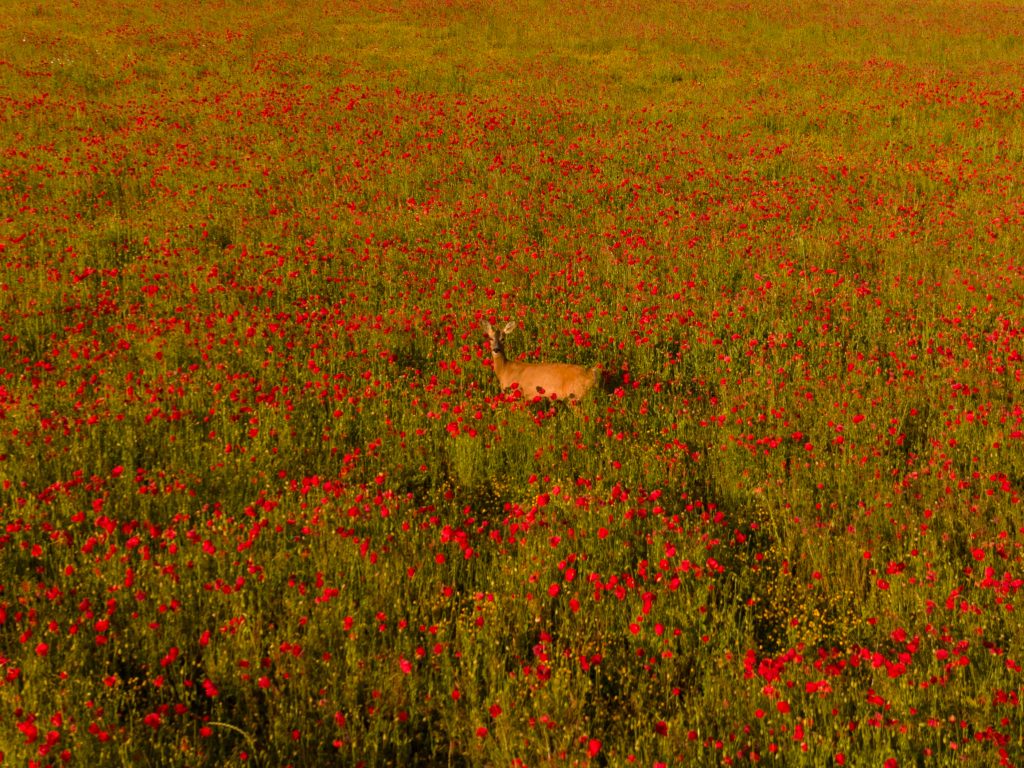
The poppy’s beauty is as brief as it is brilliant. Within weeks the vibrant flowers will fade, the rut will begin in earnest, and the woodland will echo with the unseen dramas of the roe deer. The young rabbits will grow bolder, the kestrels will continue their patient watch over the meadows, and another chapter in the rhythm of an English summer will unfold.
As the morning sun climbs higher, the roe deer slip quietly back towards the shelter of the woodland, leaving behind little more than gently swaying poppies and the unseen scent marks that tell the story of their presence. It is a reminder that the countryside is filled with lives intricately connected, each woven into the fabric of the landscape by the changing seasons.
These are the moments that define June— rich in their subtle beauty. A roe buck among the scarlet poppies, fawns and rabbits taking their first steps into the world, and a kestrel poised above the meadow all become part of nature’s symphony: telling a story of renewal, survival and the enduring wonder of an English summer.