Rhapsody in Blue: the Bluebell Display in Spring
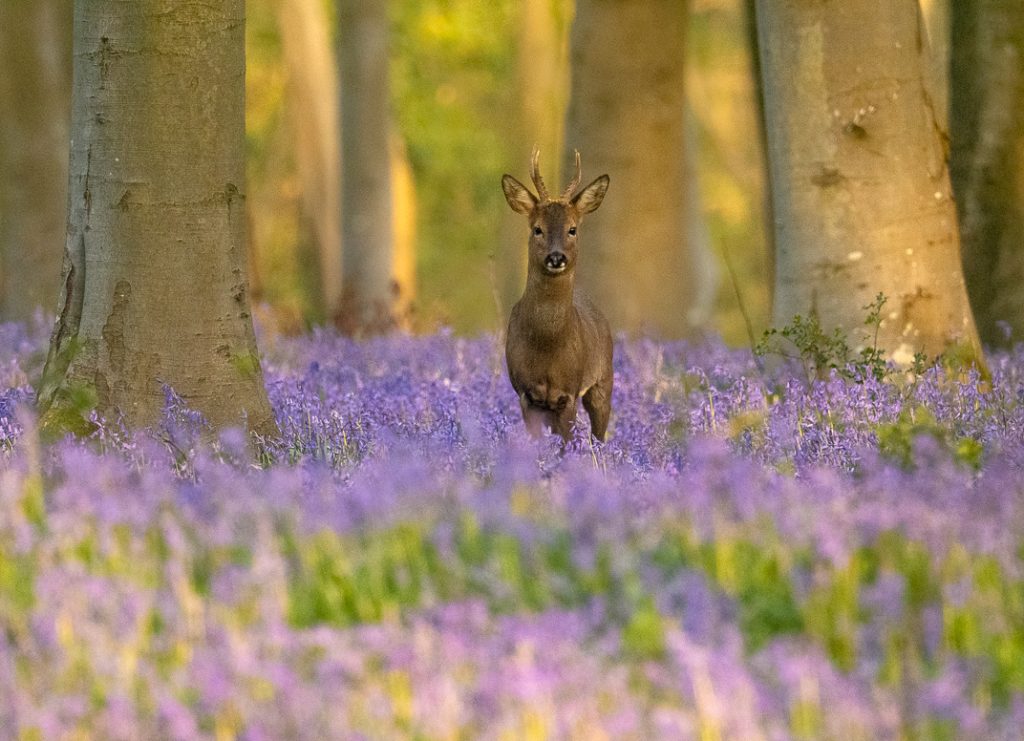
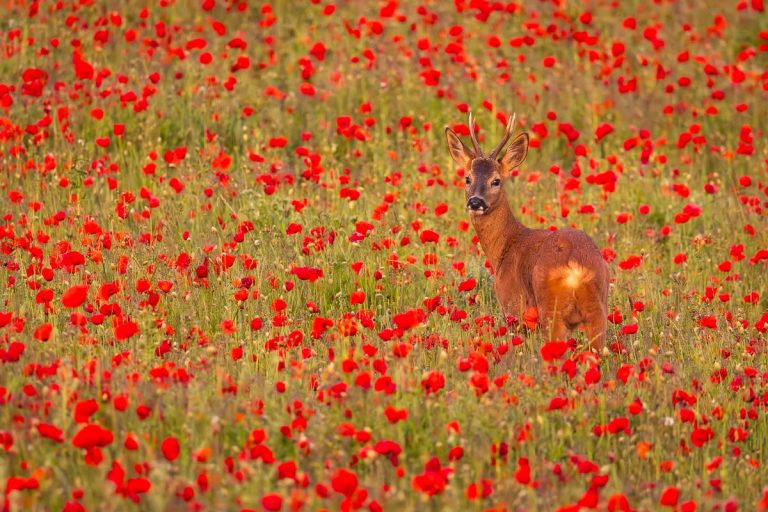
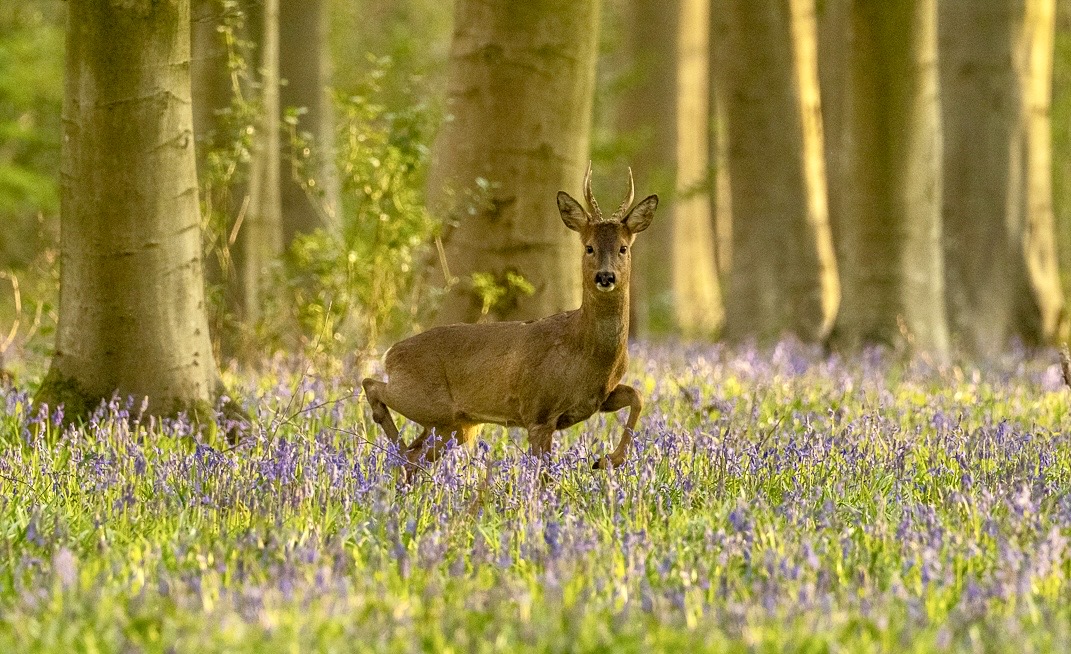
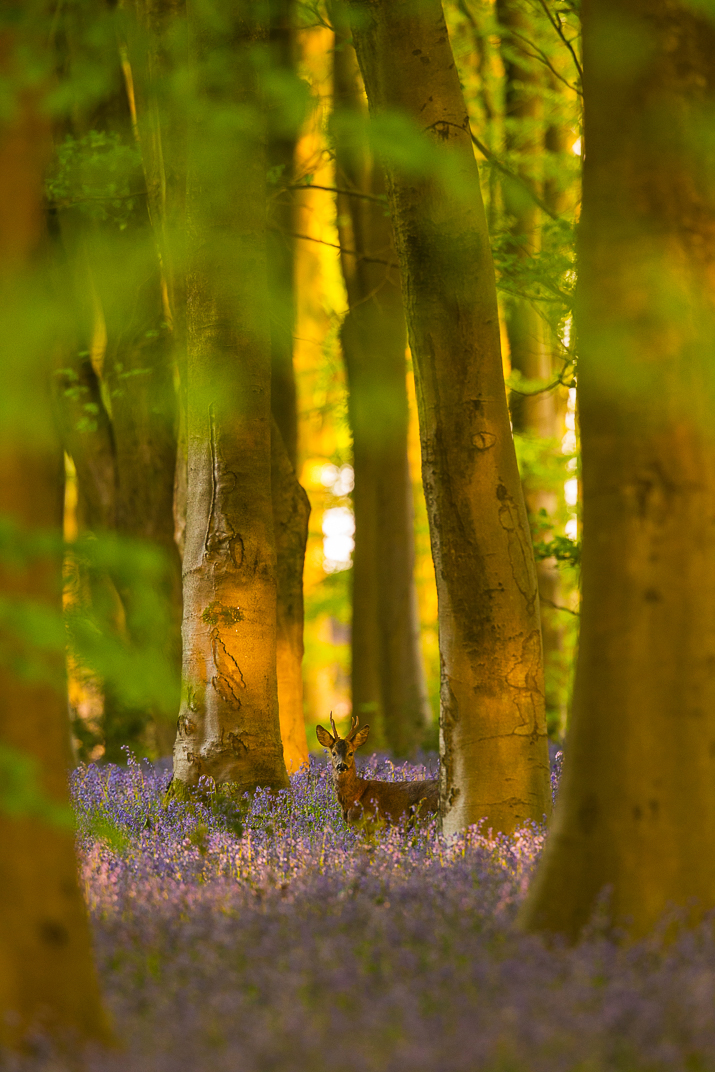
A roe buck, its antlers newly cleaned of velvet, stands on the edge of an ancient bluebell wood on a cold, early Spring morning, warming itself against the rising sun.
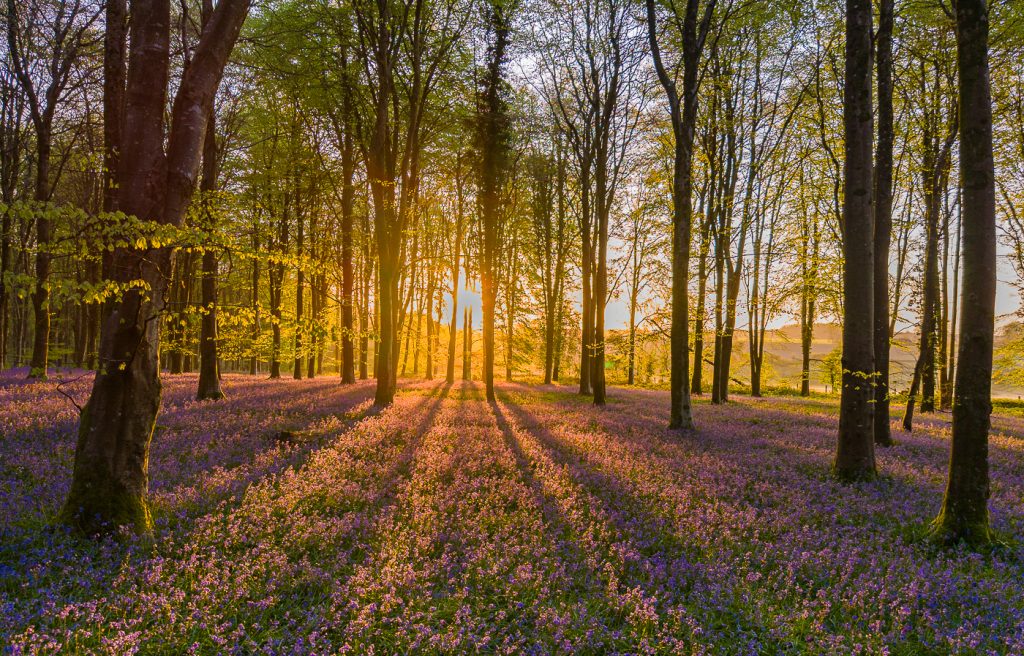
There are few natural spectacles that are quite as quintessentially British and quietly breathtaking as an ancient bluebell wood in full bloom, wrapped in early morning mist. What makes this one of the British Isles’ great natural spectacles is not just its visual appeal, but its fleeting nature. Bluebells bloom for only a short window in spring, and mist is never guaranteed. When the two coincide, the result feels almost otherworldly—a quiet convergence of season, light, and atmosphere as I stand with my son, surrounded by a sea of blue, the mist drifting silently between the trees.
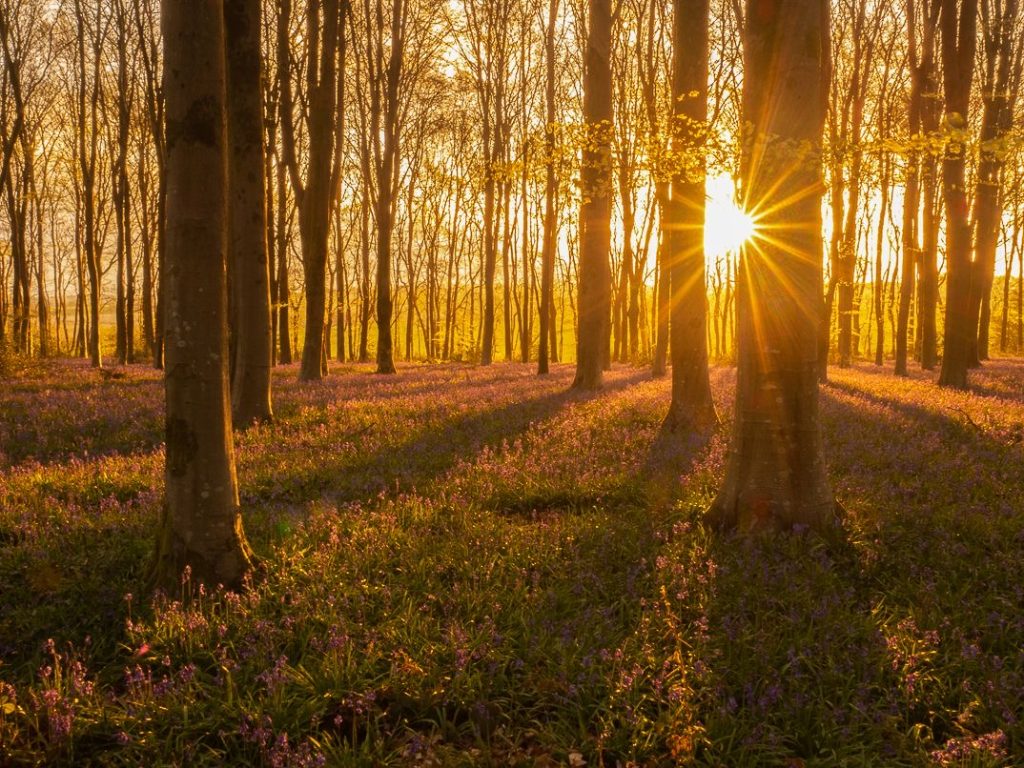
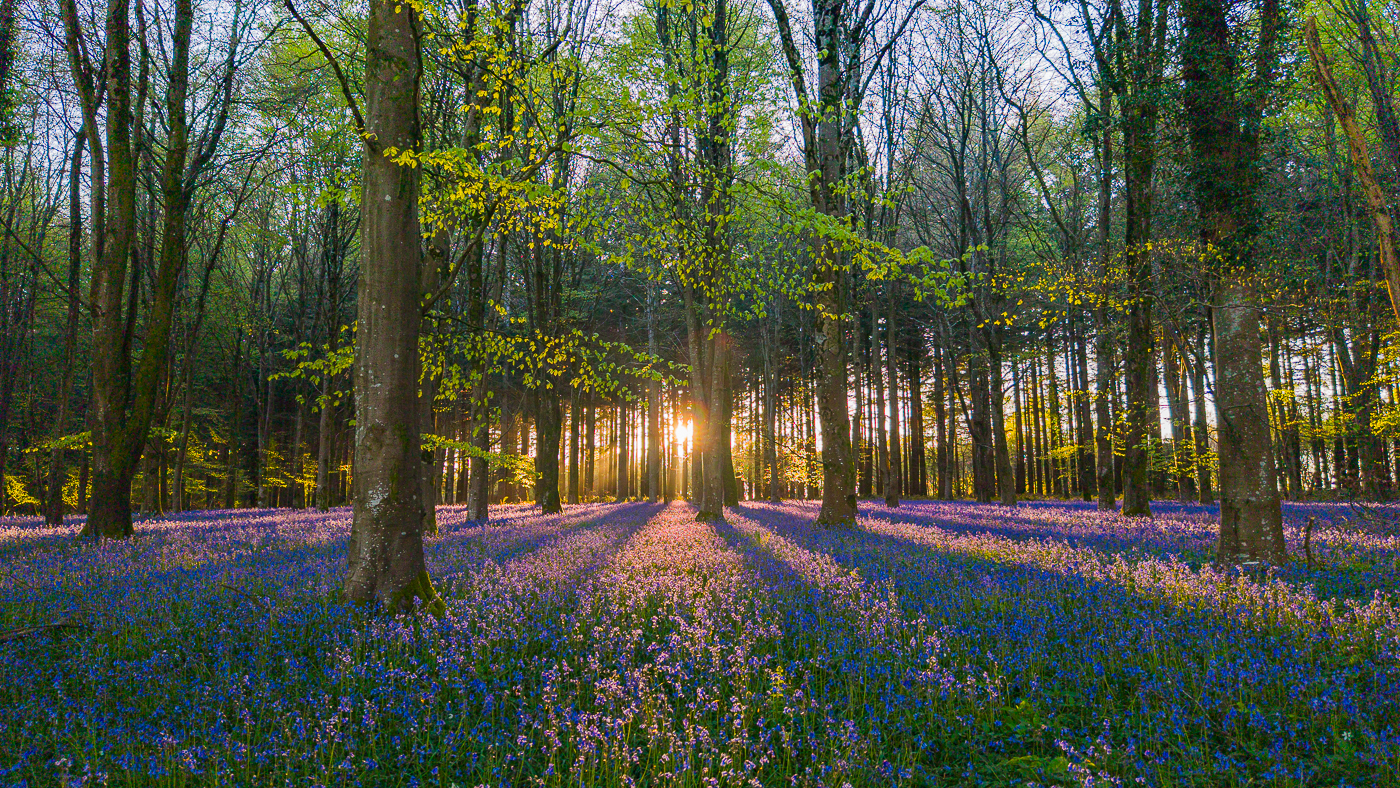
Photographing bluebell displays in ancient woodland feels less about chasing a subject and more about interpreting a mood. These ancient woods—often centuries old—hold a particular kind of stillness. Beech trees stand silently like pillars, their fresh spring leaves forming a soft canopy overhead. Beneath them, a dense carpet of bluebells stretches in every direction, transforming the forest floor into a luminous wash of violet-blue.
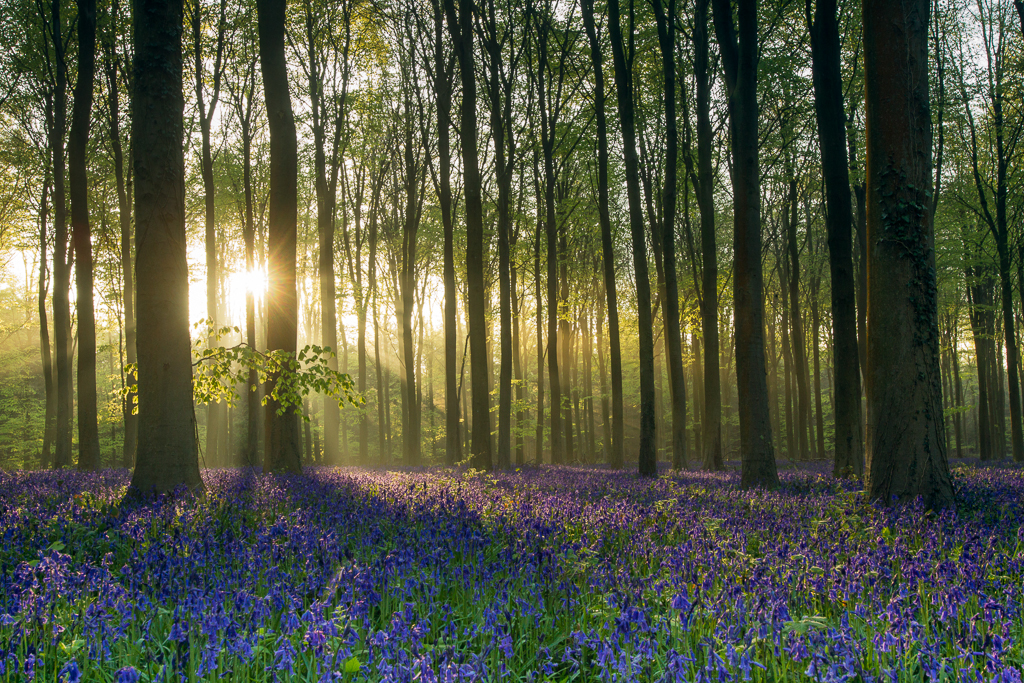
Adding mist to this already rich setting is transformative. Arriving before first light gives you time to settle, to observe how the fog moves and how the light begins to filter through it. As the sun rises, beams of light can pierce the canopy, illuminating patches of bluebells and creating fleeting moments of enchantment.
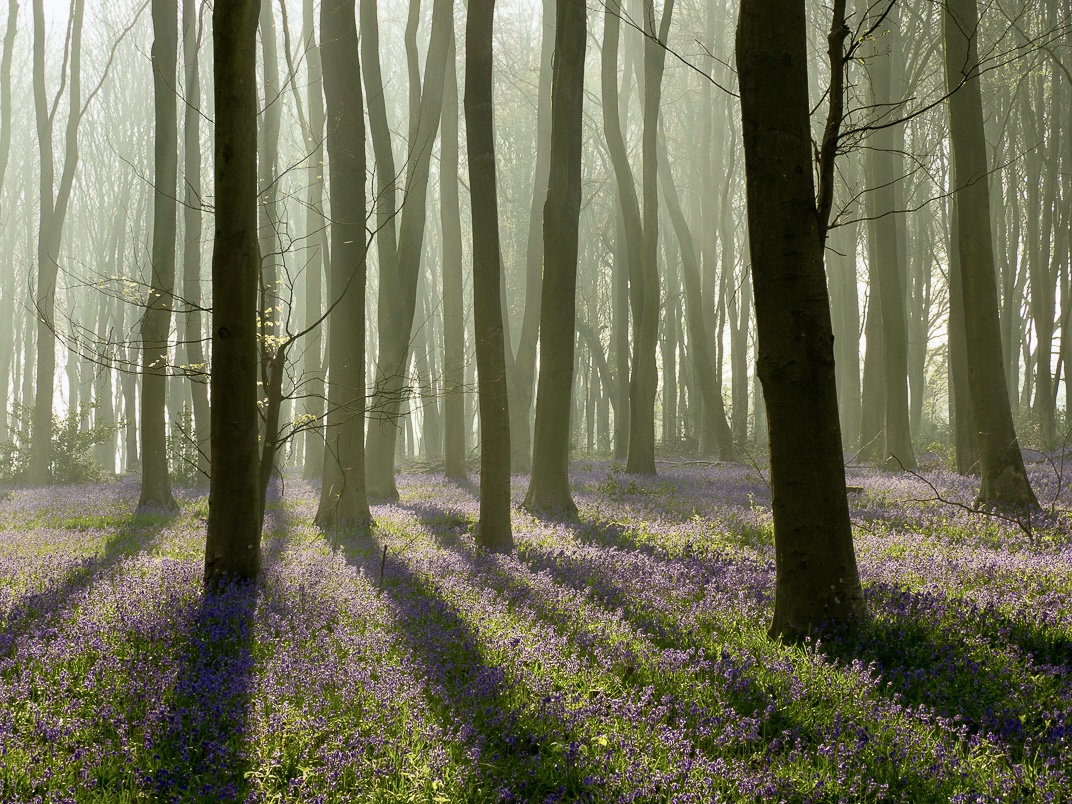
Mist simplifies the woodland. It softens the chaos of branches and undergrowth, gently fading distant trees into pale silhouettes. Depth becomes layered and painterly.
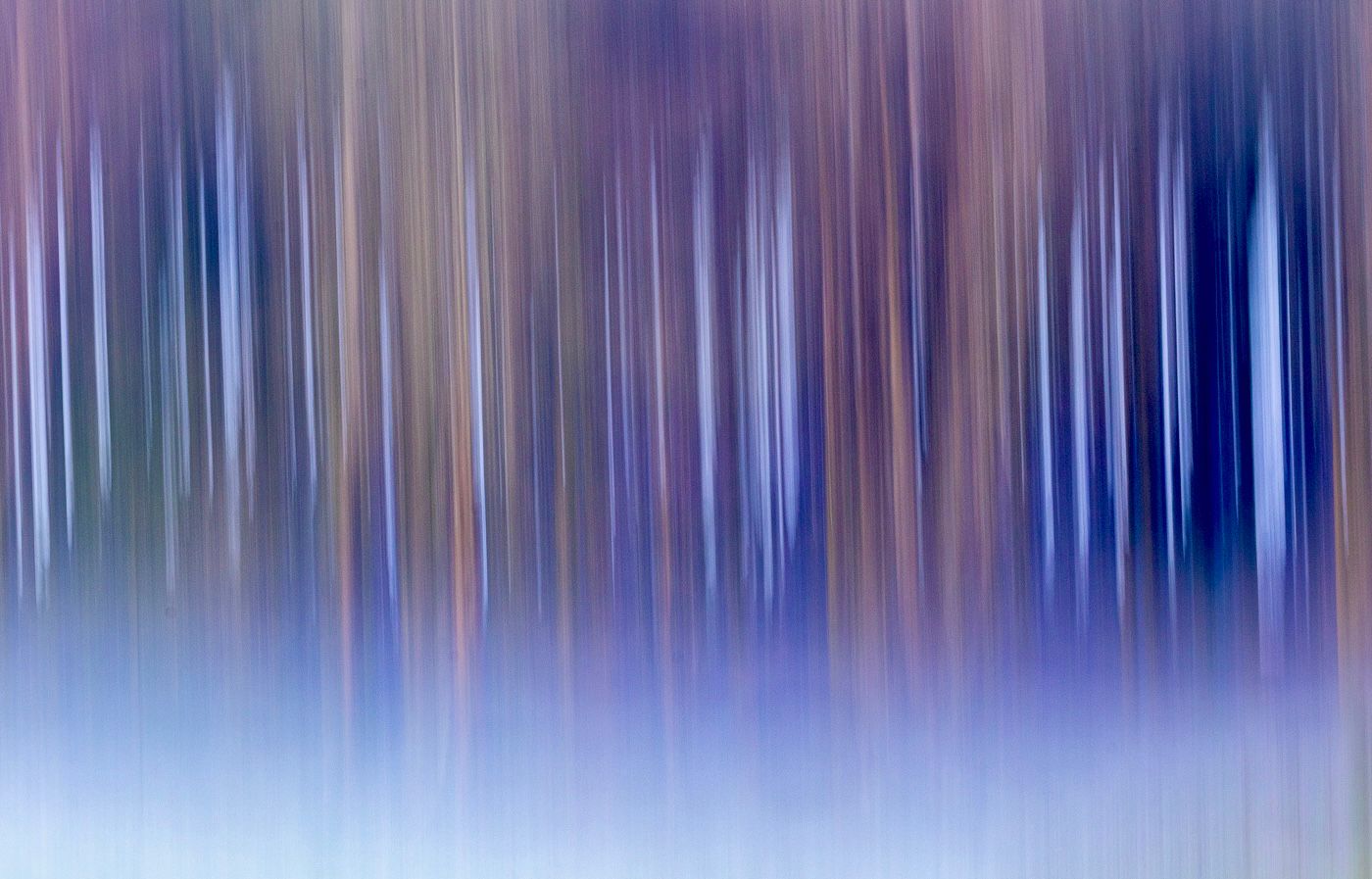
Scenes that might otherwise feel cluttered suddenly gain clarity and structure, with natural separation between foreground, midground, and background.
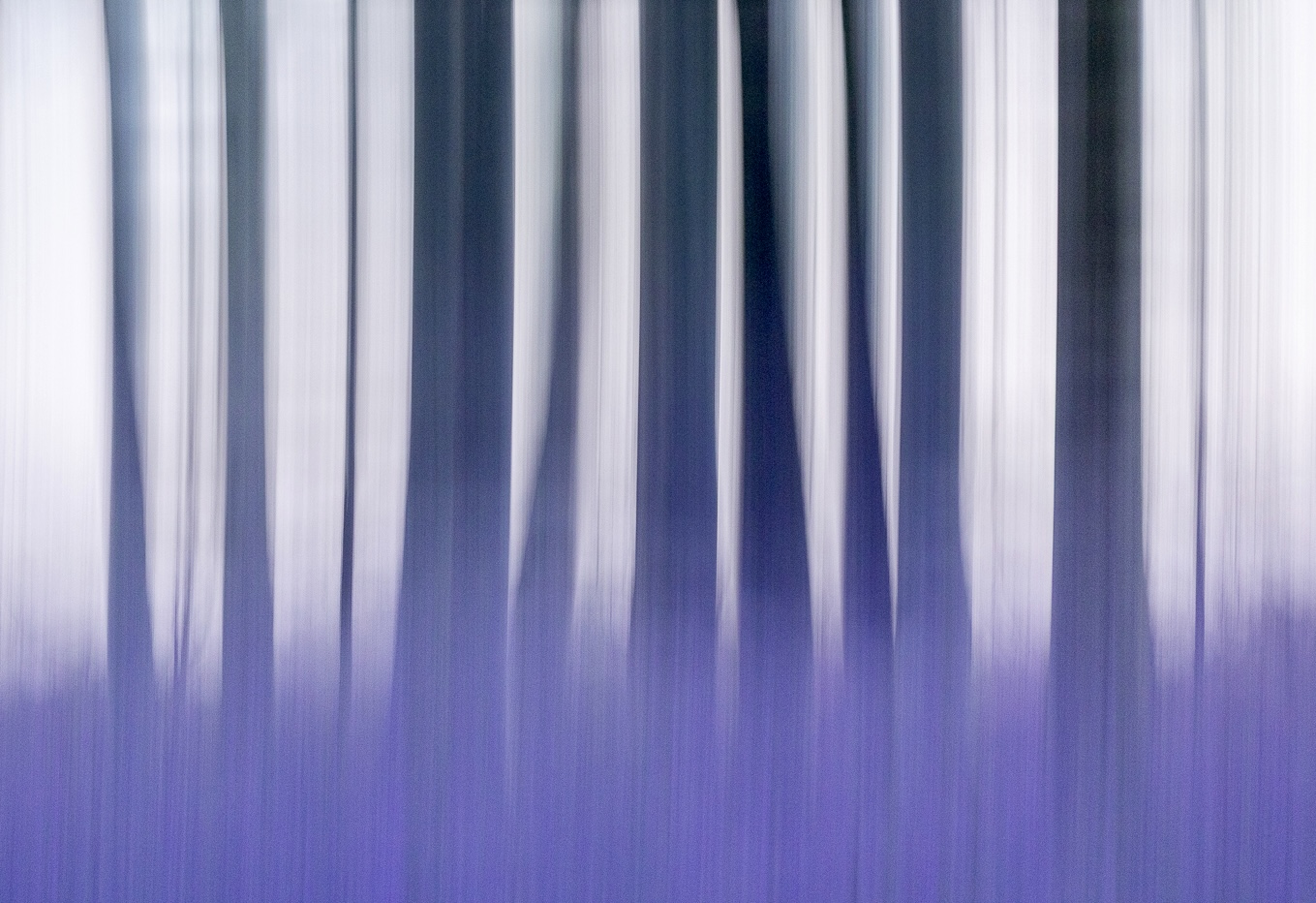
With so much to photograph, sometimes its best just to simplify, to focus on a detail. For me wildlife photography is a meditation on nature.
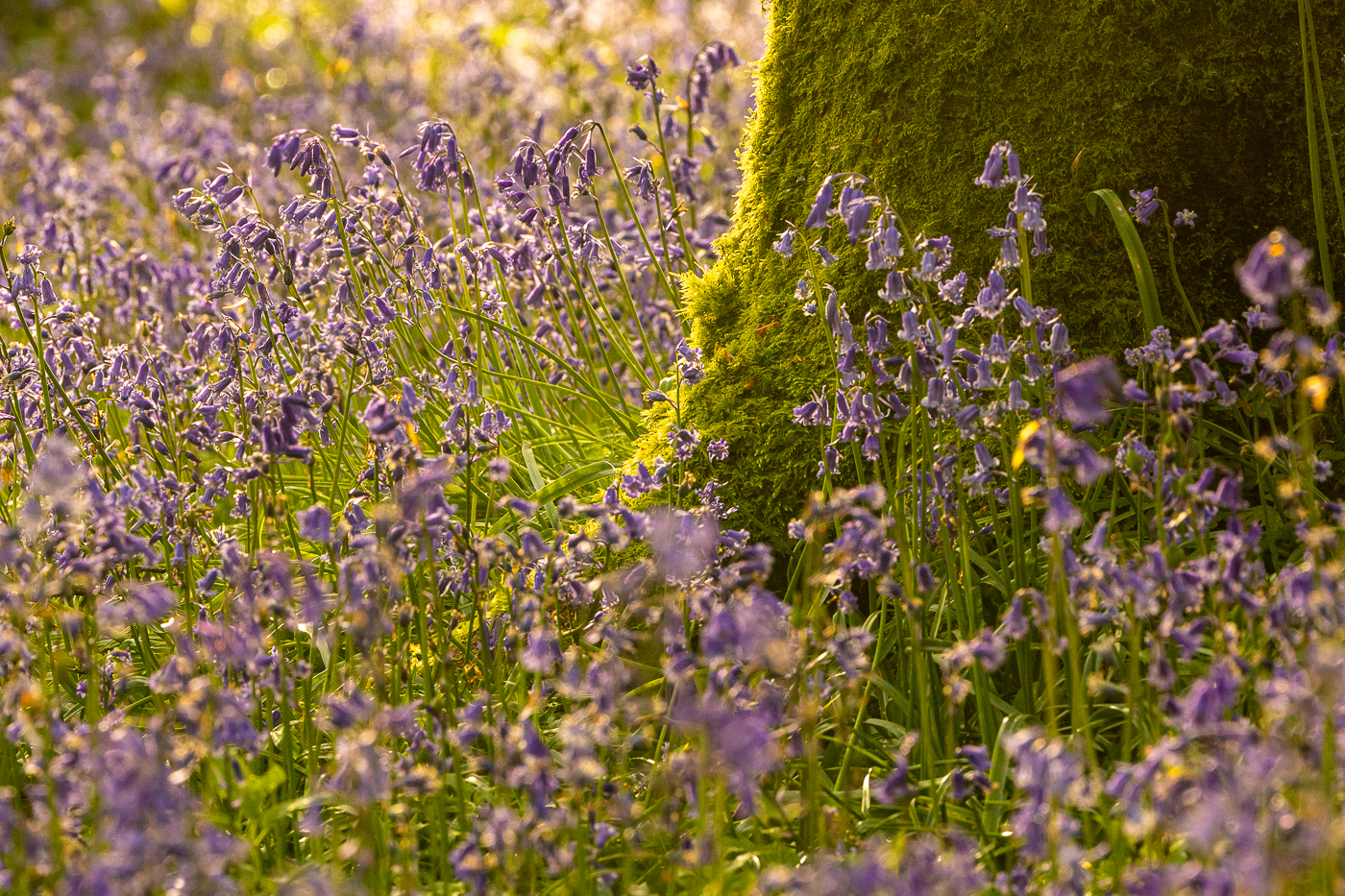
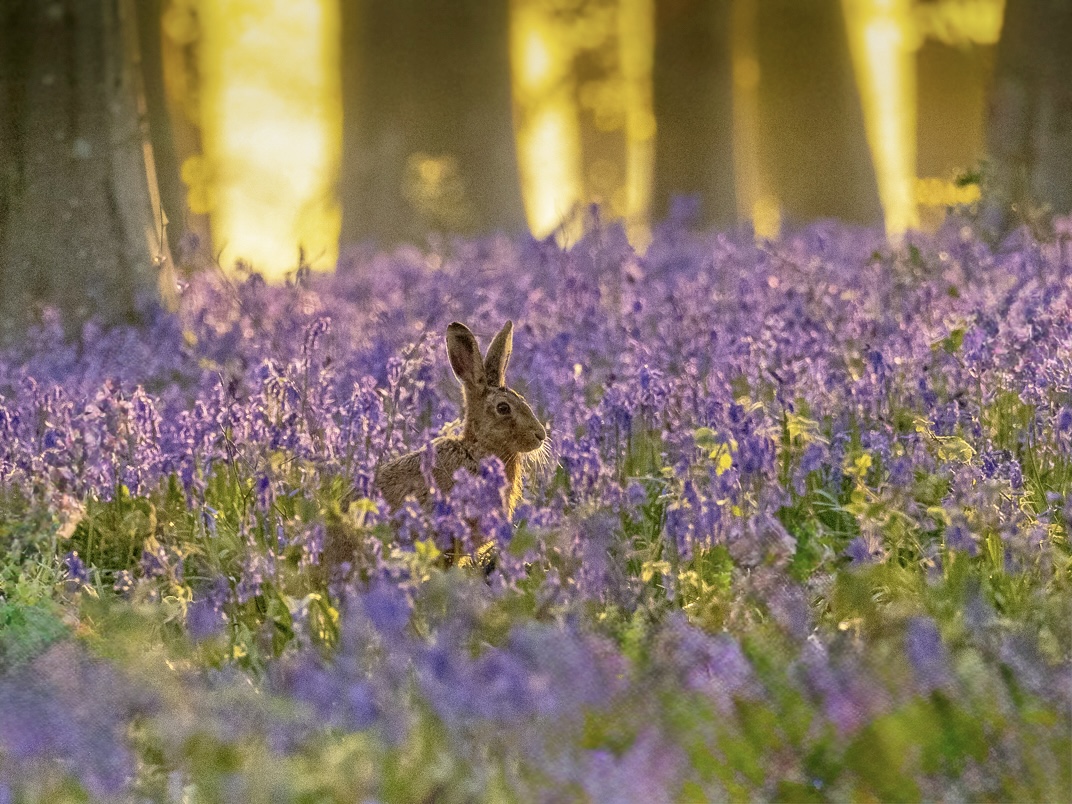
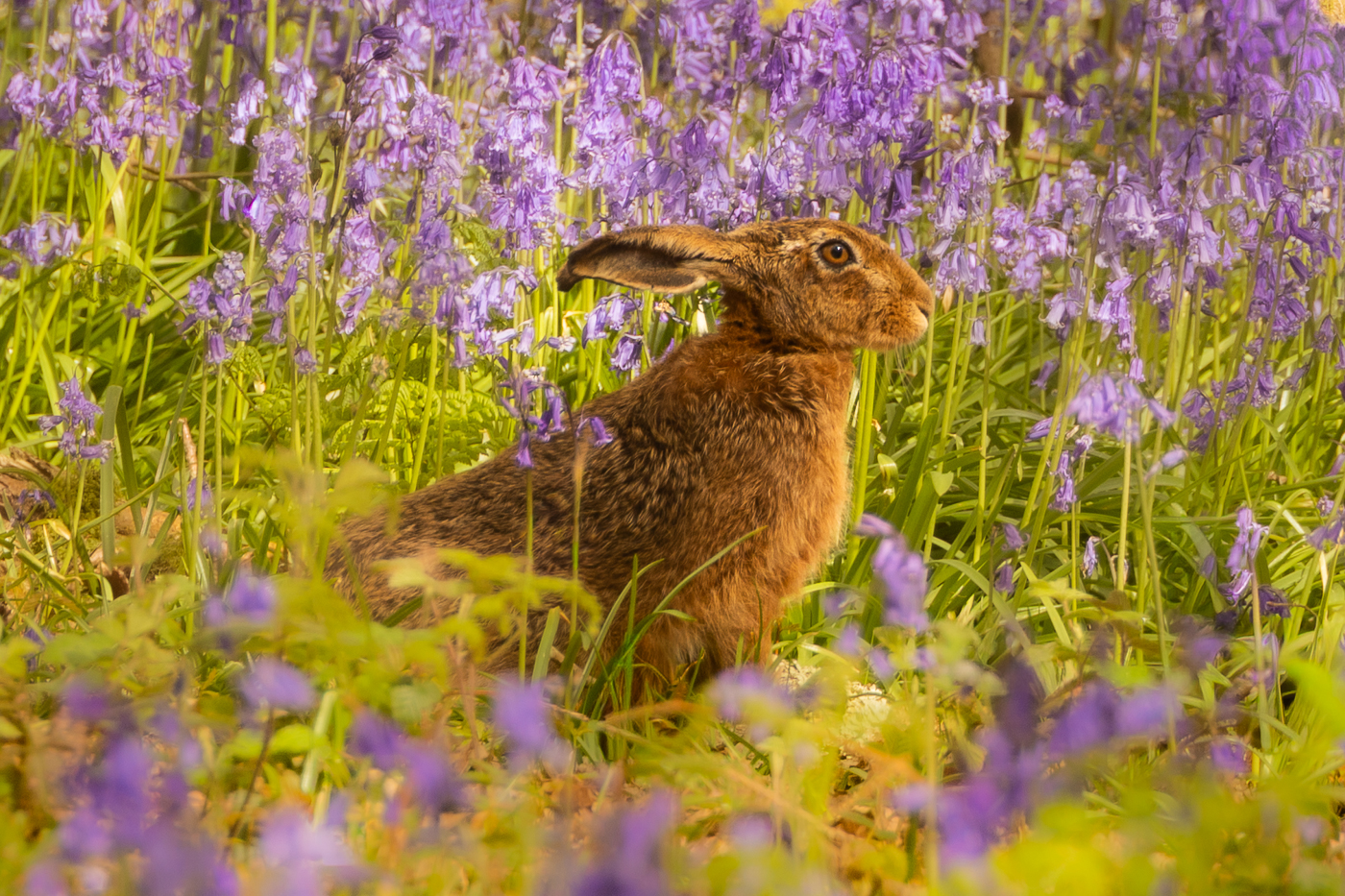
These ancient woods are full of life. The brown hare is essentially a woodland animal that calls the wood its home, venturing out into the fields only by day.
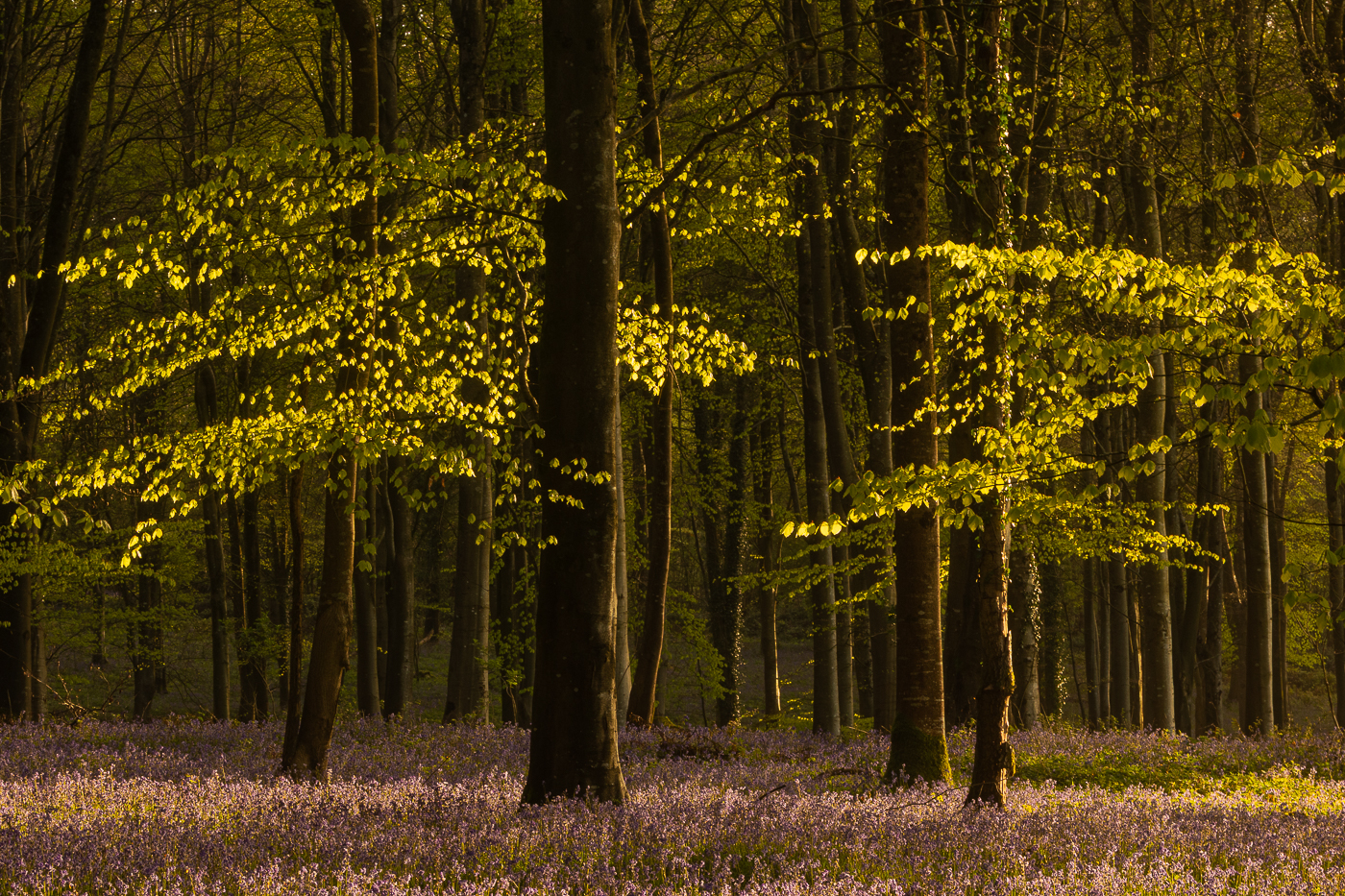
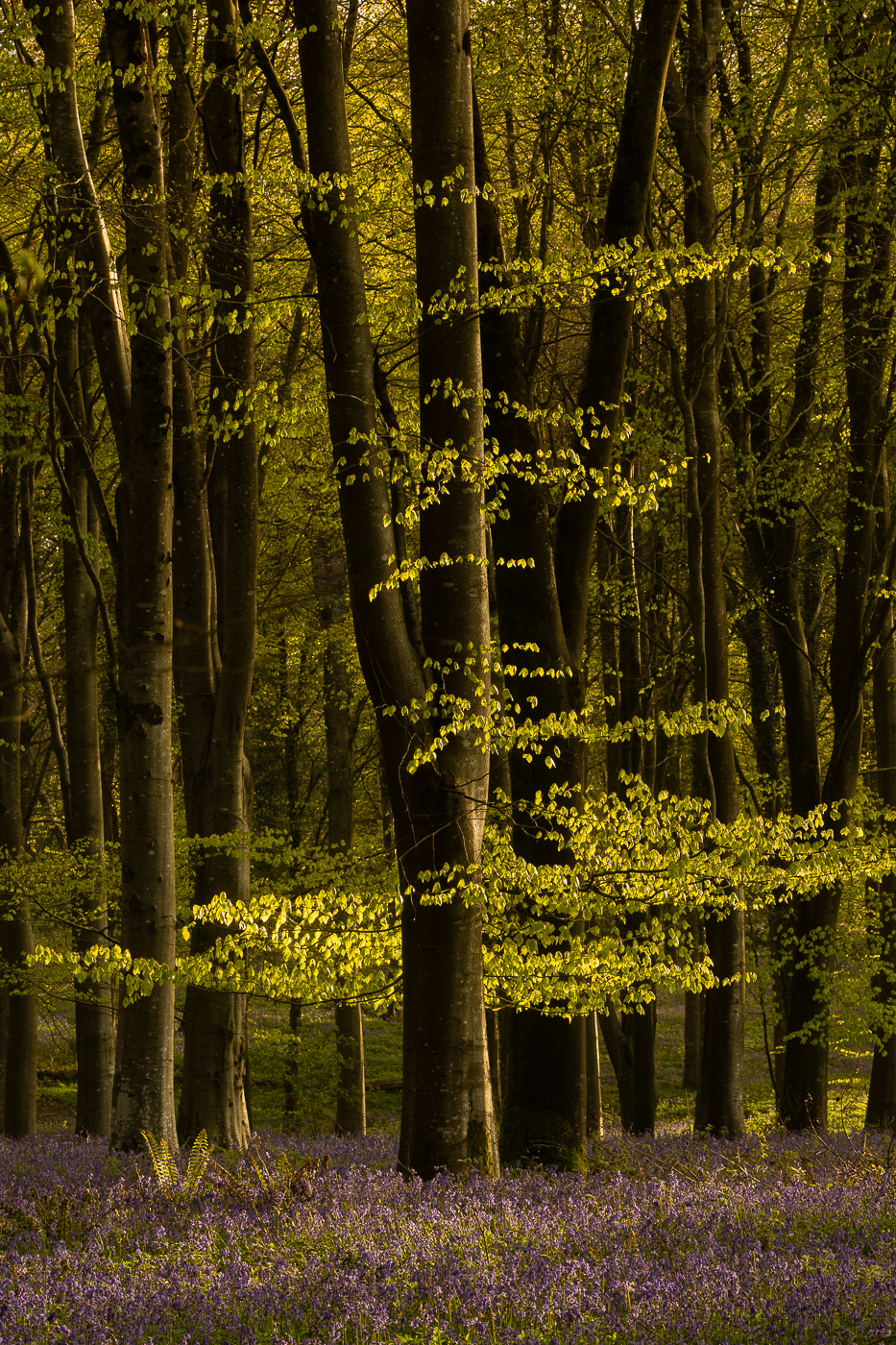
Light penetrates the woodland, illuminating the leaves of the beech trees leaving them shimmering and glowing.
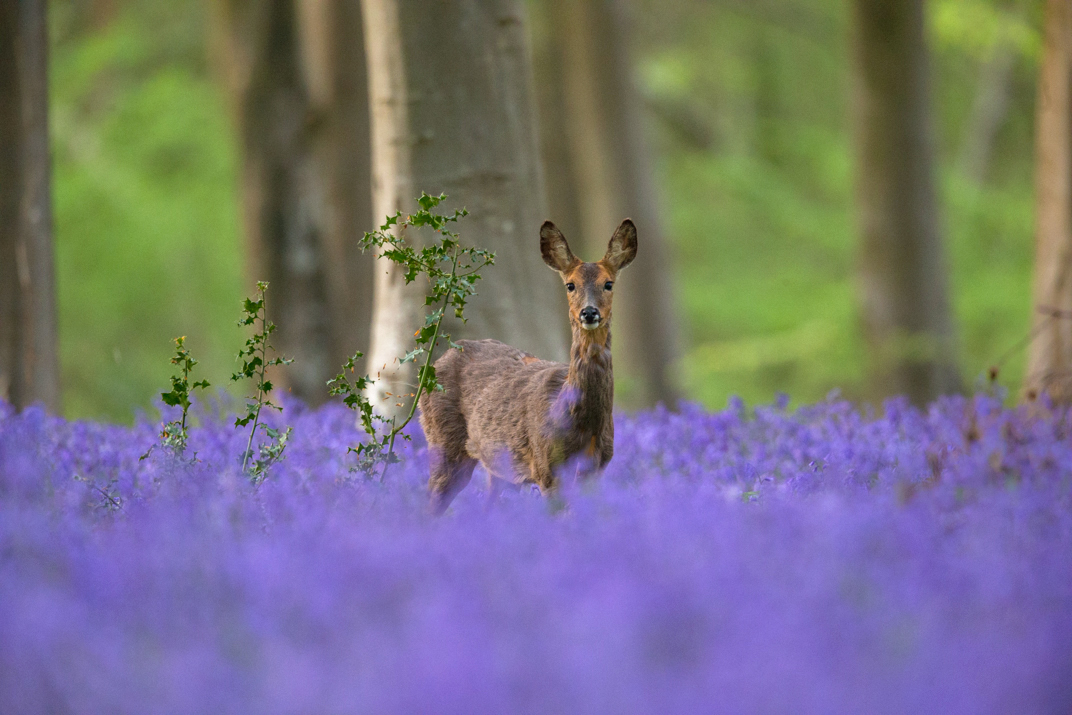
The roe deer is another mammal that makes these woods their home, often described in English folklore as the ‘fairy of the woods’ due to their beauty and shy, elusive nature.
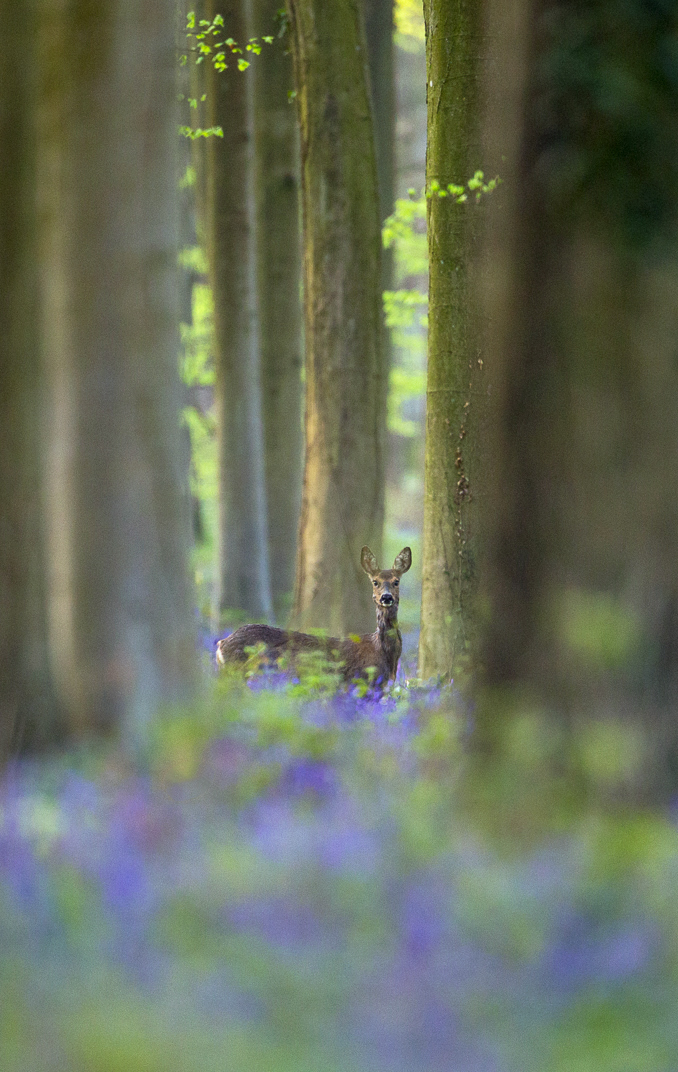
These gentle sprites move silently and gracefully through the ancient wood, seemingly able to appear and disappear effortlessly tip toeing through the bluebells and between the beech trees, giving them a delicate, elvish charm.
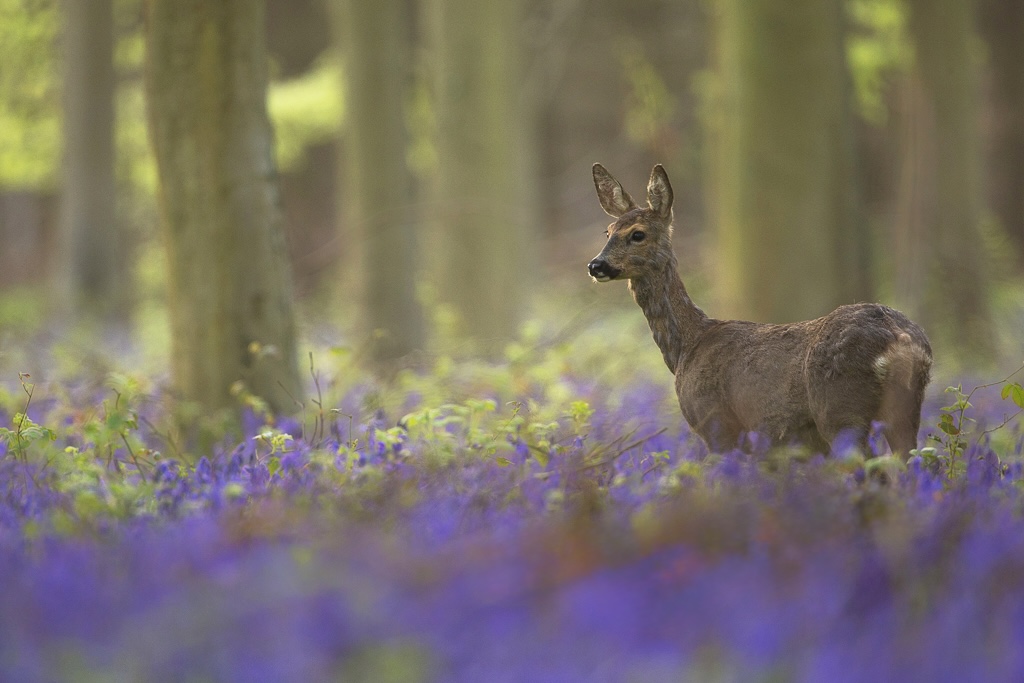
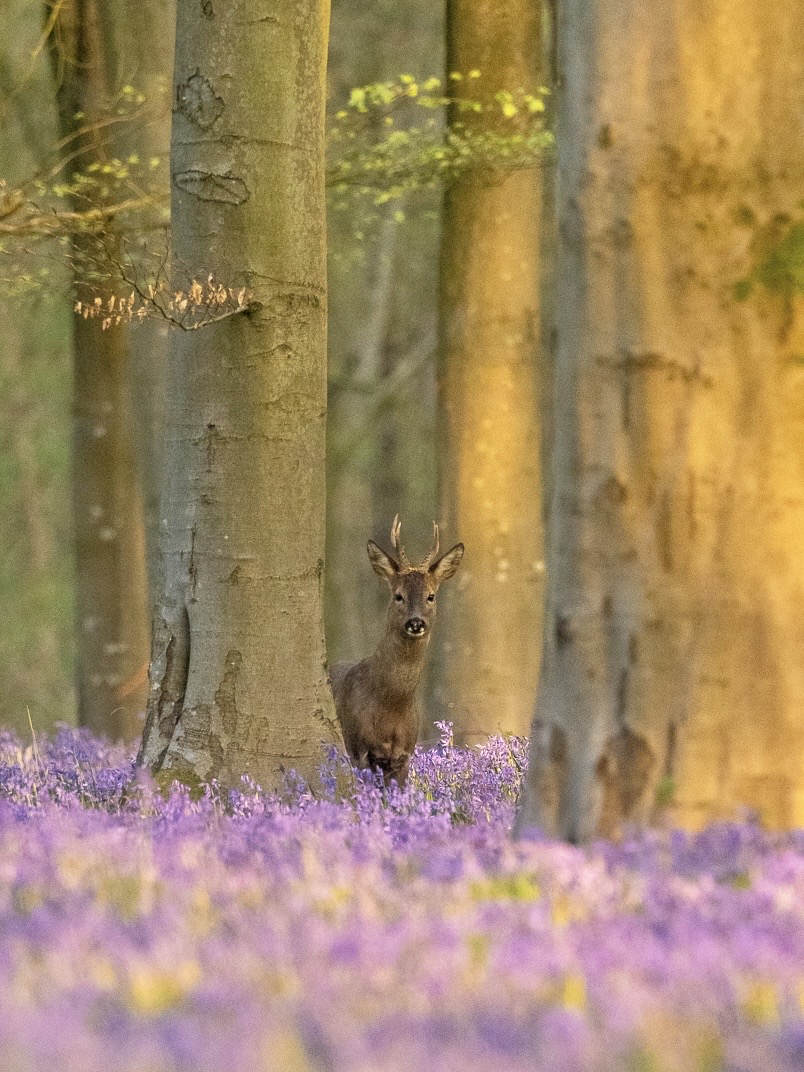
Ancient bluebell woods are fragile environments and the flowers themselves are easily damaged. Native bluebells are protected under UK law. It’s important therefore to stay mindful and stick to the path to avoid trampling these rare, precious flowers, leaving the woodland untouched. The goal is not just to capture the beauty of a bluebell display, but to preserve it.
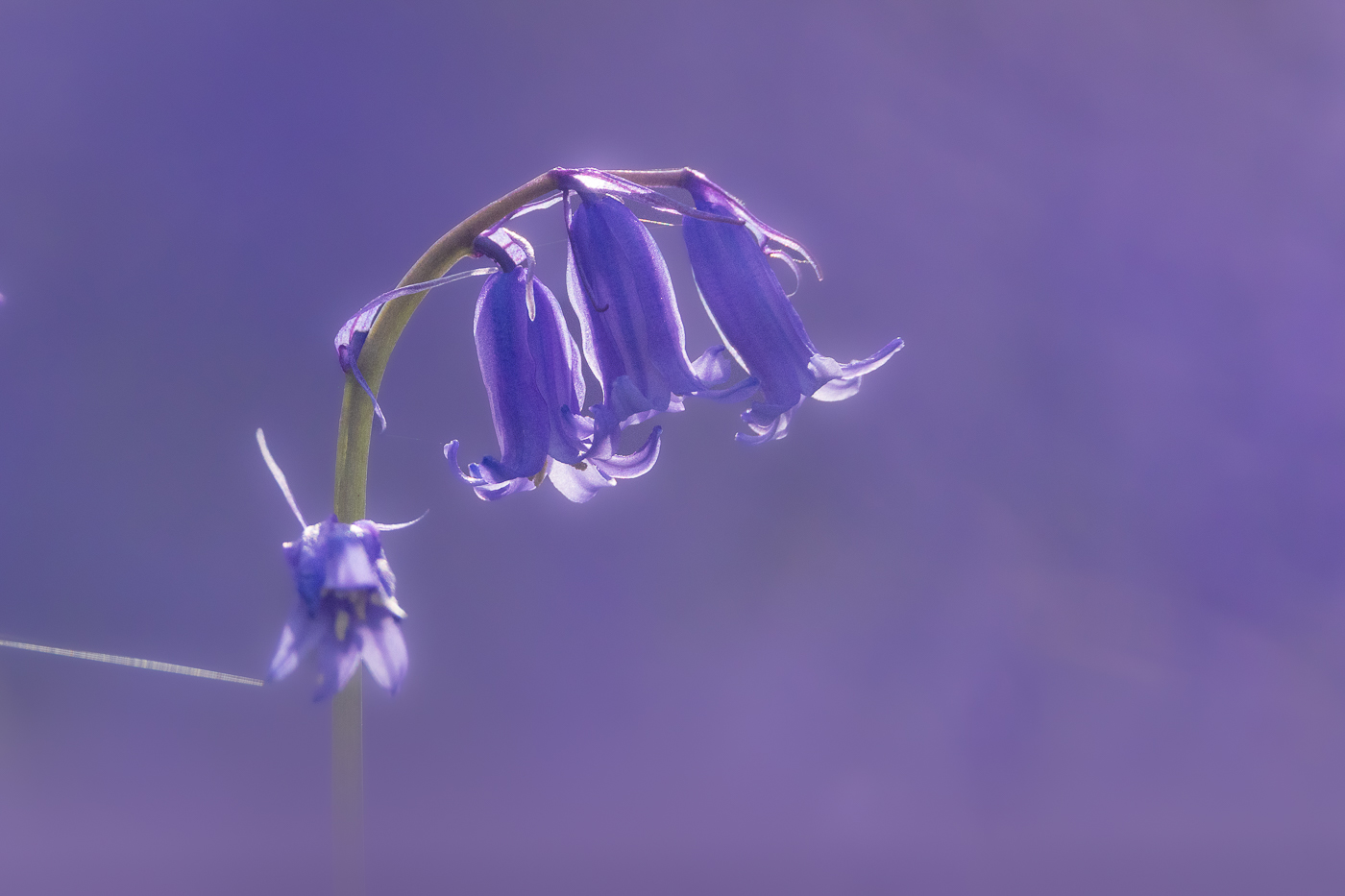
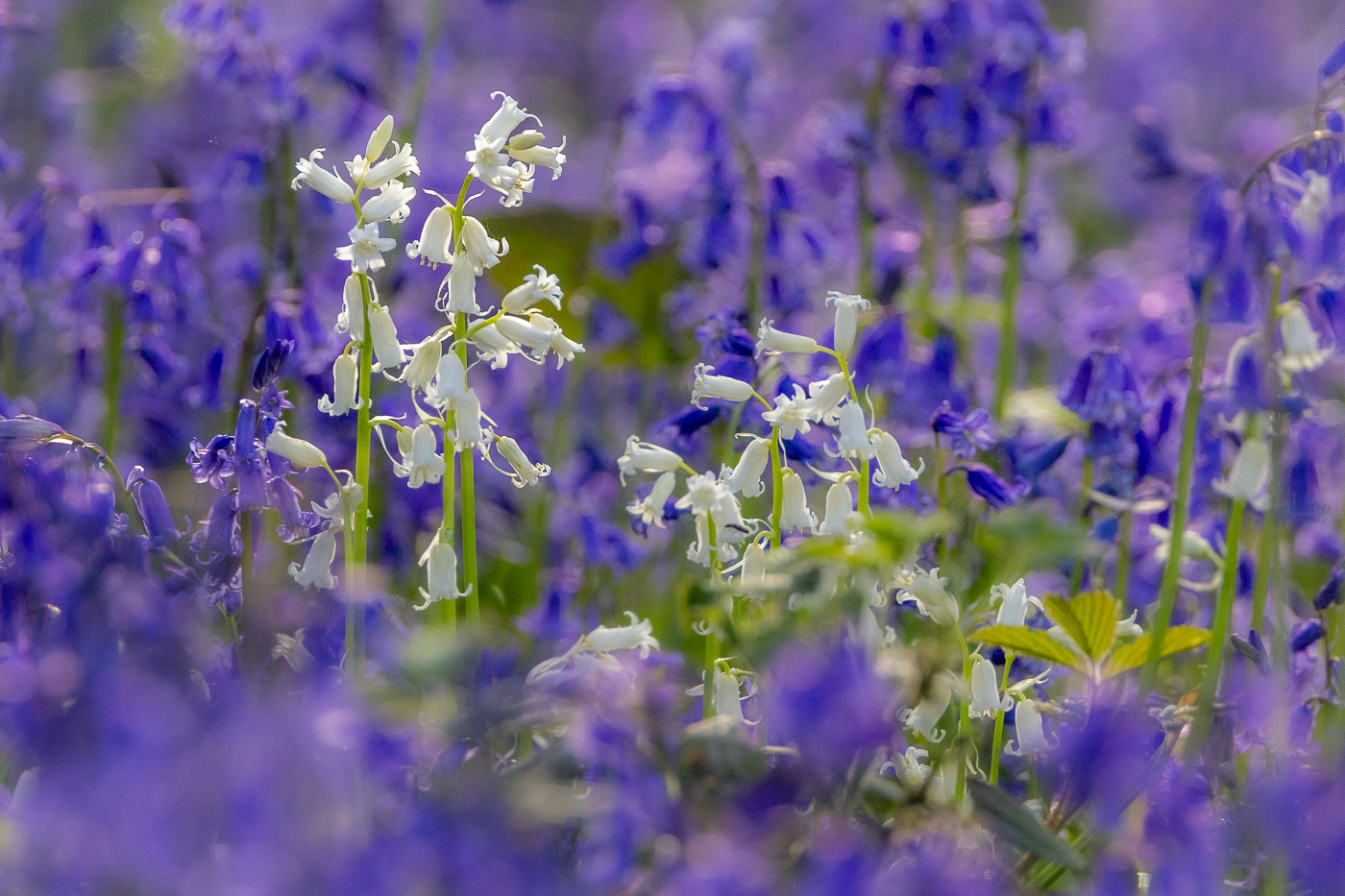
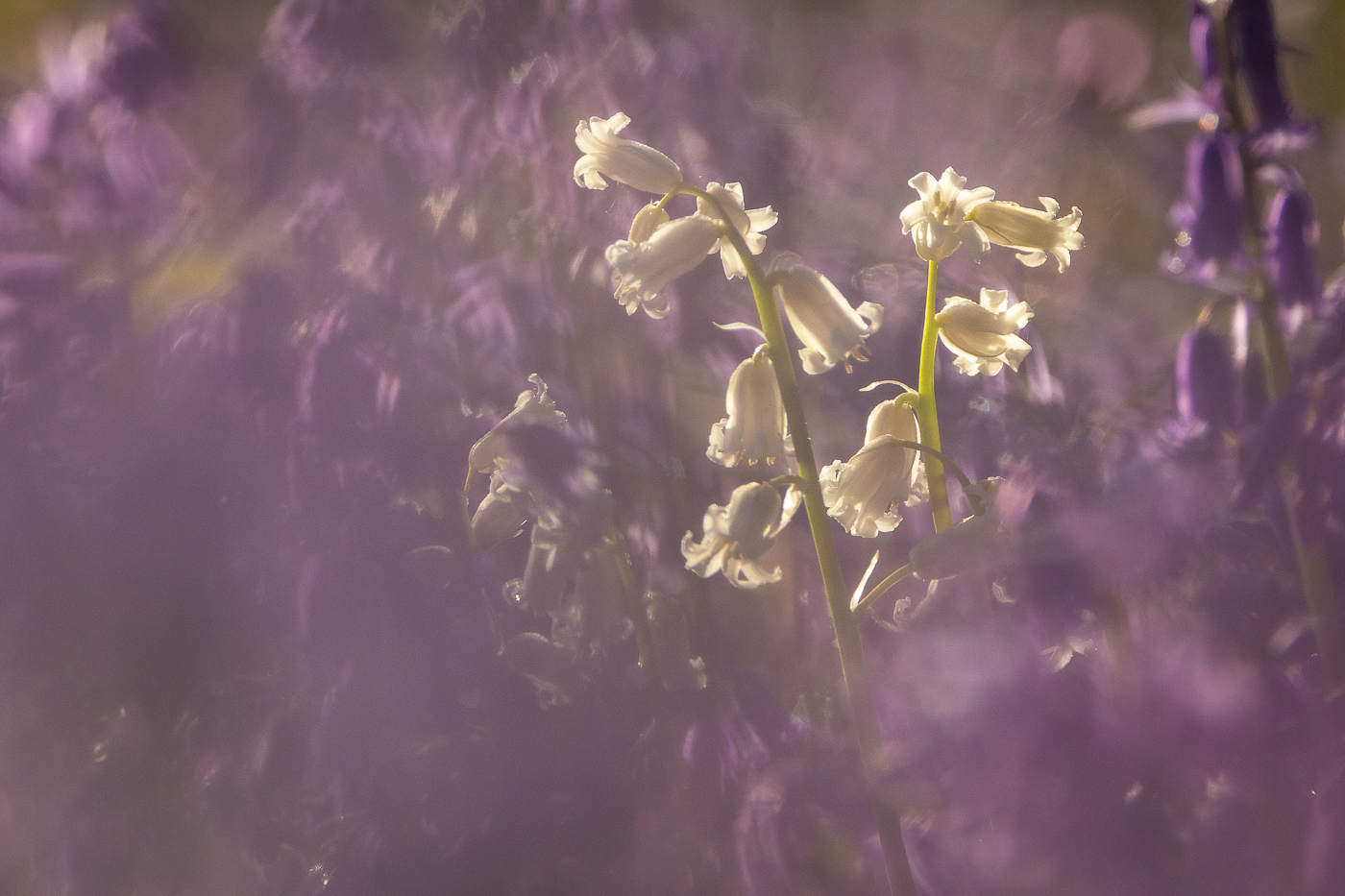
In English folklore Bluebells are known by the name ‘fairy flower’ or ‘witches thimble’. White bluebells are rarer still, natural variants that stand out amongst the violet-blue blue carpet. Traditionally they are often identified as symbolising a magical, ghostly purity.
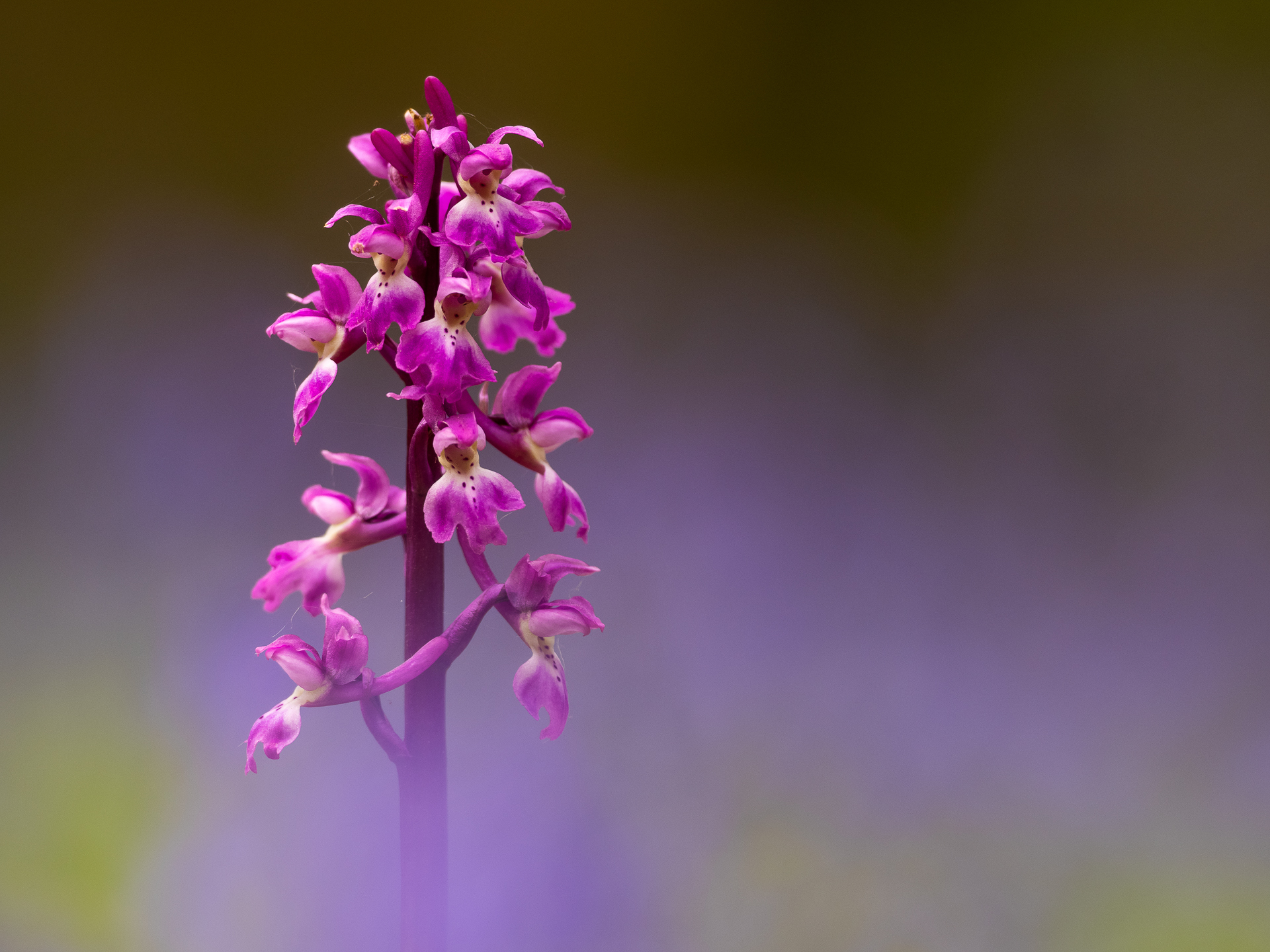
Finding an Early Purple orchid in a bluebell wood serves as a powerful ancient wood indicator, typically woods where they are present date back centuries. These first orchids of spring are slow to colonise new areas. Whilst bluebells indicate that the land has been wooded for centuries, the presence of early purple orchids, along with wood anemone, often suggest undisturbed soil that has never met with the plough.
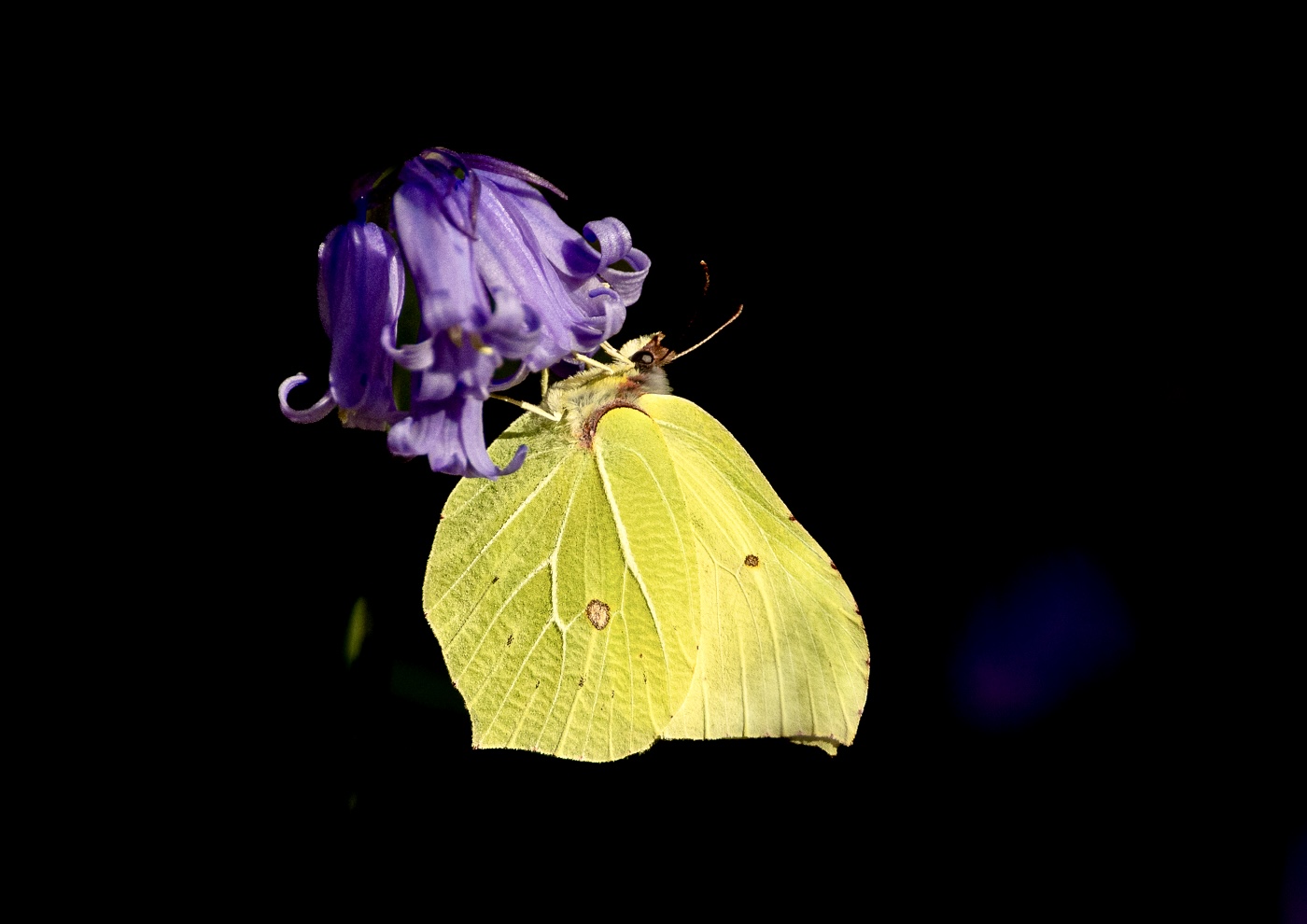
As the wood awakens, a Brimstone butterfly flutters across its meandering paths and rides, feeding from the bluebells. As one of the first butterflies to emerge, they are another harbinger of Spring. There lemon-yellow wings create a striking contrast against the purples and blues of the bluebells.
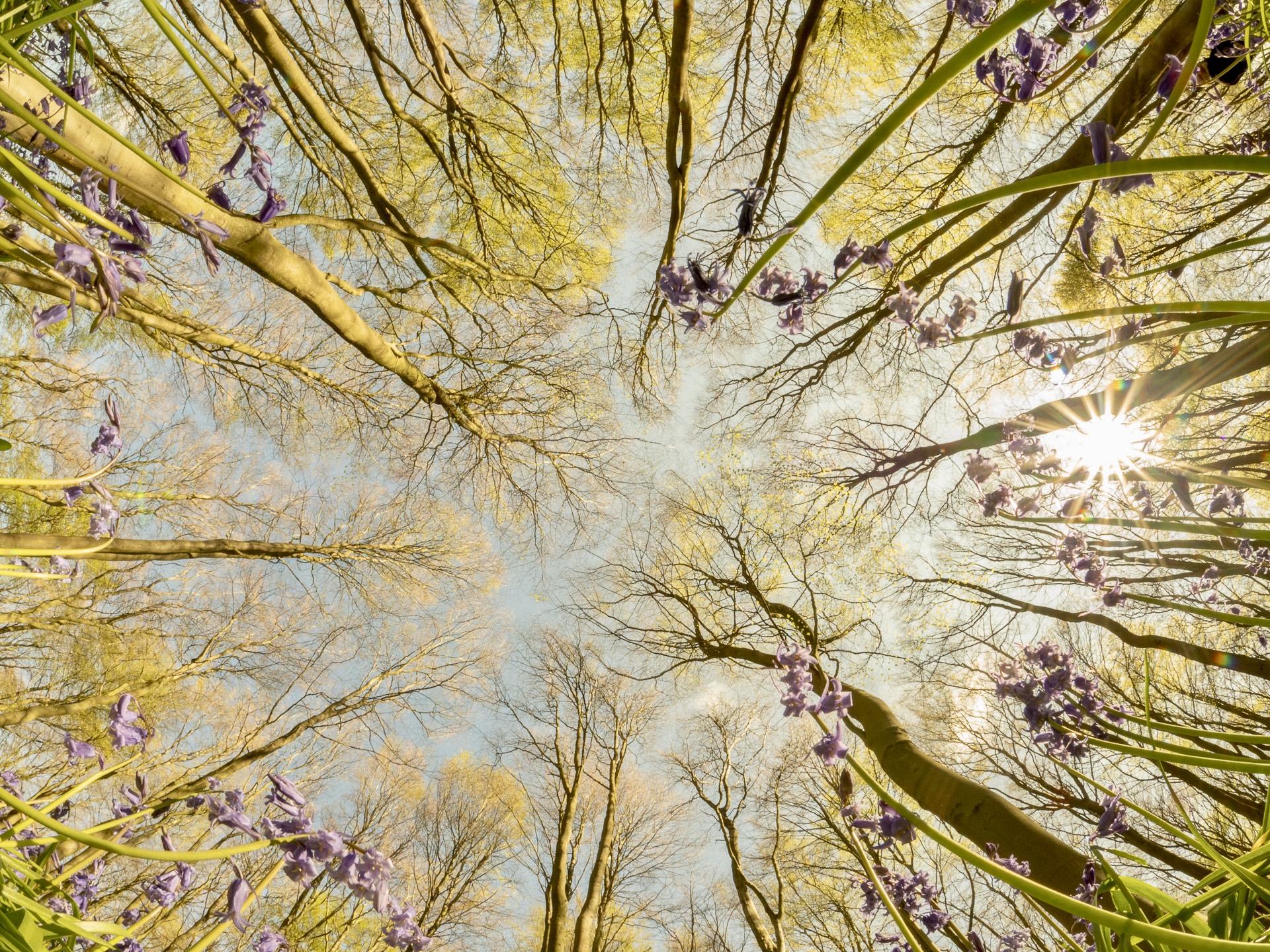
As the season progresses, so the ancient beeches are clothed in leaves, blocking out the life giving sunlight on which the bluebells on the woodland floor depend and casting a veil over the bluebell season.
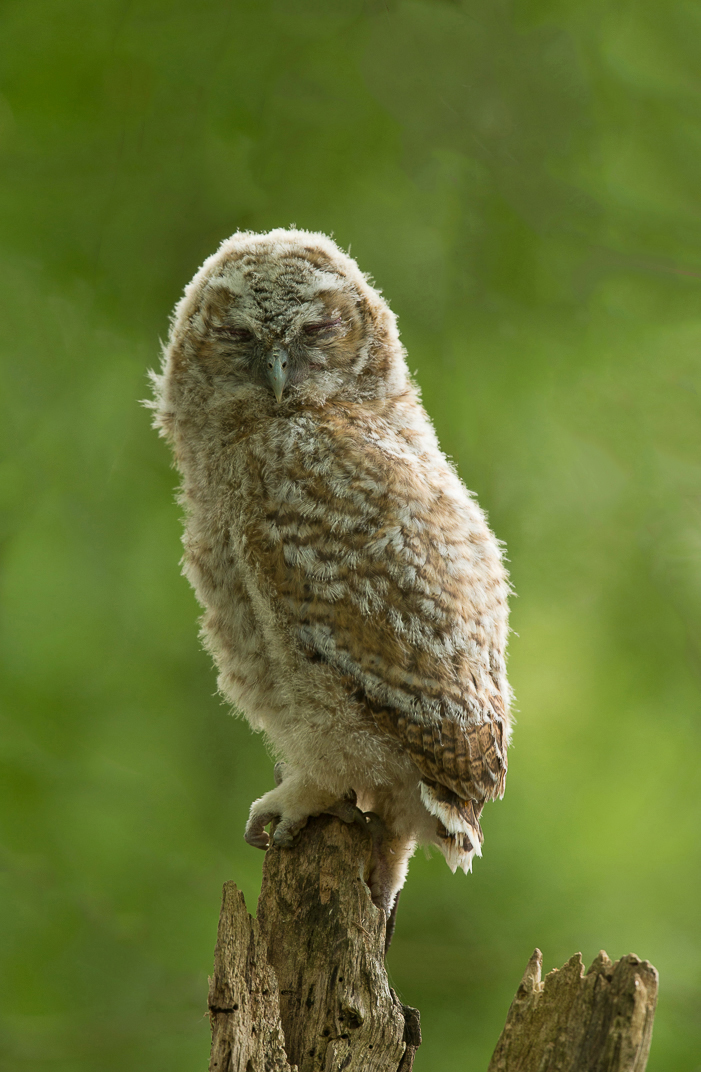
The brown hare and roe deer, share their woodland home with other creatures. On one walk around the wood I felt eyes on me and looked across to see this tawny owlet looking back at me, sunning itself on a broken tree stump.
Evenings in the bluebell wood have a different feel to them. As the sun starts set, it starts to pick out individual flowers against the light.
In the gloaming, the roe deer reclaim the wood for themselves. Evenings for me are one of the best times to find and photograph roe deer.
Exploring these ancient woods in early Spring with my son is an uplifting experience, one that engages the senses through a blend of vivid colour, sweets scent and still atmosphere. It evokes feelings of renewal and restoration after the long winter, as we look forward to other spectacles nature’s calendar has to offer.