Murmurations: a Winter Sky Dance between Predator and Prey
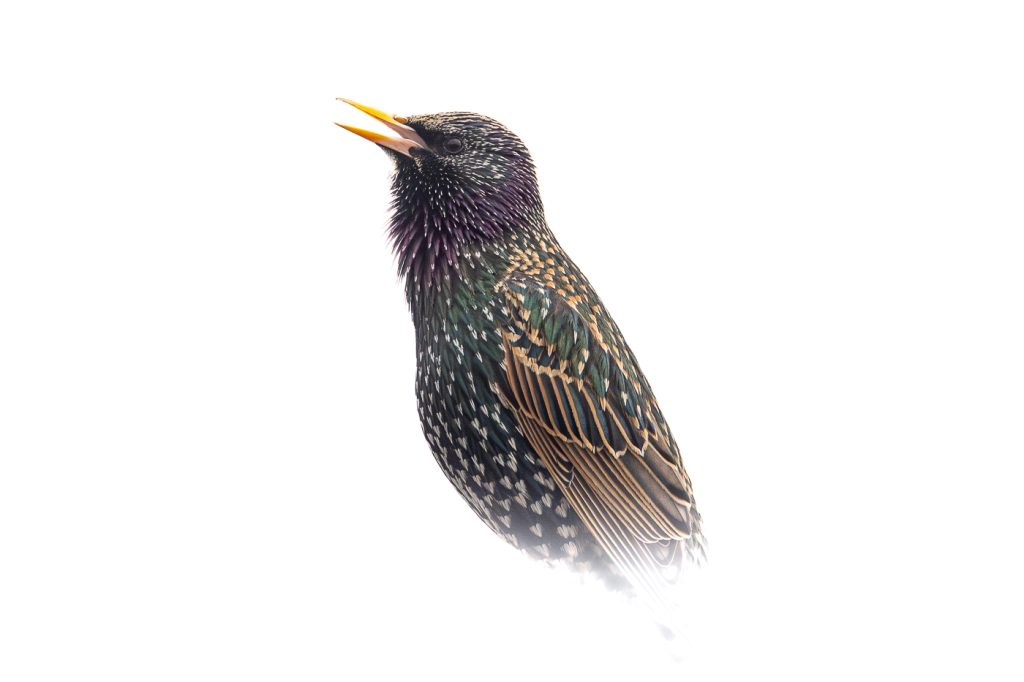
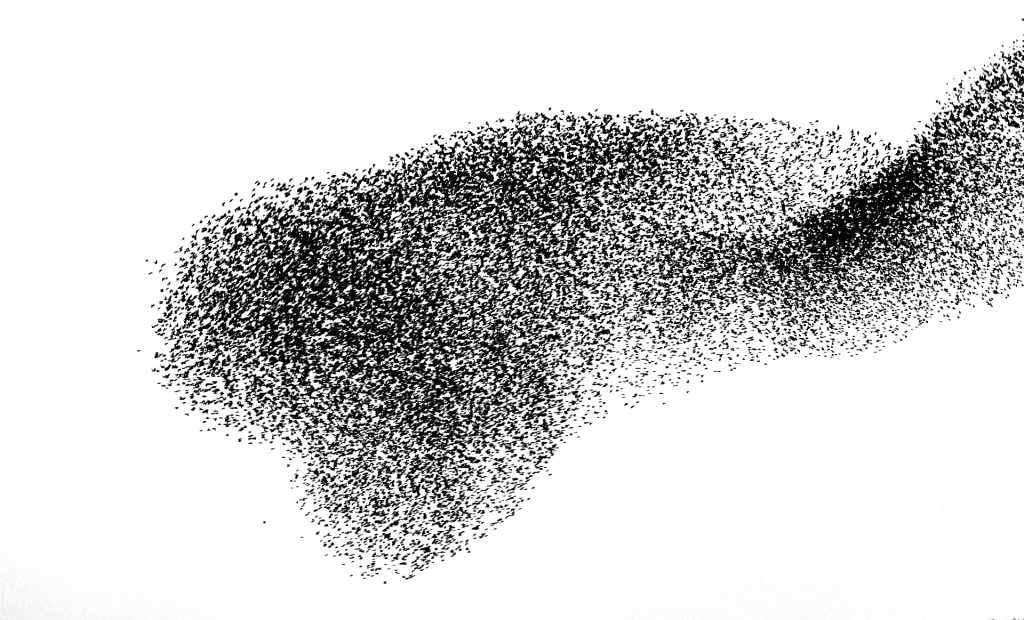
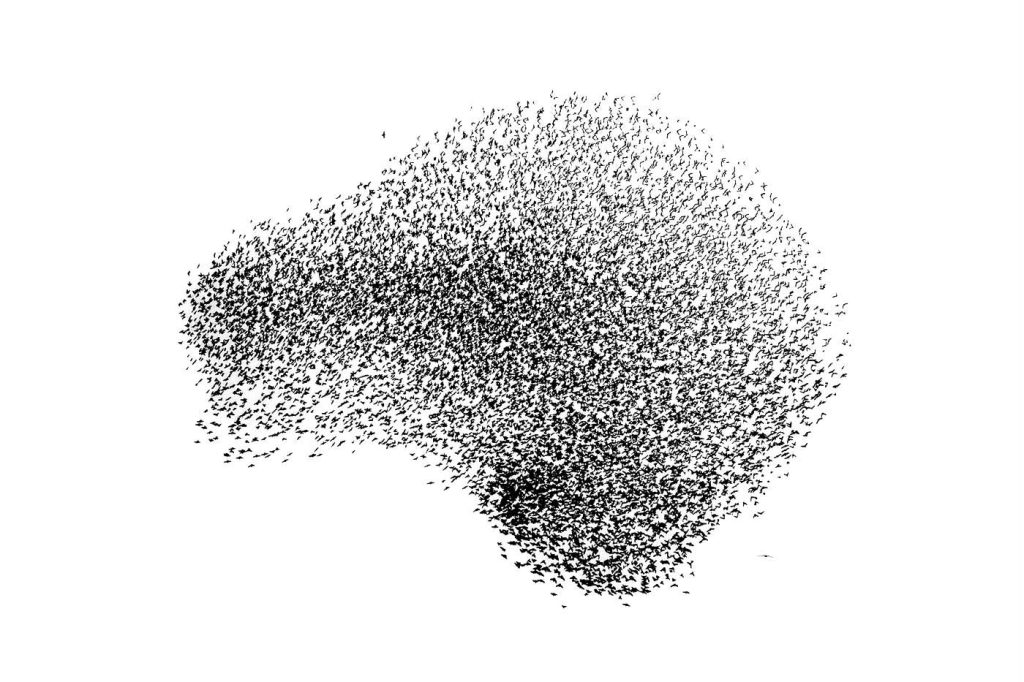
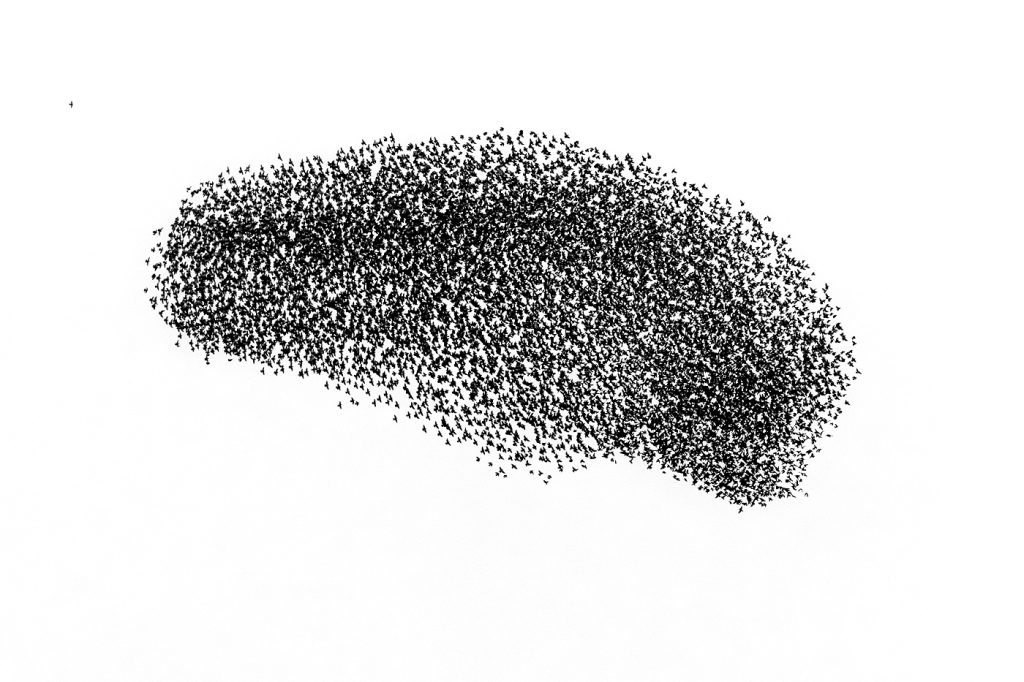
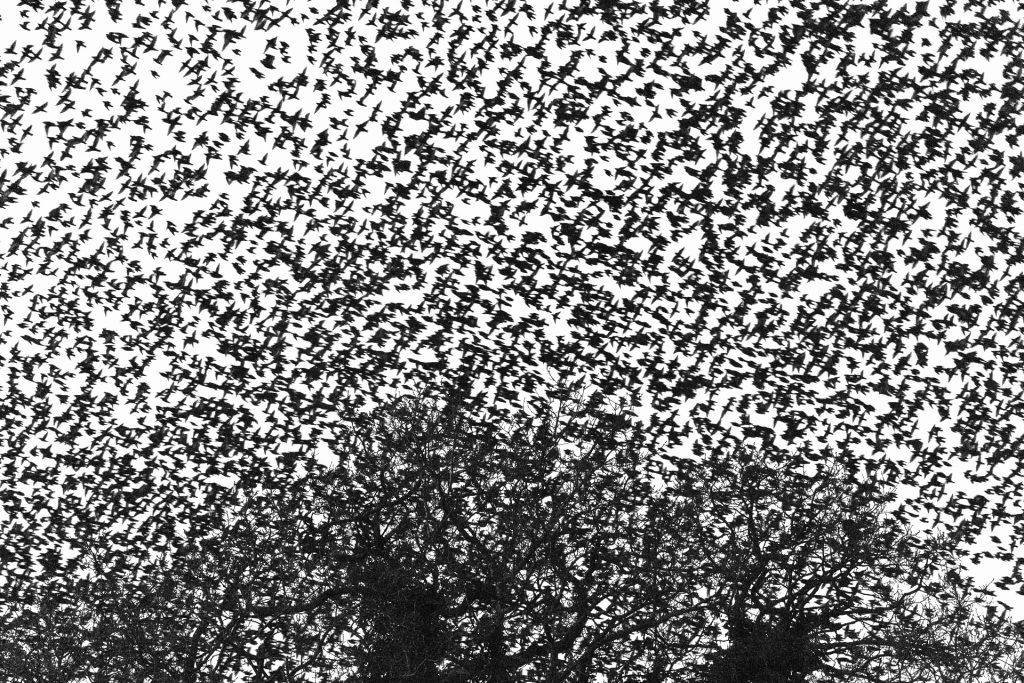
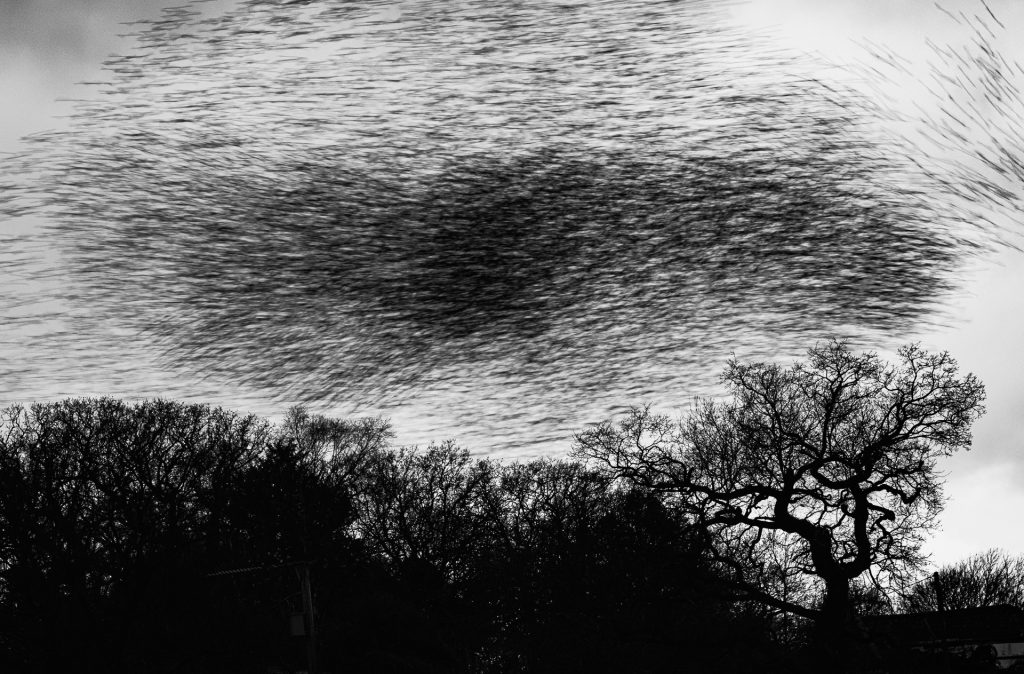
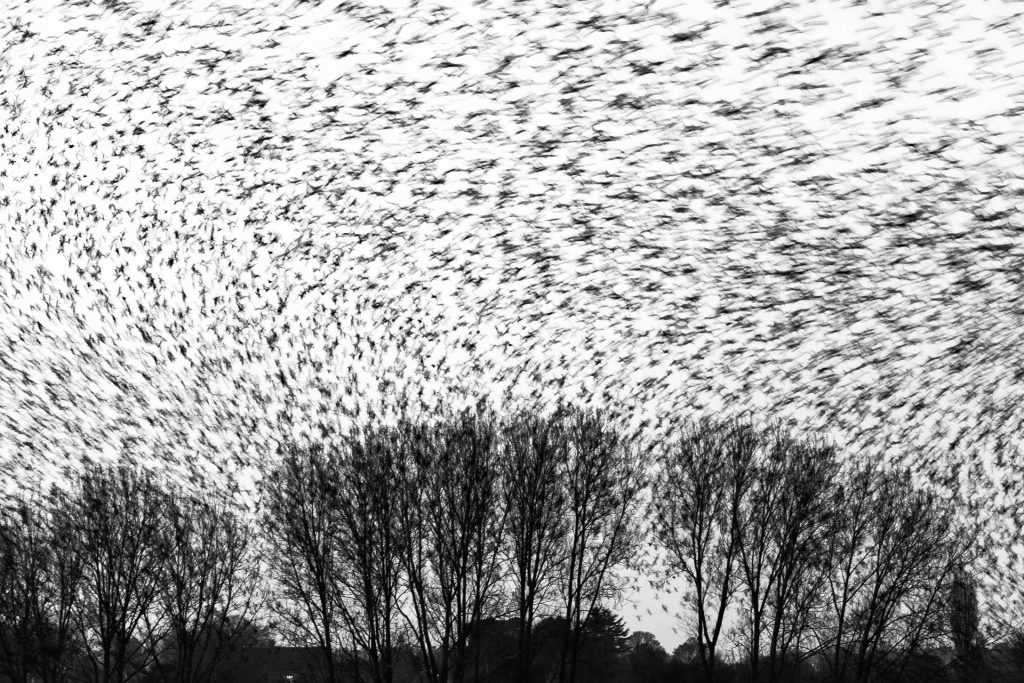
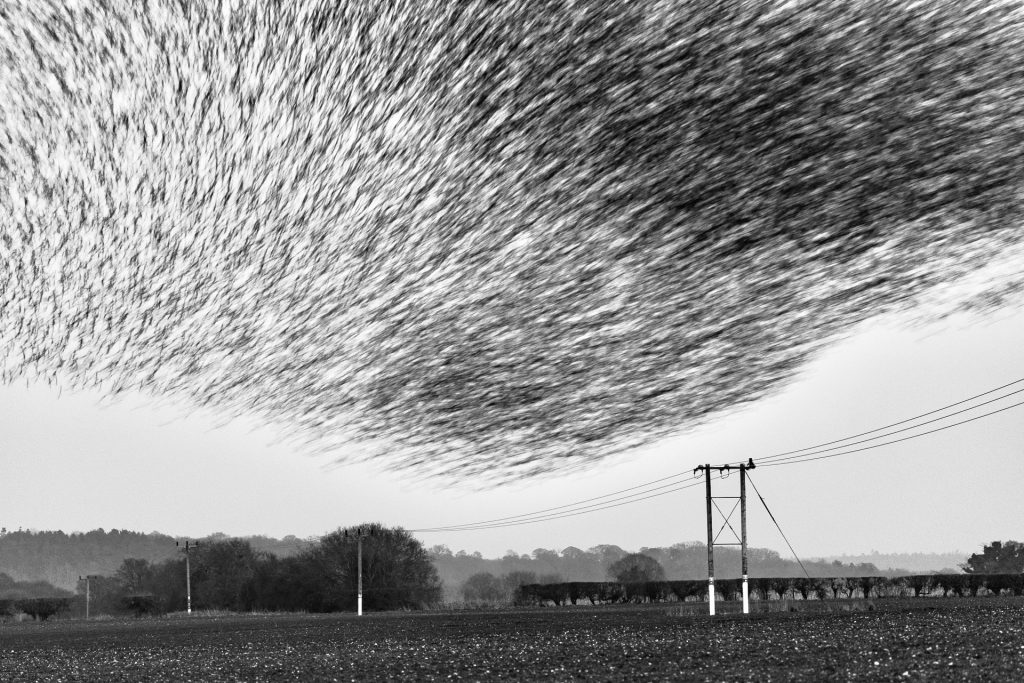
There are few sights in nature as mesmerizing as a starling (sturnus vulgaris) murmuration. At dusk, thousands of birds, resplendent in their winter plumage, gather into a shifting, fluid mass — rippling, folding, and twisting across the skyline like smoke caught on the breeze. It feels as though the canvas of the sky itself has come alive. But beneath the beauty lies a far more compelling, primeval story — one shaped by survival, instinct, and one of the fastest predators on Earth: enter the peregrine falcon.
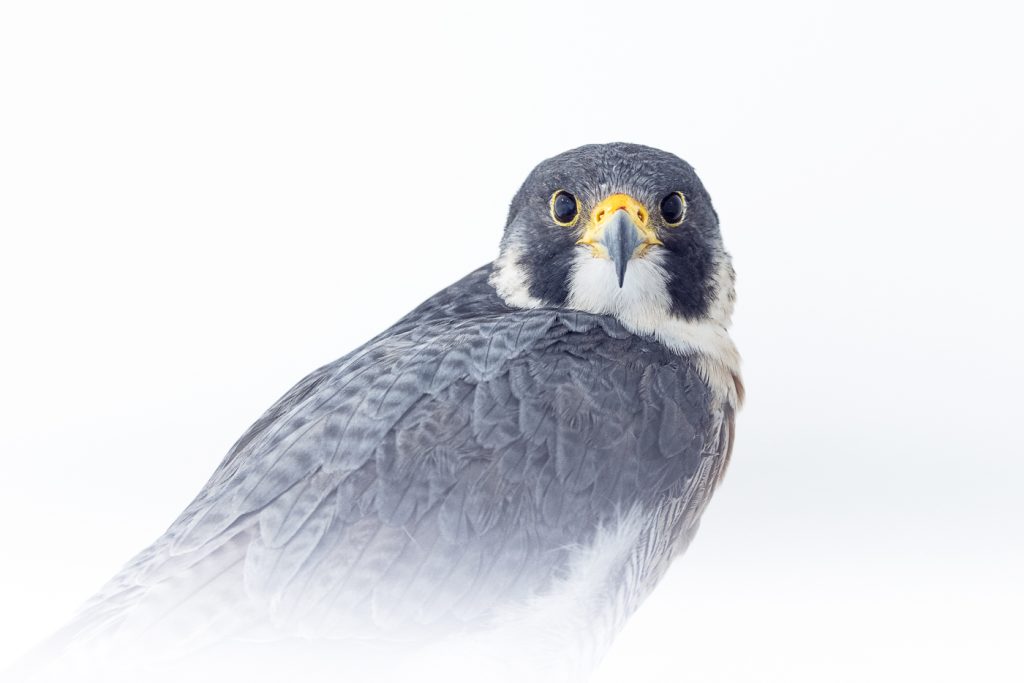
The peregrine falcon (Falco peregrinus) is not just any predator—it is the apex aerial hunter. Known for its breathtaking hunting stoop ( it can reach speeds exceeding 200 miles per hour, making it the fastest animal on the planet). Precision, speed, and timing are its greatest assets. I was very fortunate to photograph this wild 14 year old male tiercel last summer. This shot is actually as a stacked image recorded in camera.
Starling murmurations aren’t just random displays or social gatherings. They are highly coordinated survival strategies. Each bird constantly adjusts its position based on the movements of its nearest neighbours, creating a unified, almost telepathic swarm.
This turns the encounter into a high-stakes aerial chess match. The falcon tries to create vulnerability; the starlings try to eliminate it. Both predator and prey have advantages, the peregrine has speed, agility, and lethal precision whilst the starlings have collective awareness and confusion tactics – who wins the aerial battle can depend on what happens in a split moment.
When a peregrine approaches, the murmuration often tightens and becomes more dynamic. Waves ripple faster. The flock may compress into a dense ball, then suddenly expand or split. These movements are not random—they are reactions to the falcon’s position and speed.
The next couple of images of a peregrine tearing into a murmuration from both above and below were taken by my son, who accompanied me this winter, chasing starling murmurations across the British Isles.
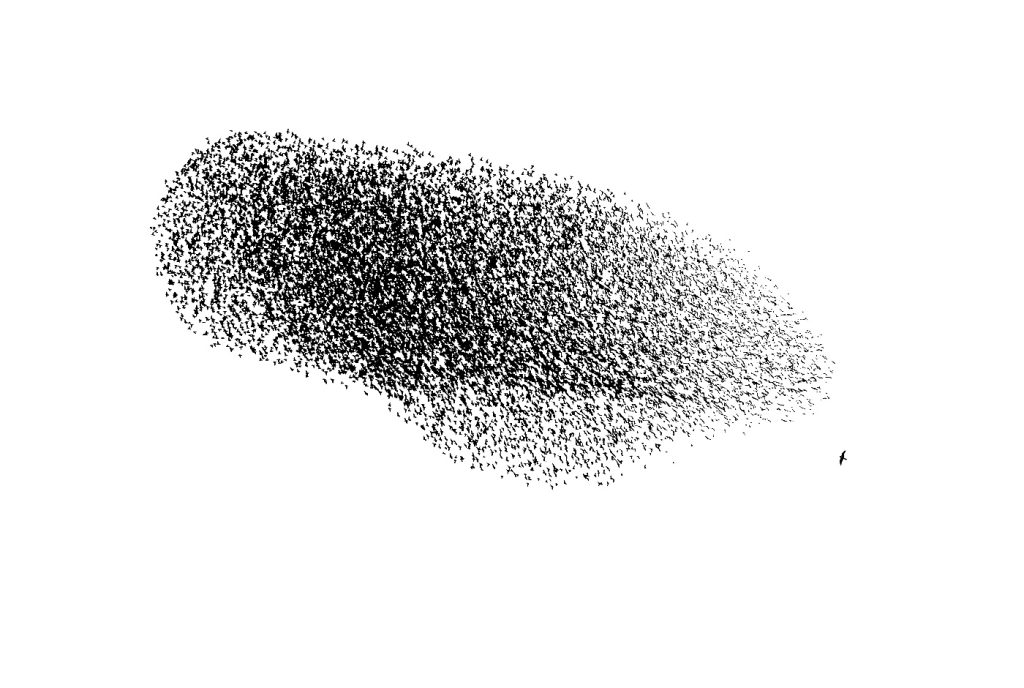
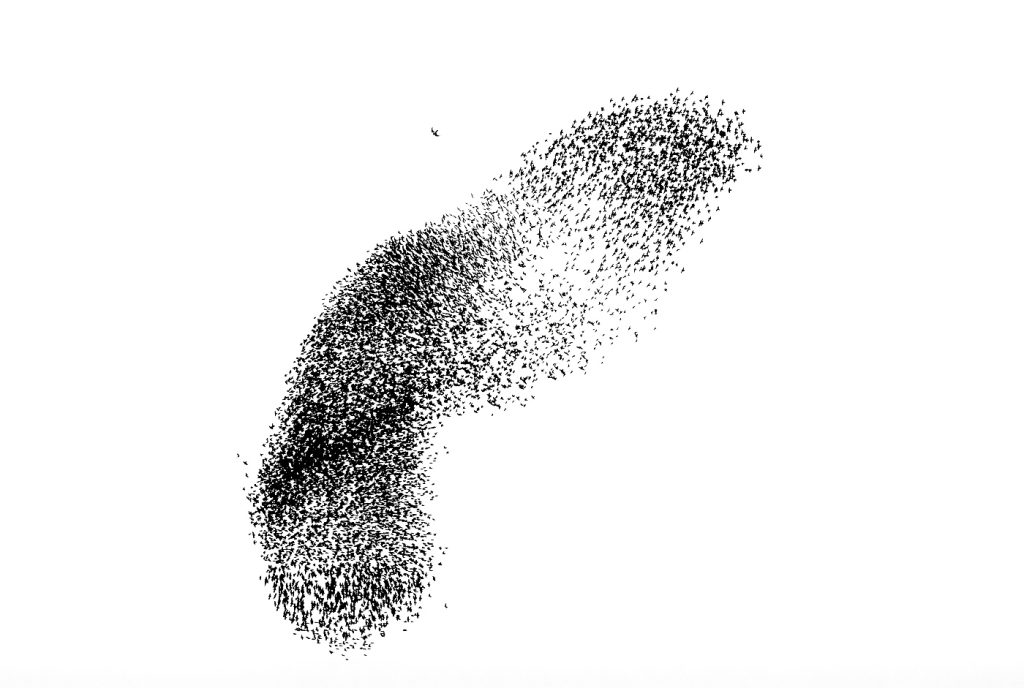
Murmurations represent both a challenge and an opportunity for a peregrine. A dense flock of starlings offers an abundance of potential prey, but capturing a single bird from the flock isn’t easy. The very movement that protects the starlings also forces the peregrine to make split-second decisions. It must read the flock, anticipate its movement, and strike at exactly the right moment.
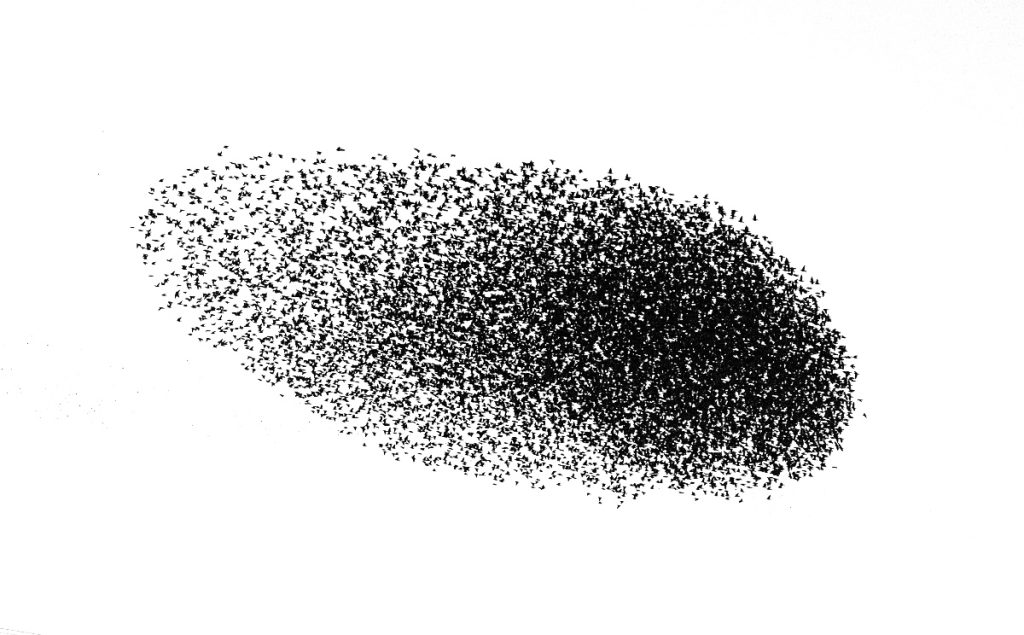
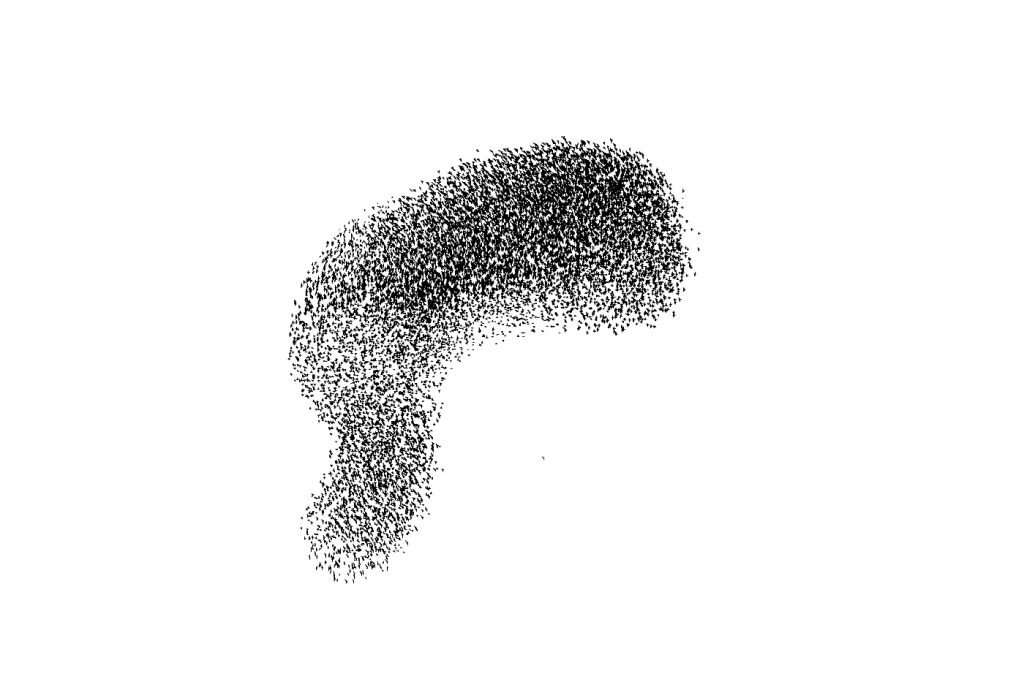
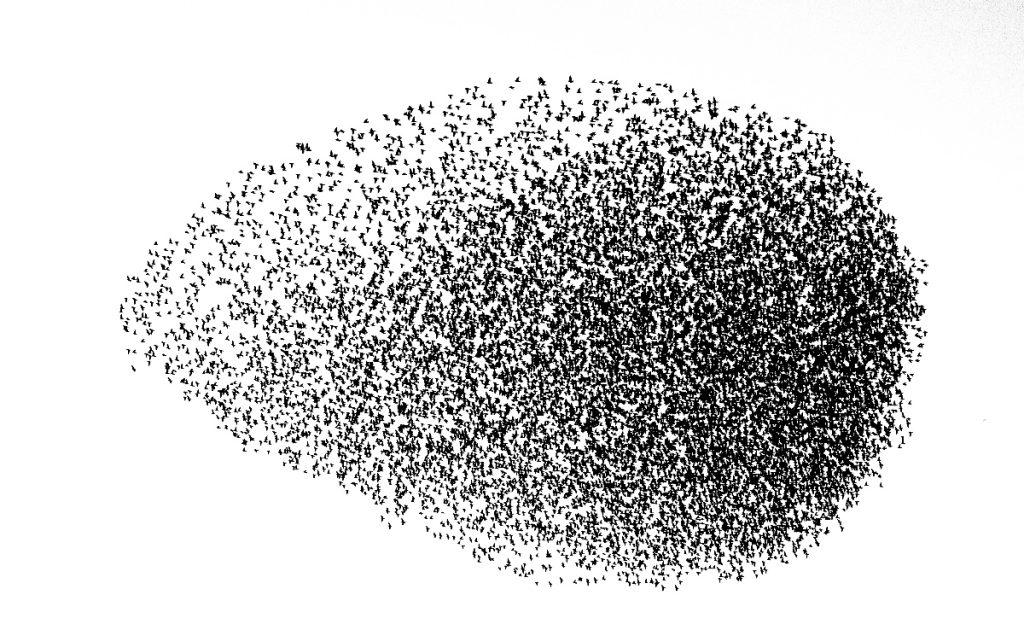
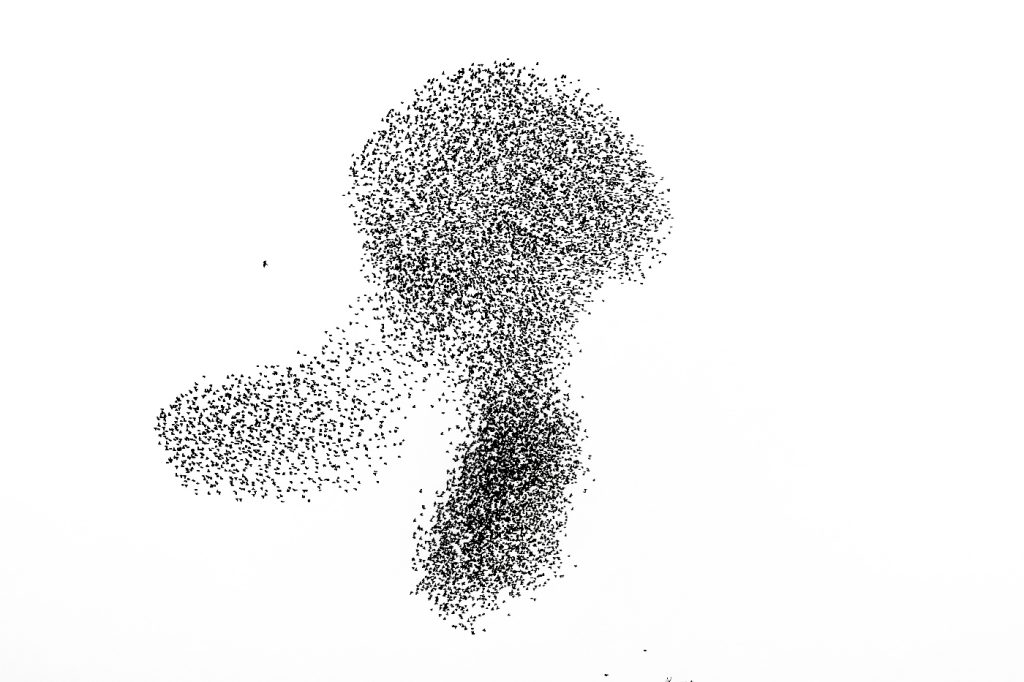
Interestingly, peregrines often don’t dive blindly into the center of a murmuration. Instead, they may skim the edges of the murmuration, force the flock to fragment or target individuals that become separated.
In a large flock, the odds of any single starling being caught by a predator are reduced. The swirling motion also creates confusion, making it difficult for a hunter to isolate a target. To us, it’s hypnotic. To a predator, it’s chaos.
Most attacks fail. The murmuration works—often brilliantly. But occasionally, a single bird hesitates, drifts too far, or simply gets unlucky. That’s all the peregrine needs.
From the ground, it’s easy to romanticize murmurations as peaceful, even magical. But understanding the role of the peregrine adds a layer of tension to the scene. What looks like art is also a life-or-death performance. And perhaps that’s what makes it so compelling.
This next shot was also taken by my son. This winter we chased starling murmurations from the fields of North Norfolk …
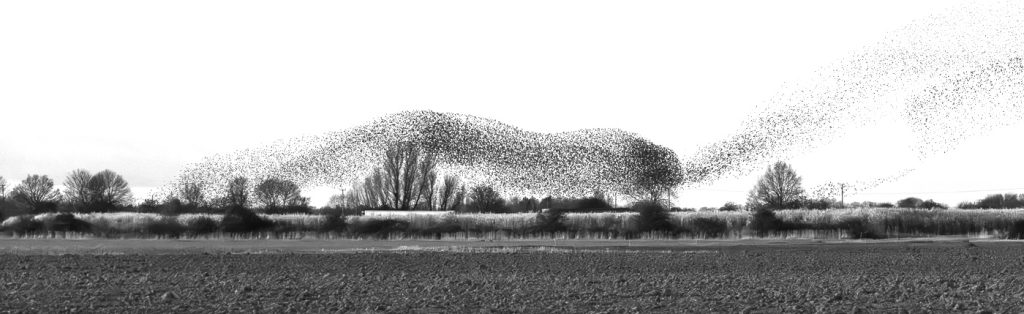
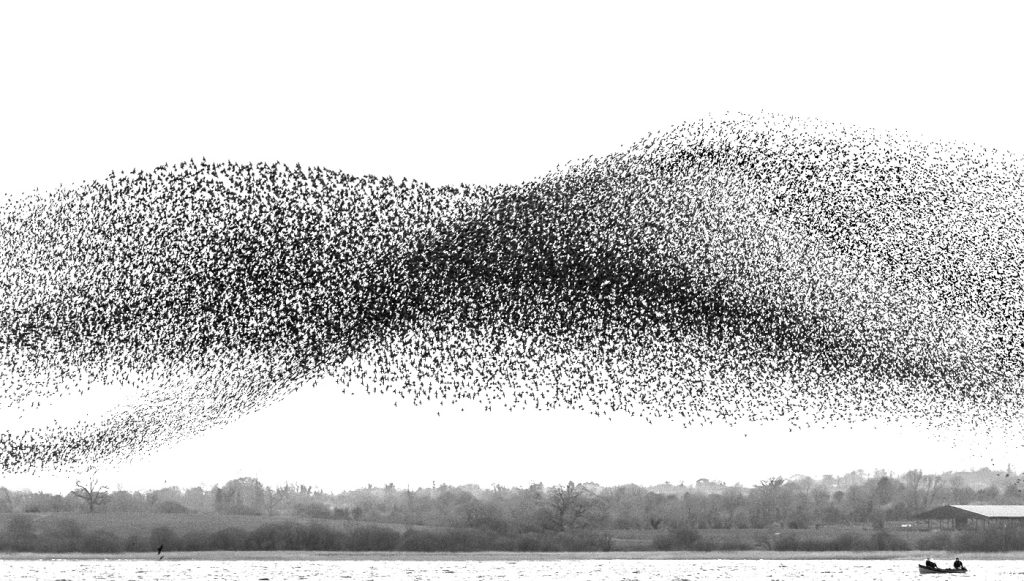
… to the shores of Loch Ennell in Ireland. From late autumn through to early spring up to 500,000 starlings gather over the lake, just before dusk, creating vast shifting shapes that pulse across the sky.
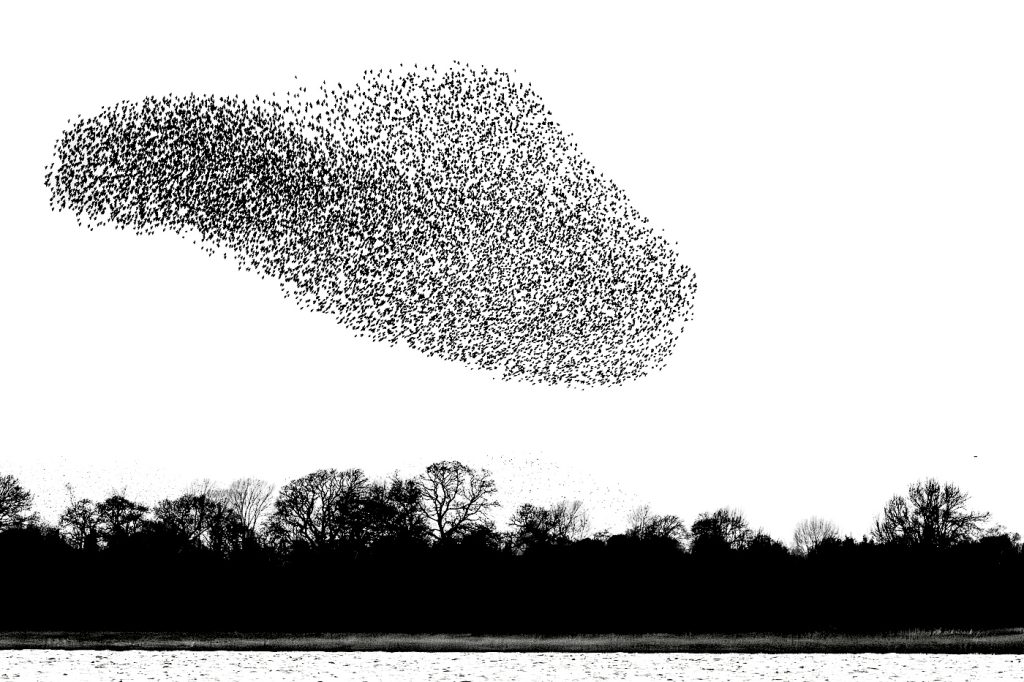
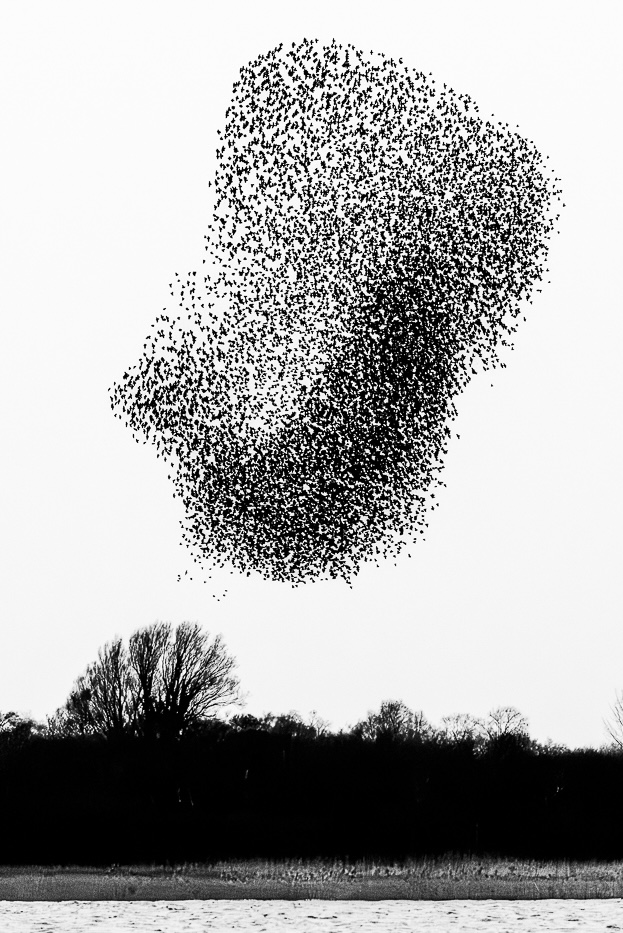
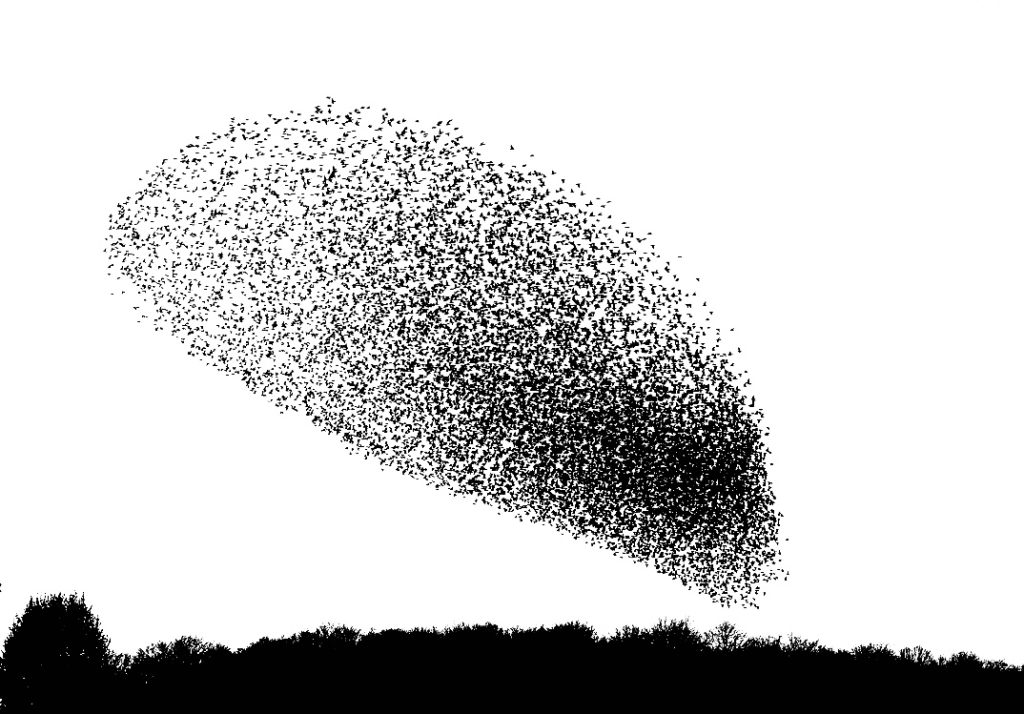
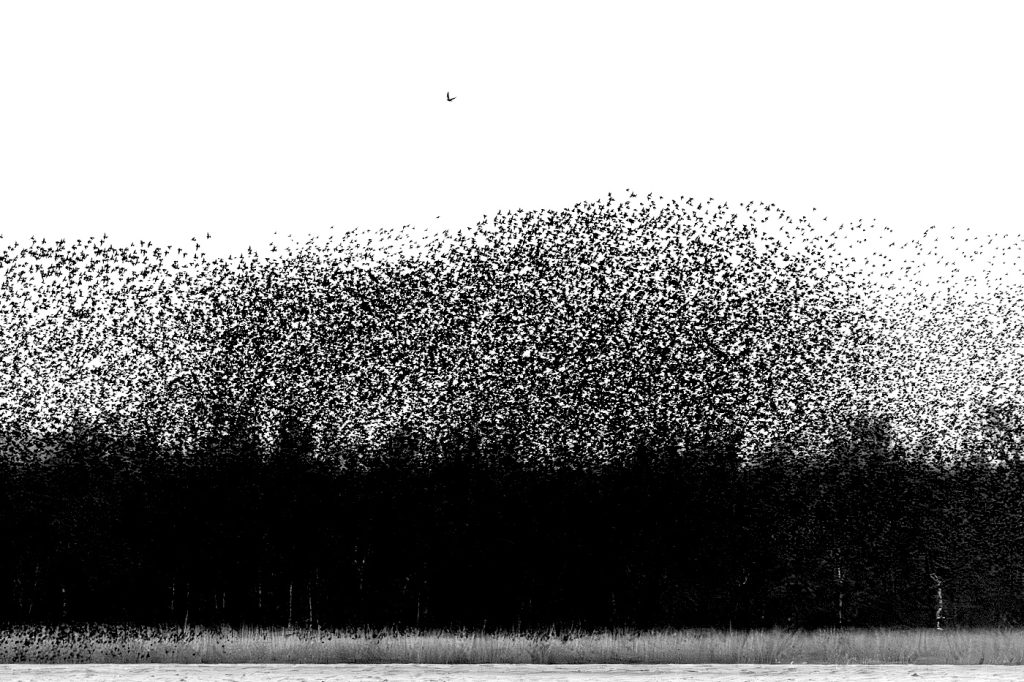
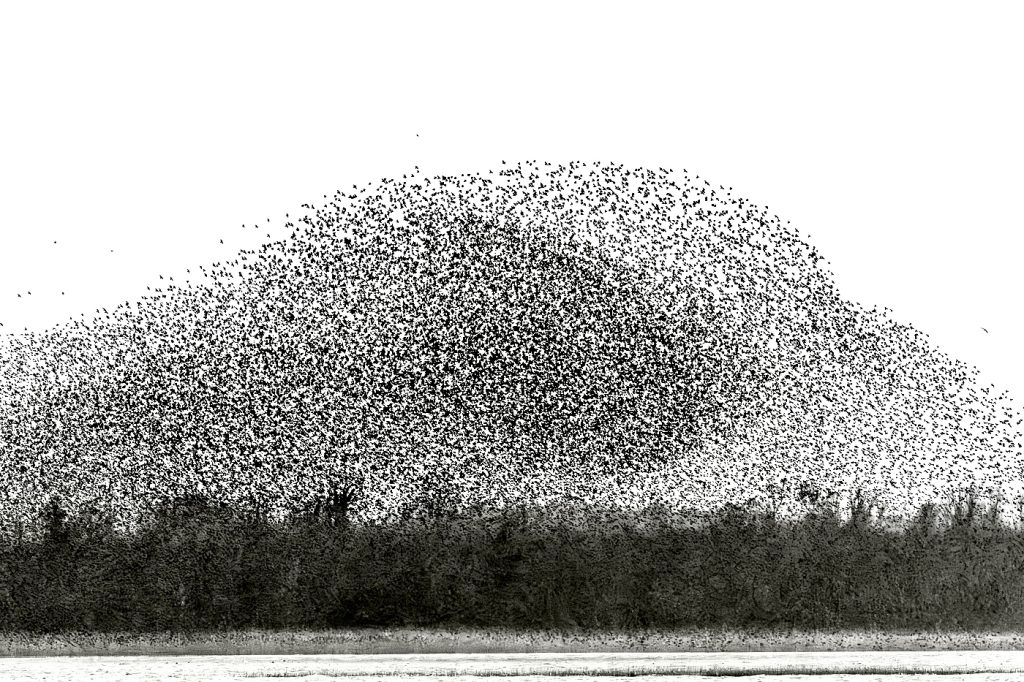
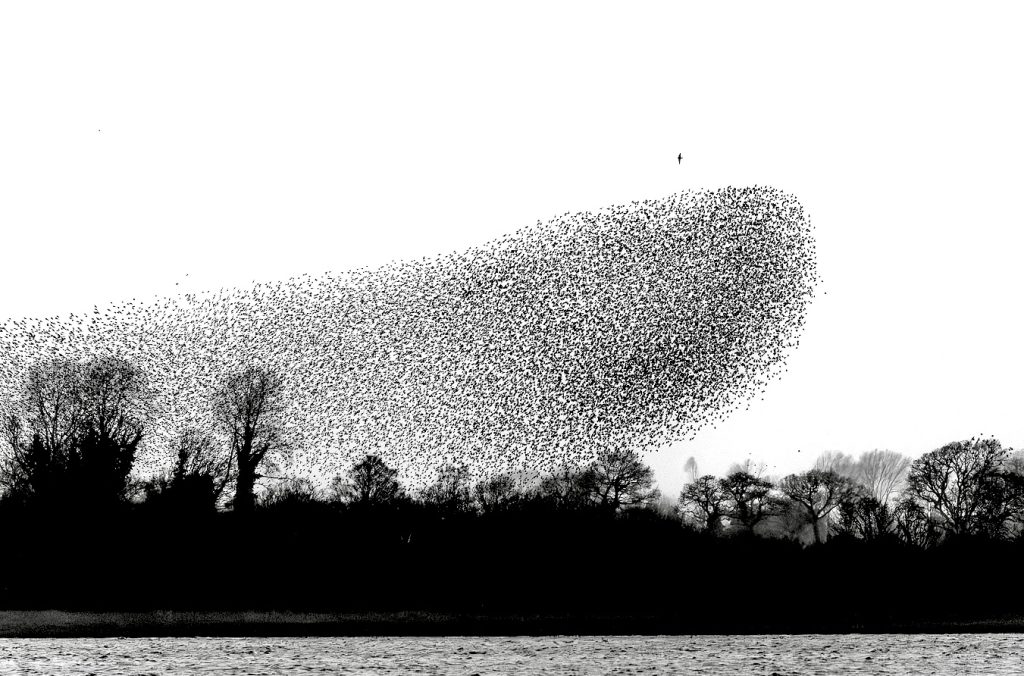
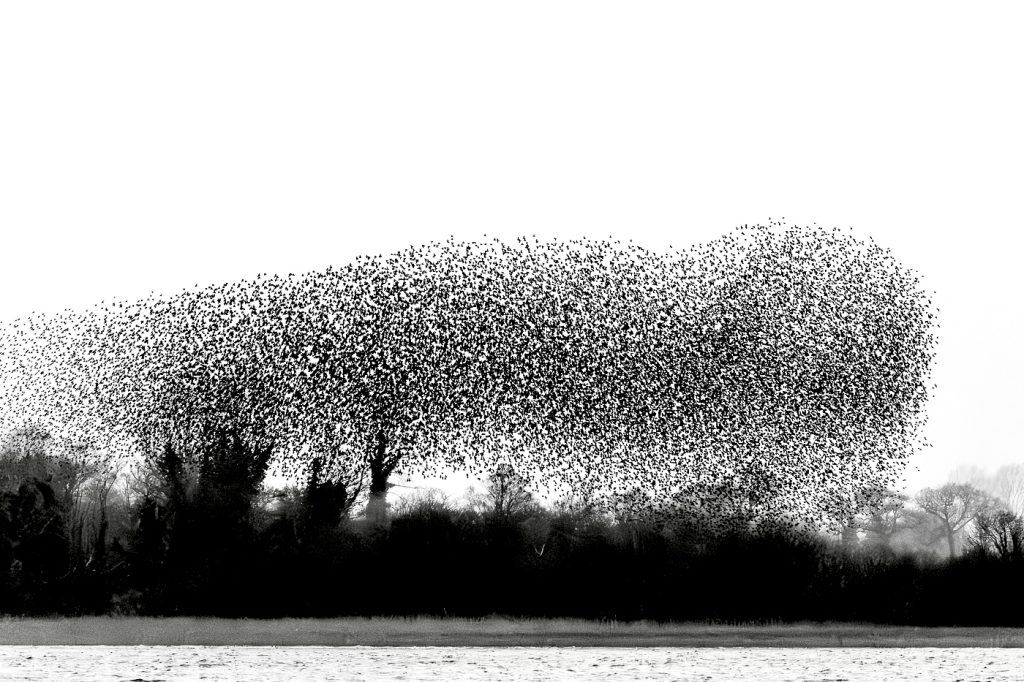
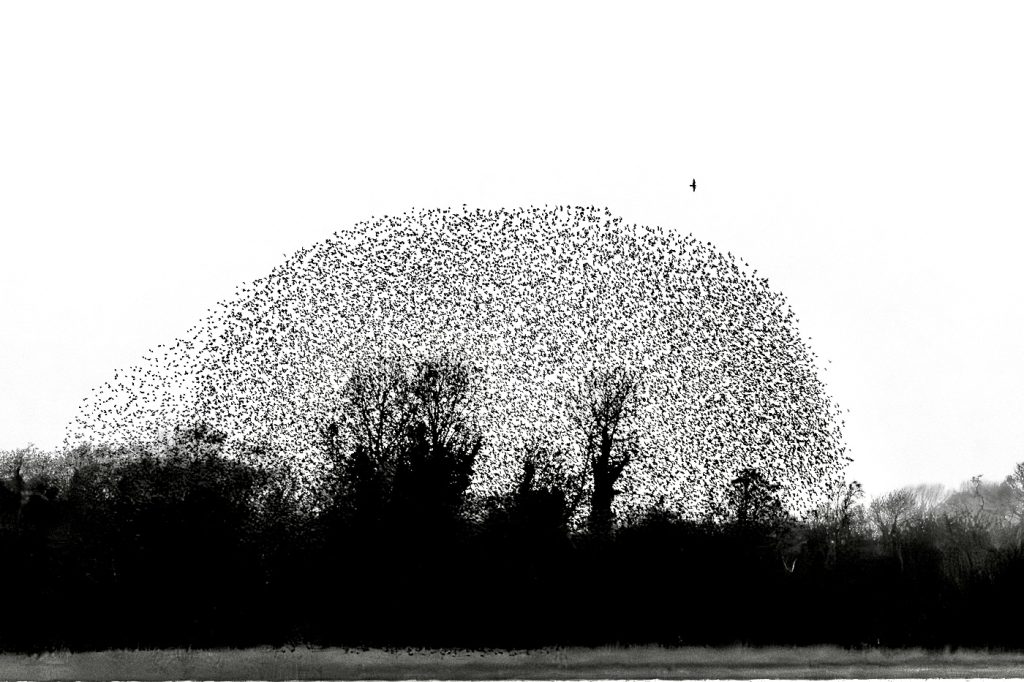
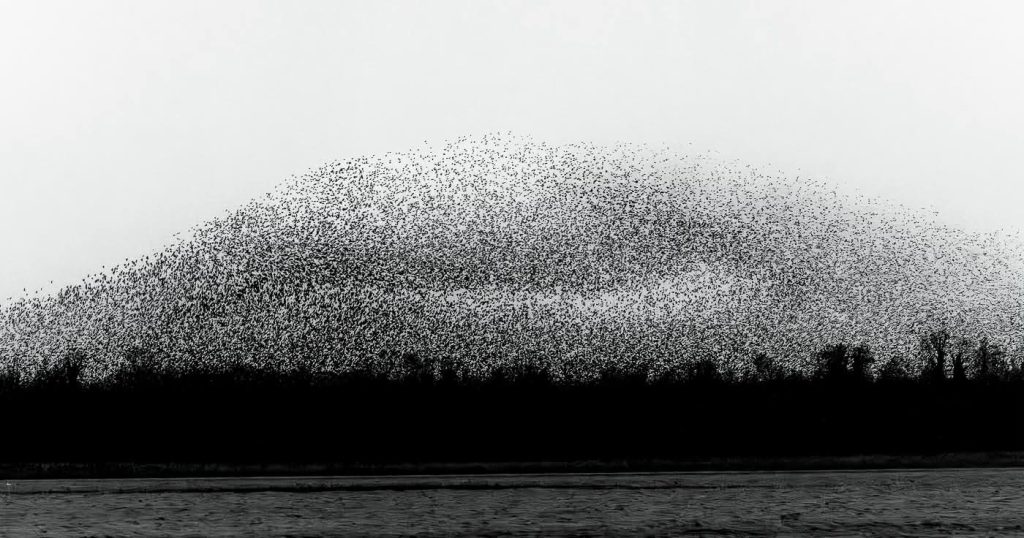
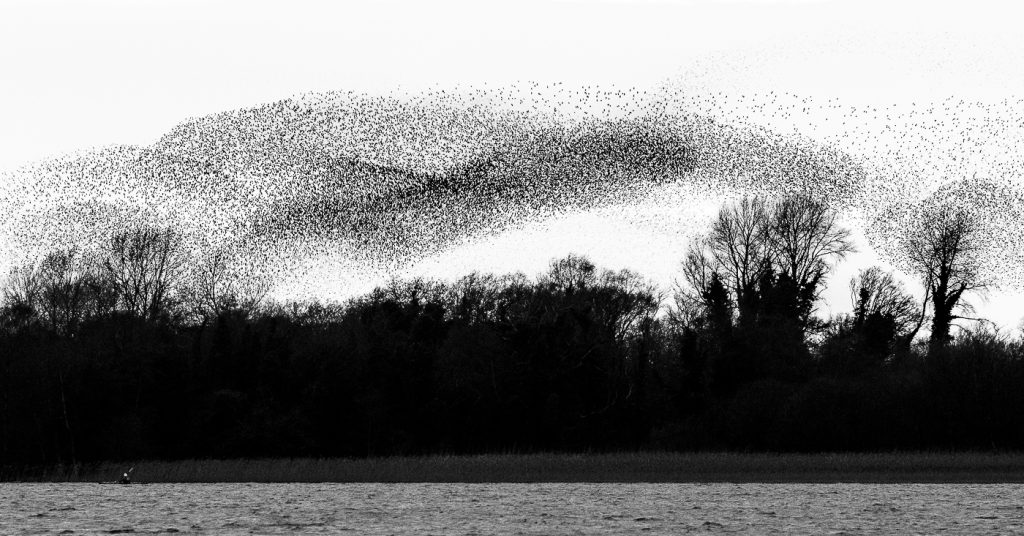
In Danish, starling murmurations are known as ‘sort sor’ which translates as ‘black sun’, a poetic way to describe the phenomenum. Sometimes the sky is so full of starlings at dusk as they go to roost they shroud the sky in darkens.
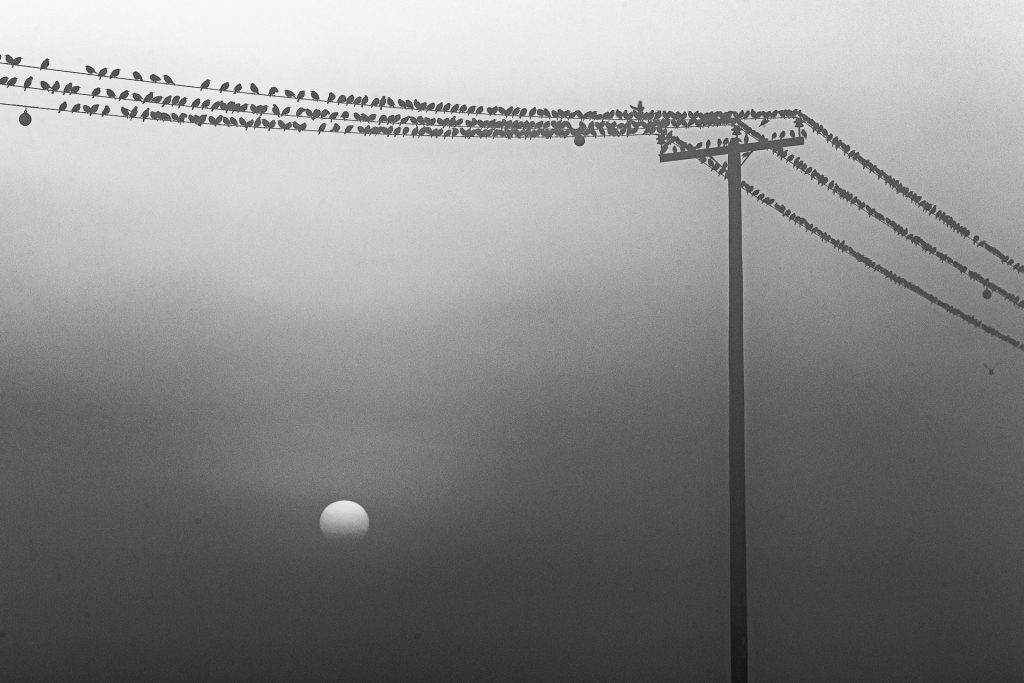
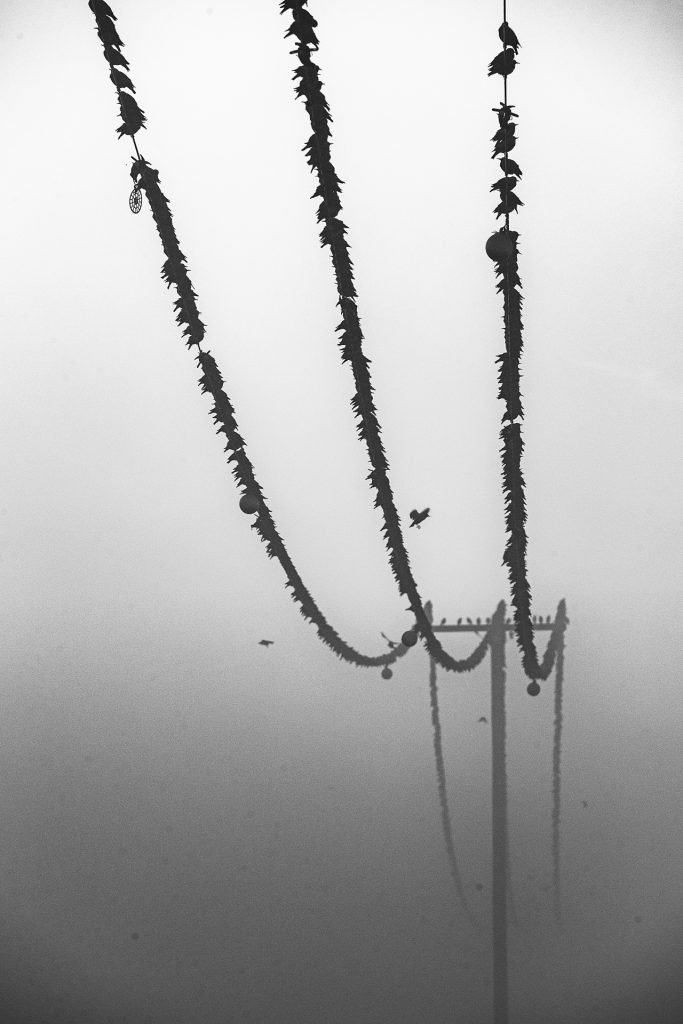
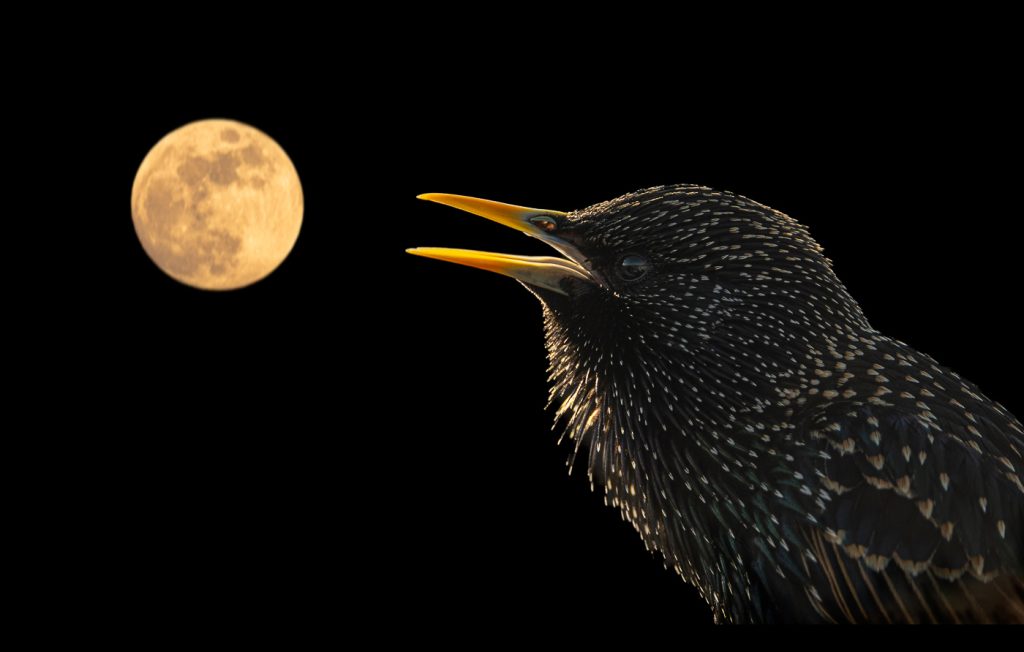
This last shot of a starling resplendent in its star-speckled plumage singing against February’s Snow Moon is a composite image, two shots taken on the same afternoon in Mudeford, Dorset where I grew up.
The murumation season is now approaching its close, as millions of starlings start to make their journey back to Scandanavia and Arctic Russia. When they return again to these shores in the late autumn we will be there to welcome them back.
For me, it’s not just about getting the shot. No photograph, no matter how perfect, can fully capture what it feels like to stand beneath a murmuration. It’s all about sharing one of nature’s most spectacular events with my son, which is much more important to me. To look up together and watch nature’s artistry, to hear the rush of wings. It’s both life affirming and offers solace for the soul. Whilst I was in Ireland, I was interviewed by RTE for a news items that was broadcast on the evening news about what draws people to starling mumurations. You can read the article that accompanies the news item on RTE’s website here.
A big thank you to Nathalie who helped me with the wild peregrine opportunity and, to Rob for all his help in Ireland. I really appreciated it.
This blog is dedicated to the memory of my great friend and mentor Phil Hurst who we sadly lost in February.