Wild Goose Chase: the Autumn Migration of the Pink-footed Geese
Each autumn, skeins of Pink-footed geese (Anser brachyrhynchus), often called “pinkfeet,” undertake a dramatic annual migration, flying a thousand miles from their Arctic breeding grounds to over winter in the British Isles. Approximately 90% of the world’s population — over 400,000 birds — migrates to these shores to avoid harsh Arctic winters.
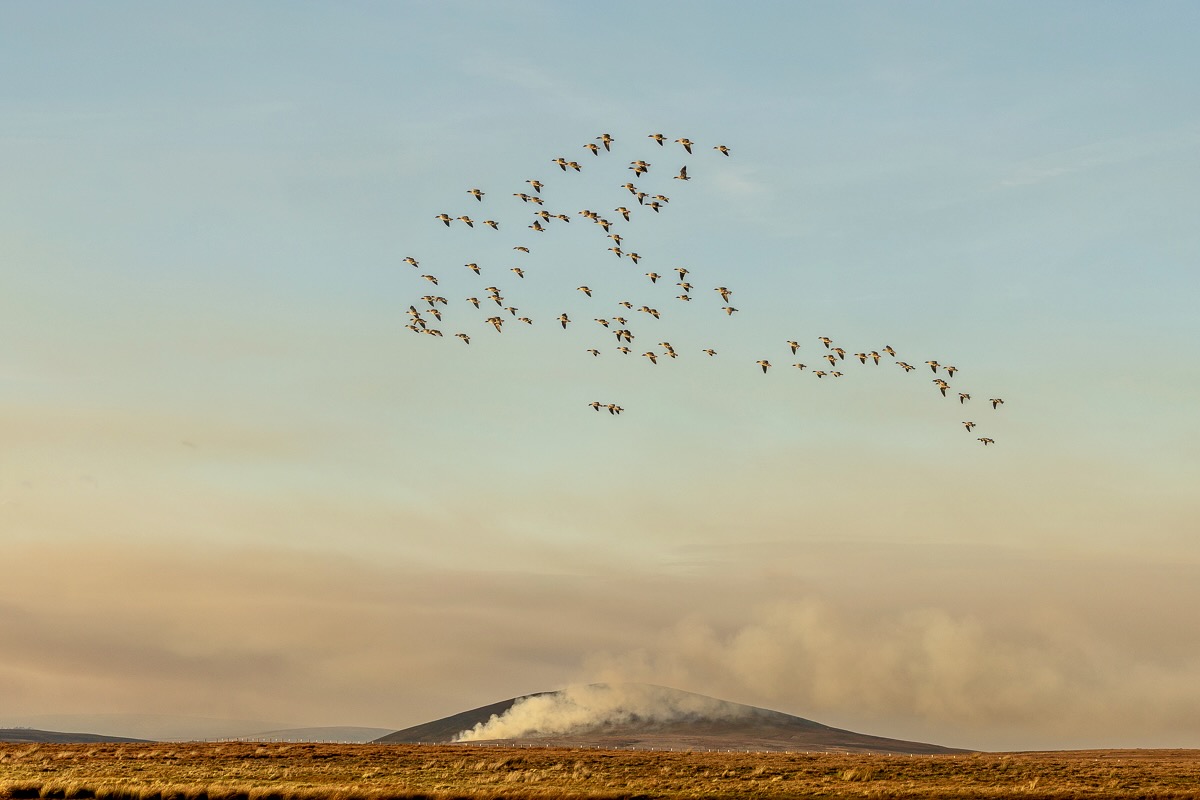
The geese arrive in Scotland from Iceland and Greenland starting in mid-September. Major staging posts include the Montrose Basin in Angus and Loch Levenin Perth and Kinross. Numbers usually peak in Scotland around mid-October, with tens of thousands of birds roosting on lochens and estuaries.
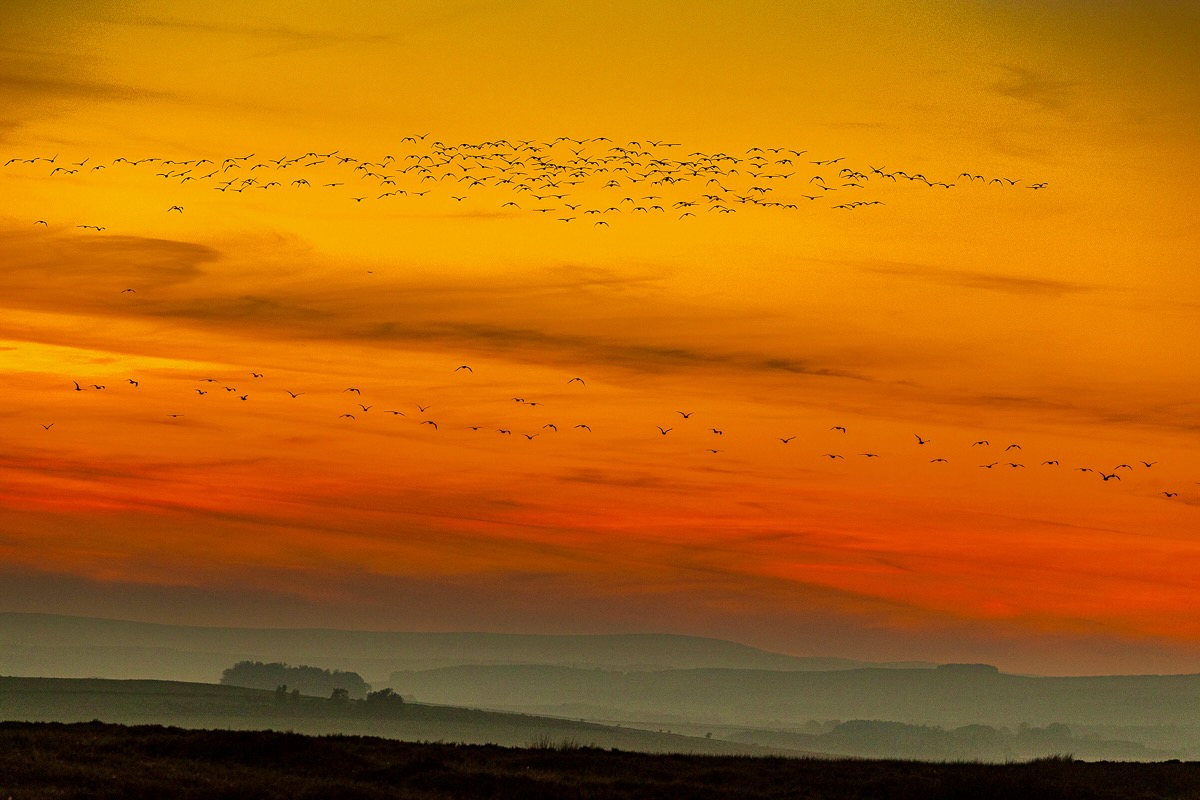
At one regular Scottish staging post, the nightly return begins almost imperceptibly: distant threads of birds stitching the pale sky, then widening into skeins that pour in from the surrounding fields. Below them lies a small, remote lochan, its dark, still waters offering shelter from predators such as foxes, human disturbance and the long uncertainties of the autumn night.
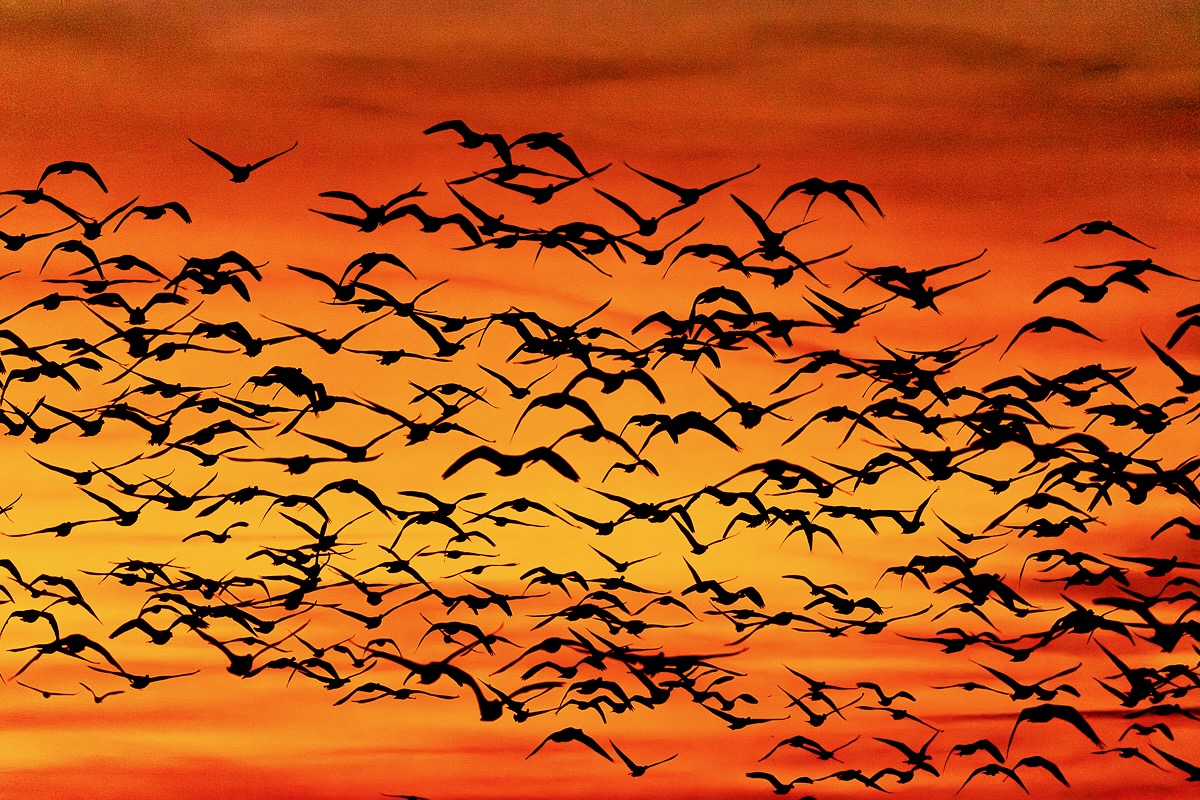
Nothing quite prepares the eye for the arrival of pinkfeet in such numbers. Skein follows skein, tens of thousands strong, their calls carrying across the evening air as the flock gathers over the lochan. Then comes the sudden descent: birds spilling from the sky in wavering, zig-zag lines, losing height with astonishing speed in the manoeuvre known as ‘whiffling’.
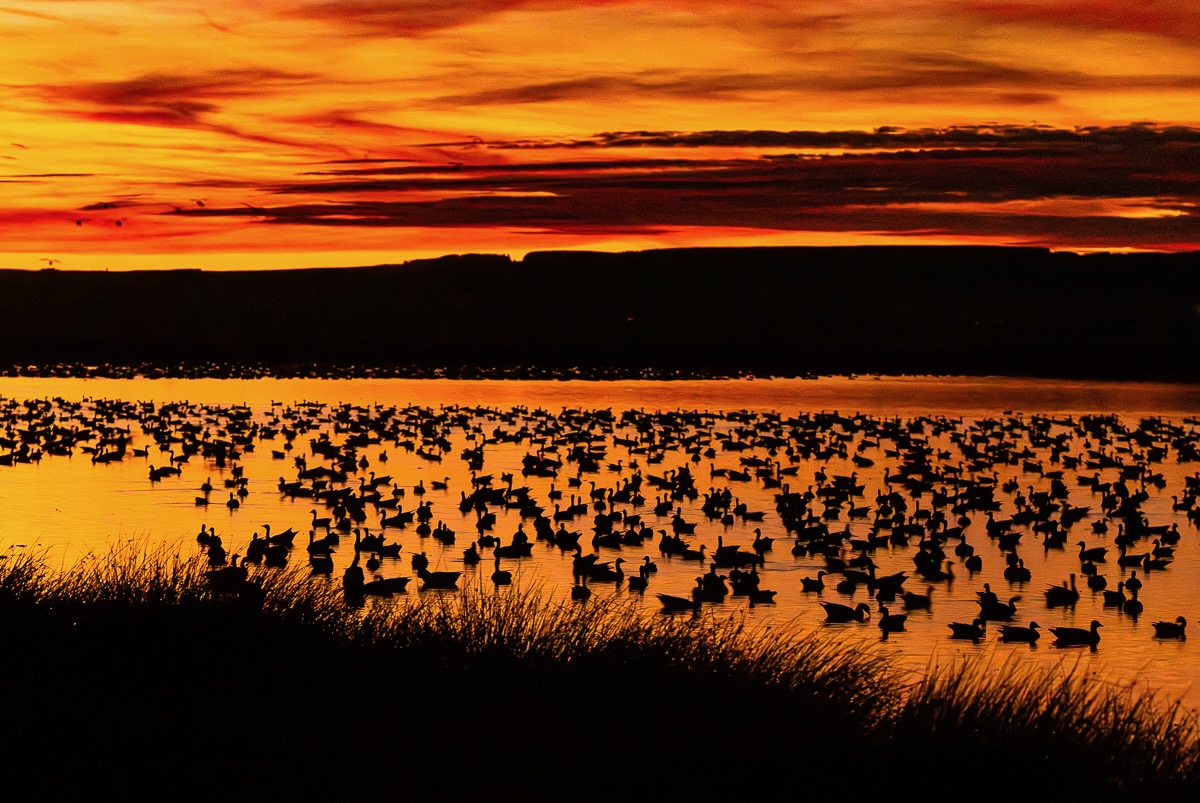
After dark, the lochan holds their voices. The familiar “wink-wink” of pink-footed geese carries across the water, softer and higher than the deeper calls of greylags, a living murmur that rises and falls in the blackness and lingers long after the sound itself has faded.
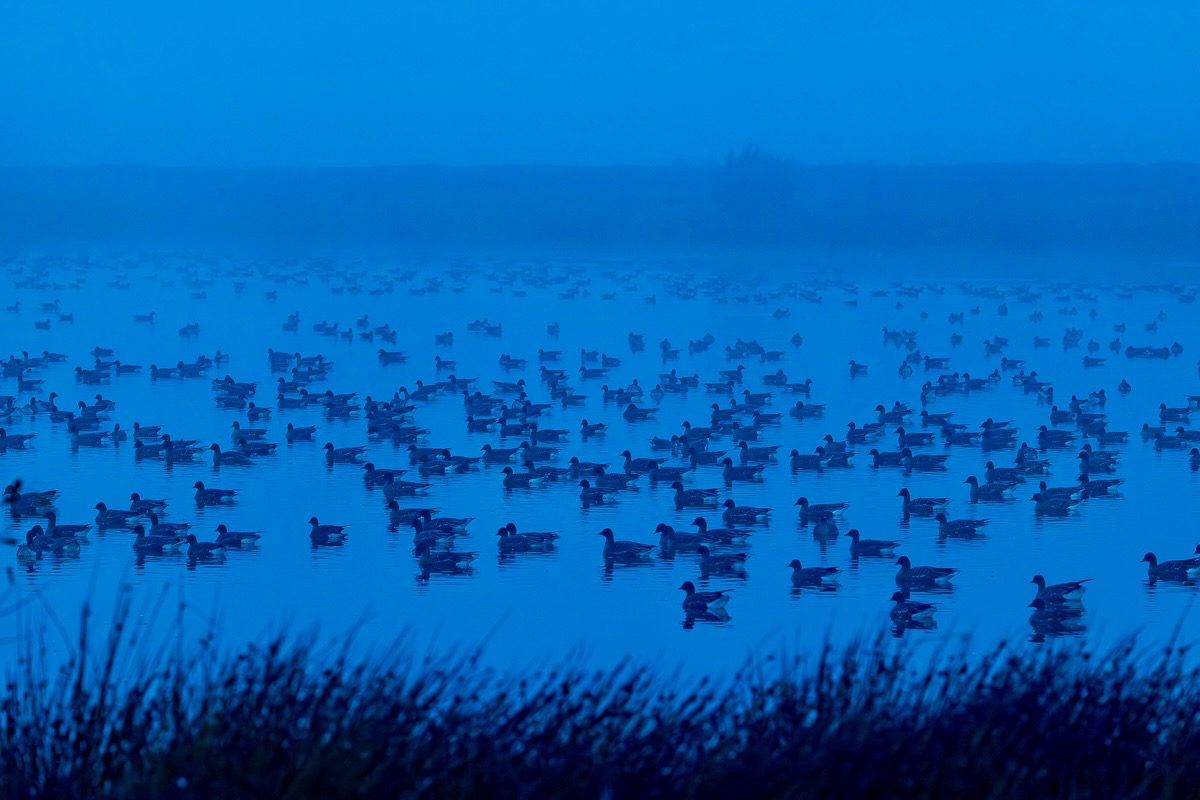
At first light, fog can erase the birds from view while leaving their voices suspended in the cold air. As the sun strengthens, the mist begins to thin by degrees, and the hidden flock is revealed: thousands of geese drifting across the calm, tranquil water of the lochan.
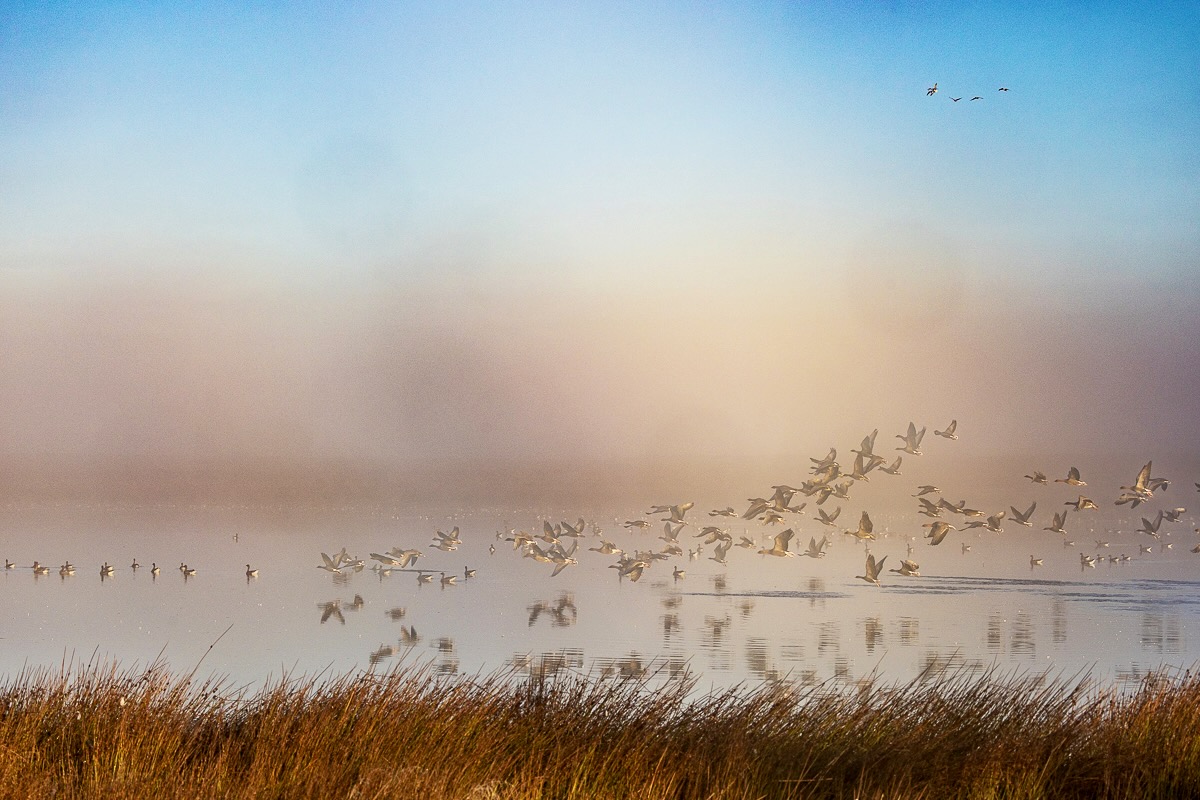
As the sun starts to rise, restlessness passes through the roost. Family parties lift from the surface and cross the lochan, wings beating into dawn. In rare conditions, a pale fogbow — a white rainbow born of sunlight and tiny droplets — may form behind them, its ghostly arc turning the morning into something almost otherworldly. In calm air, the rising geese carry their own reflections with them until water, mist and sky seem briefly inseparable.
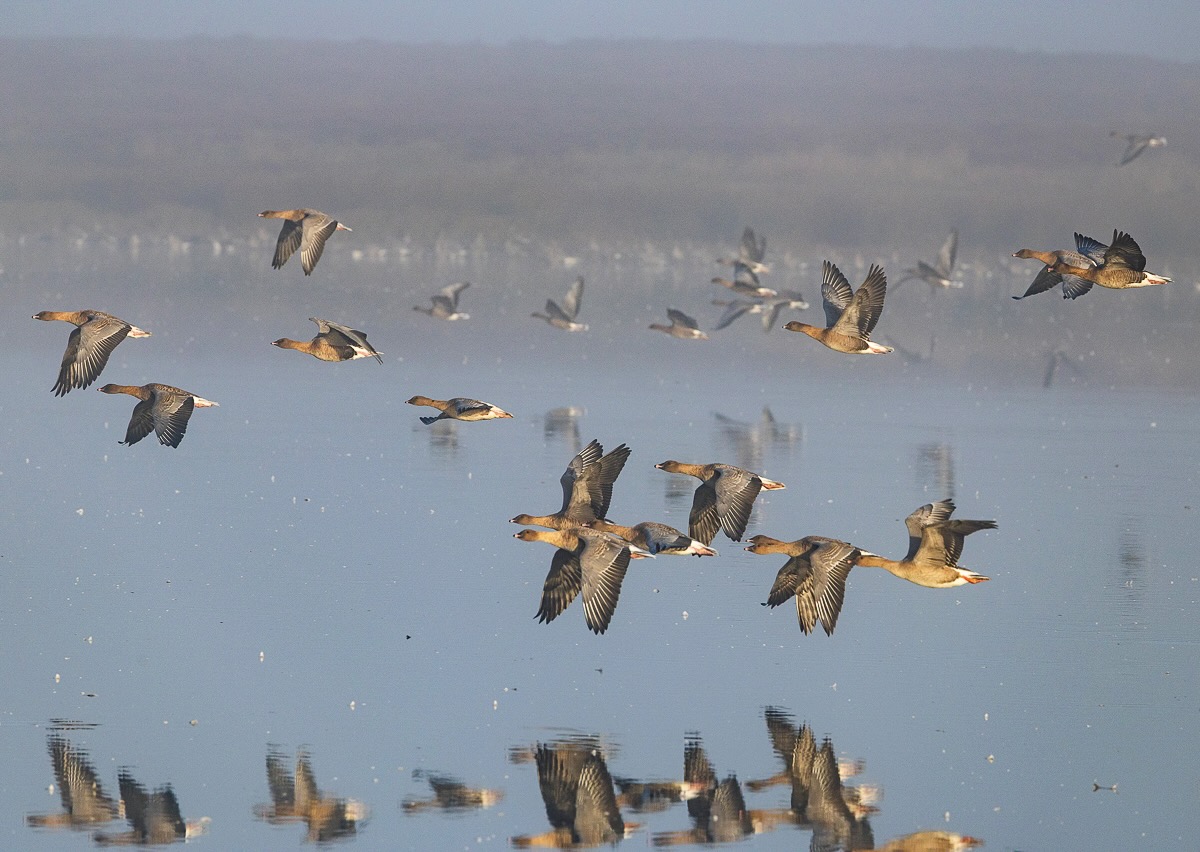
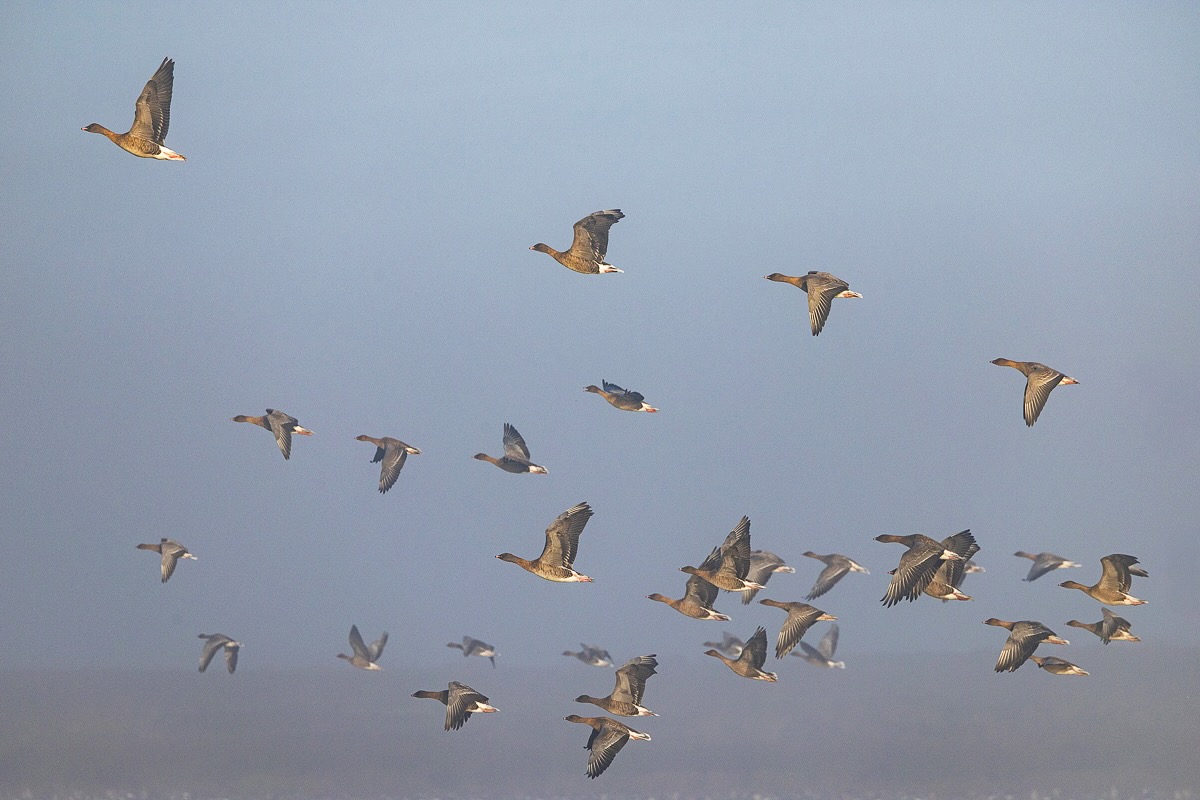
As food supplies such as spilled grain start to diminish and temperatures drop in Scotland during November and December, large flocks move further south, continuing their migration towards Lincolnshire and Norfolk – the second stage of their broader autumn journey.
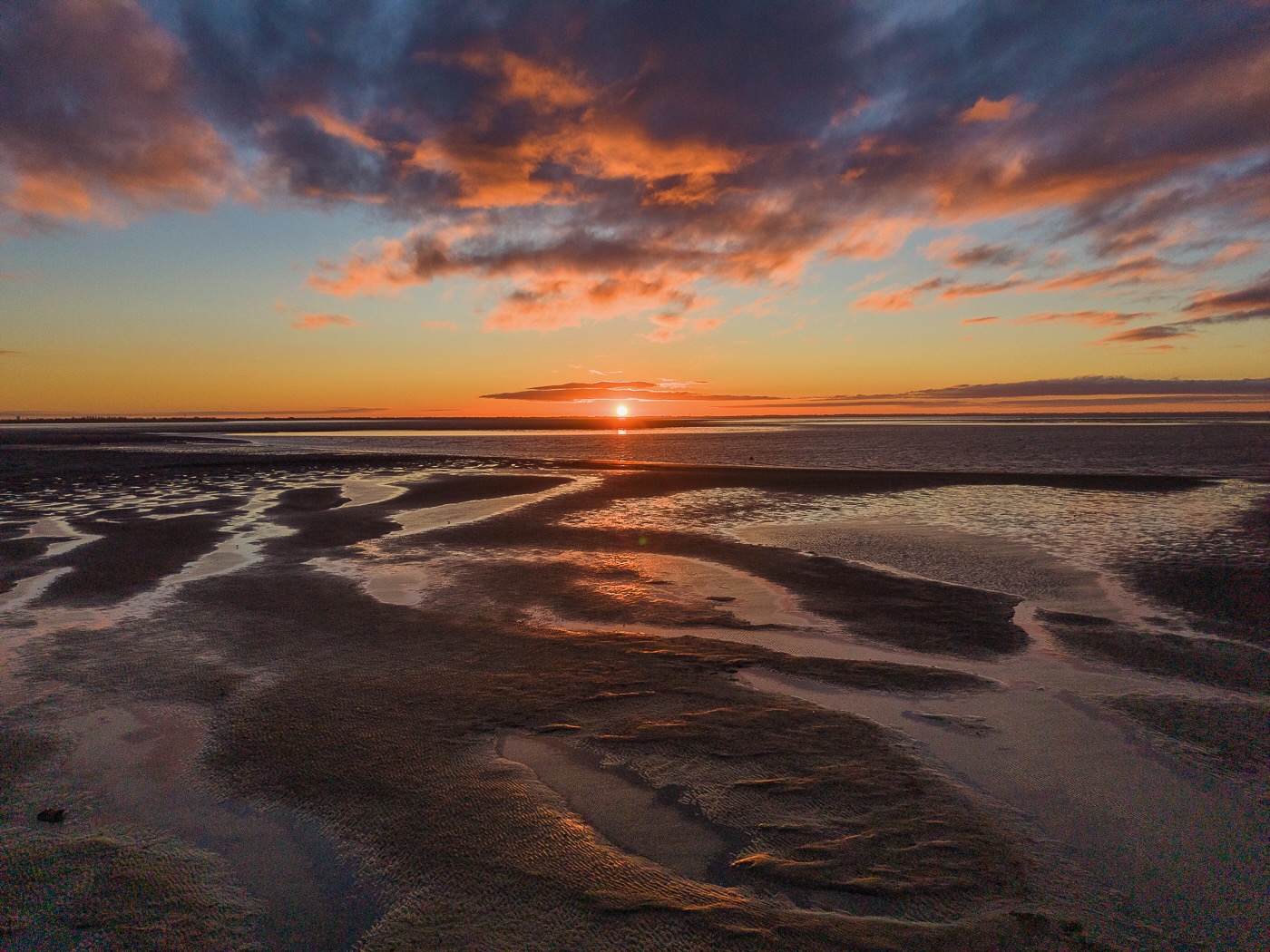
Significant numbers reach the North Norfolk coast and The Wash between late October and early November. They remain there through the winter until roughly mid-January or February before moving again and beginning their return North in April.
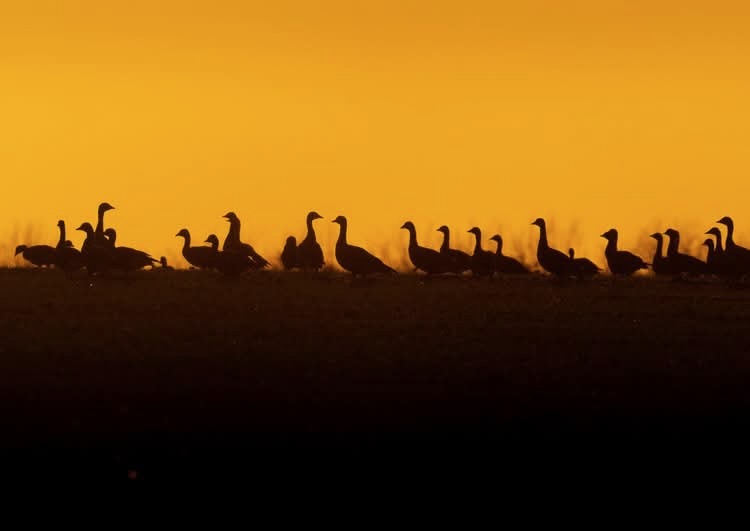
Major roosting areas include the mudflats at RSPB Snettisham. Each morning, shortly before dawn, thousands of geese leave the coastal roosts together, their voices rolling over the saltmarsh as they head inland to feed. At dusk, the movement is reversed, and the sky fills again with darkening skeins, wingbeats and wild sound.
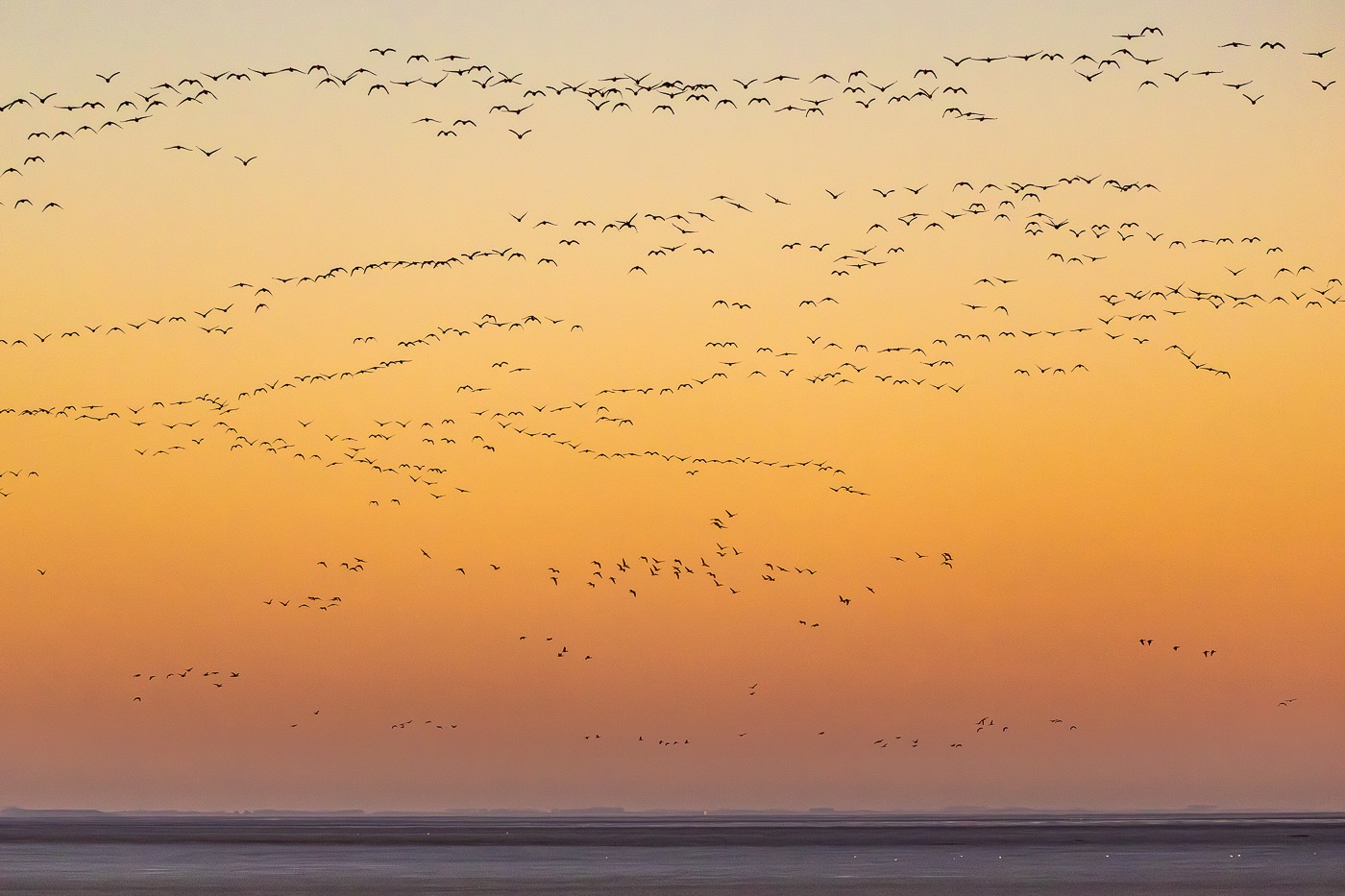
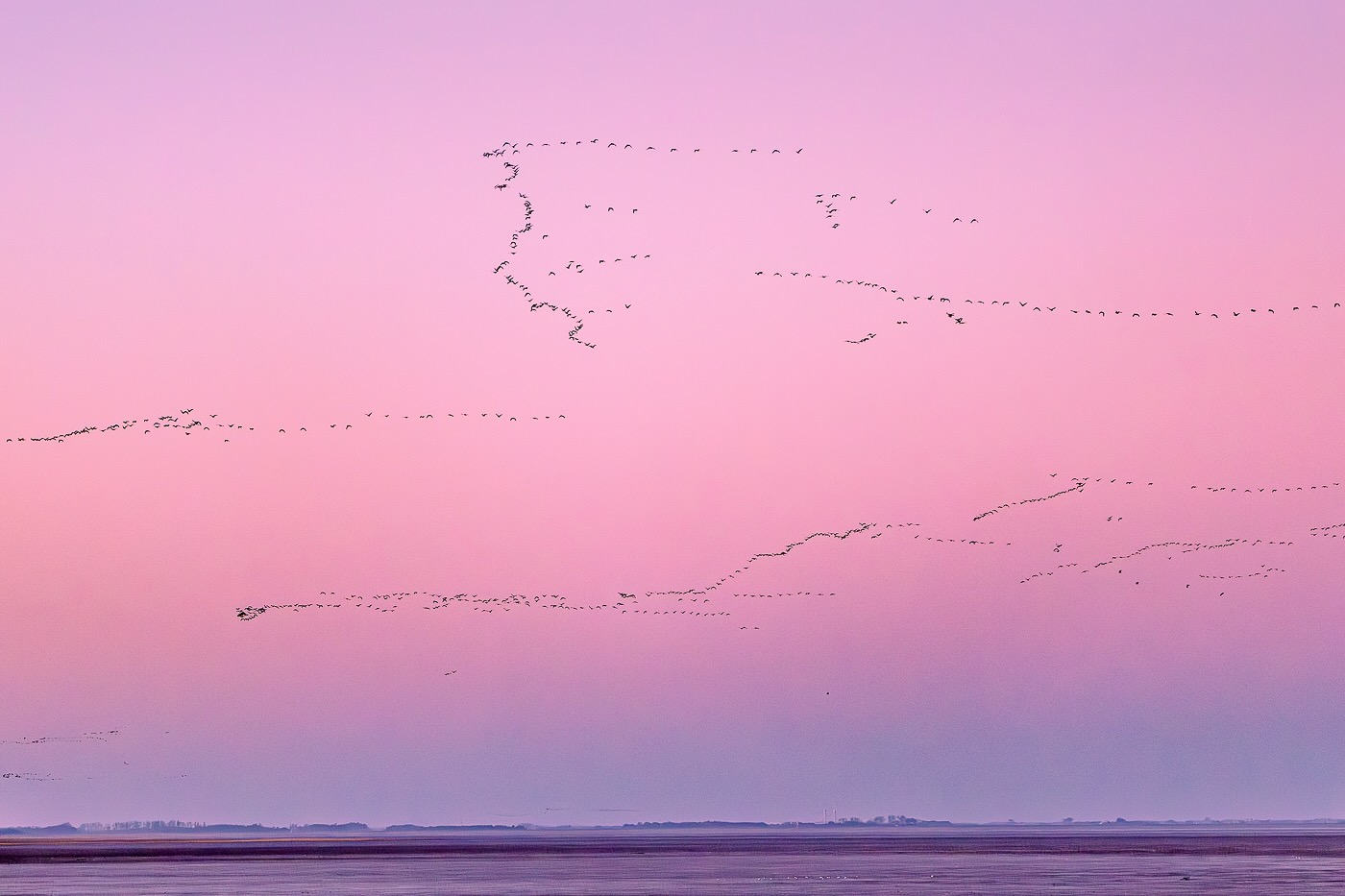
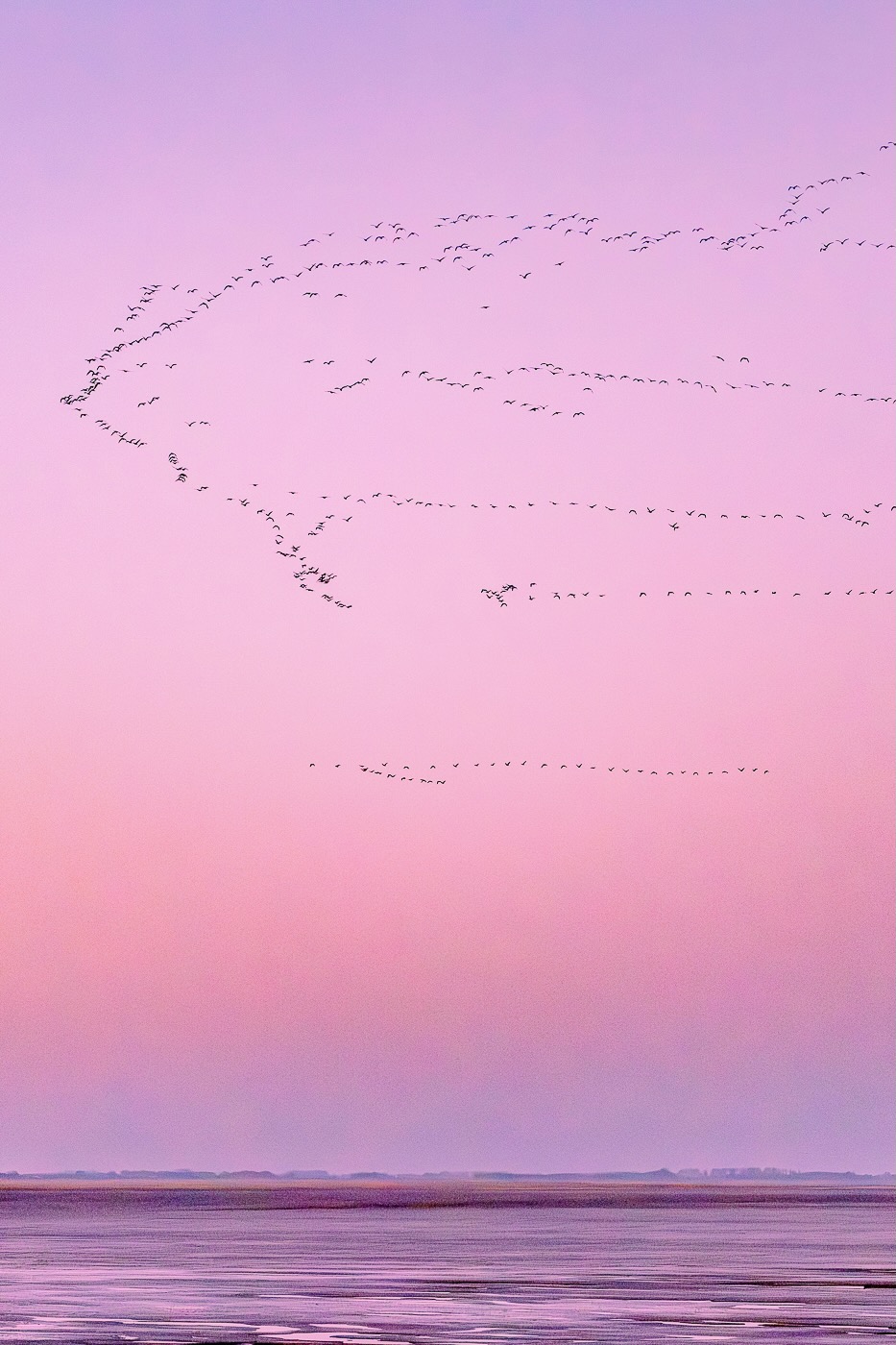
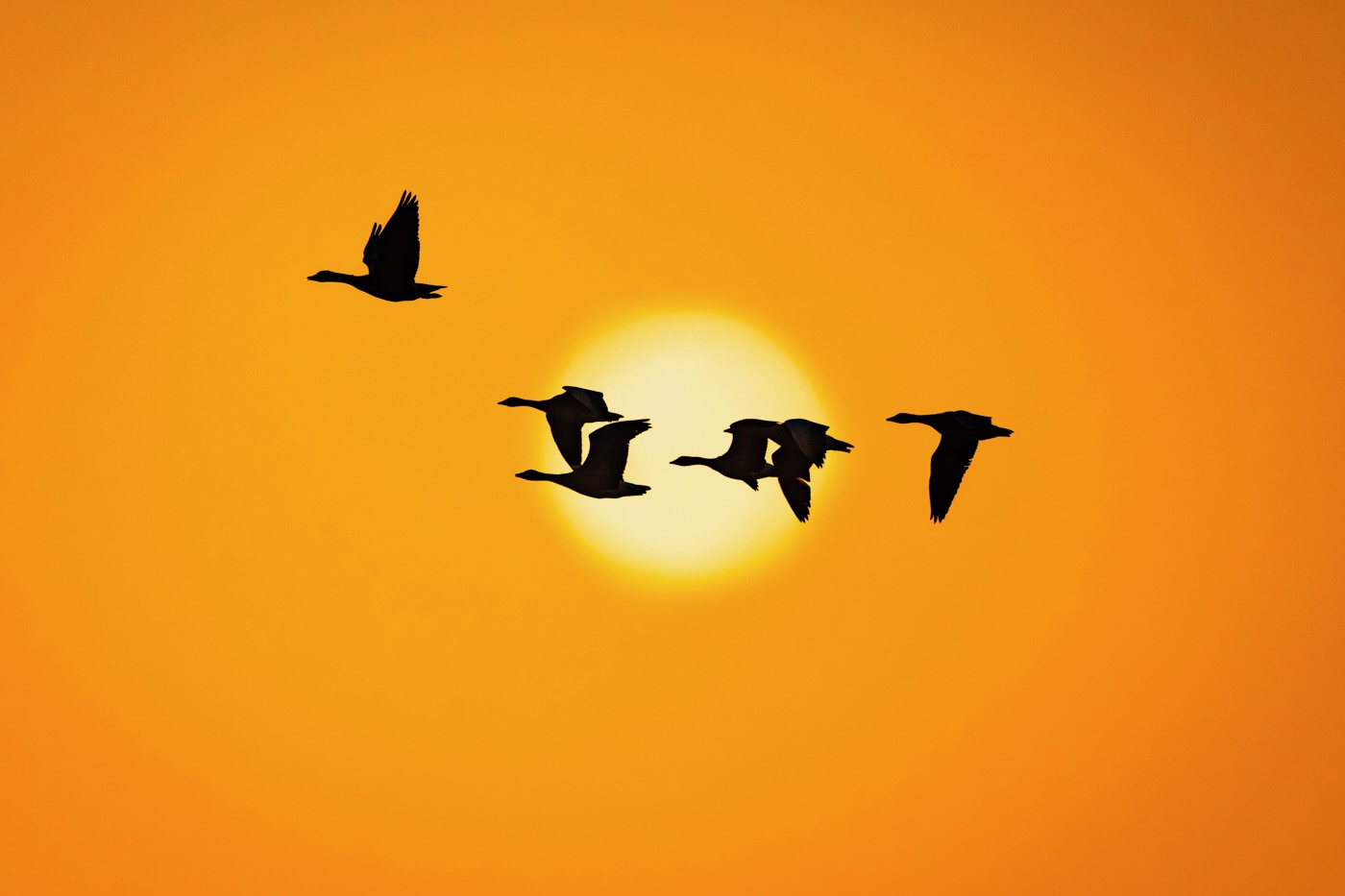
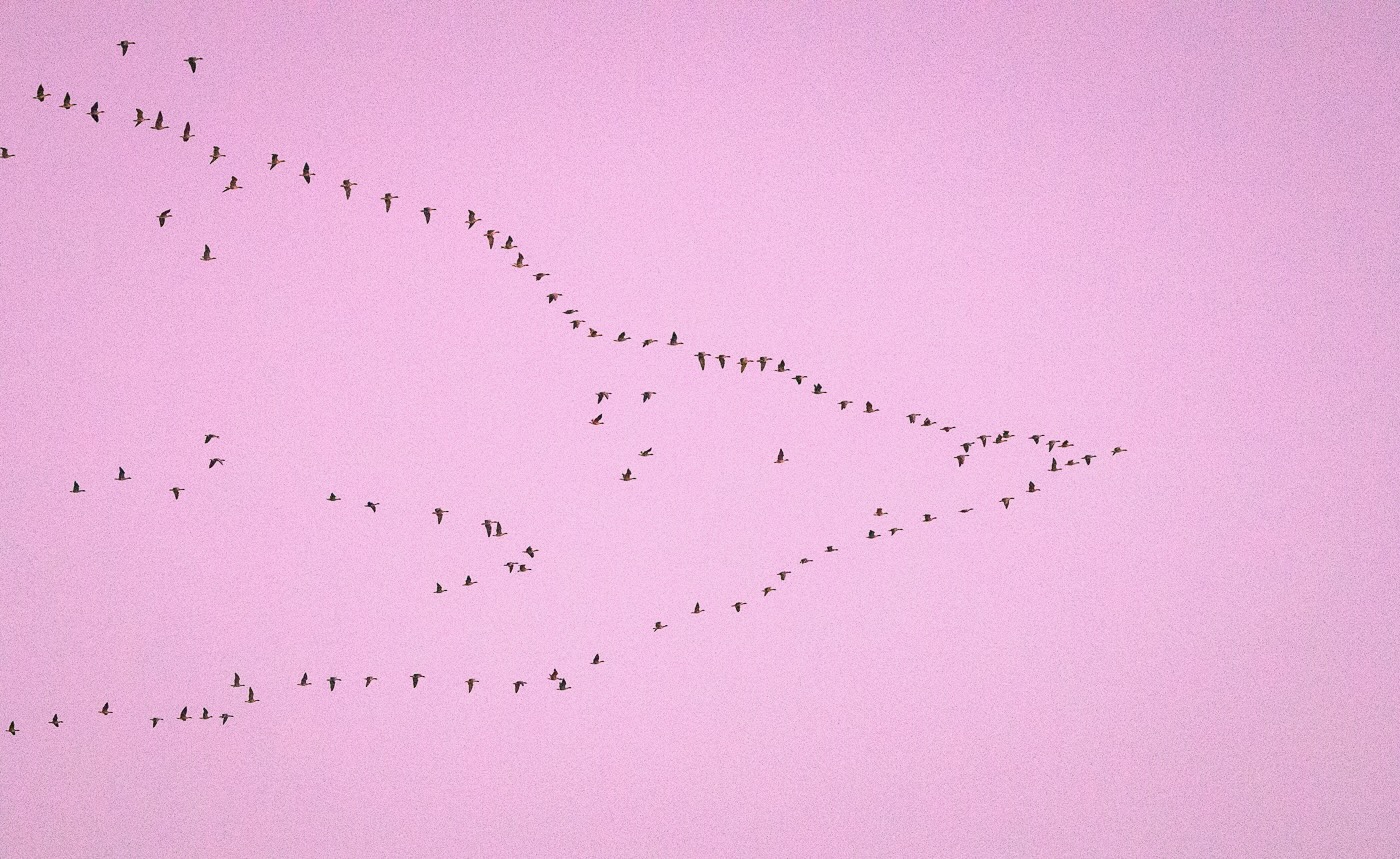
Geese travel in characteristic “V” formations, known as skeins to reduce wind resistance for birds following the leader.
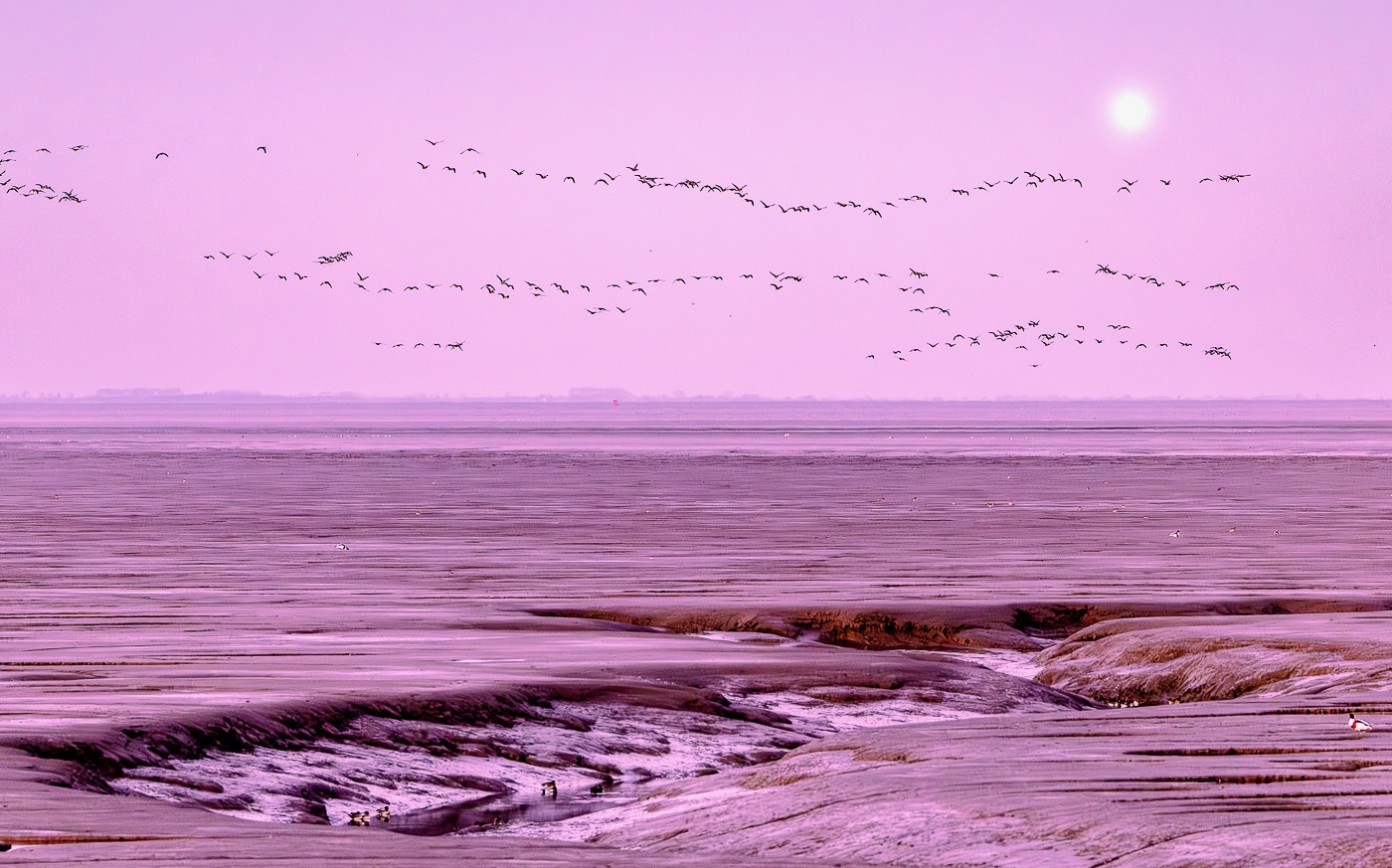
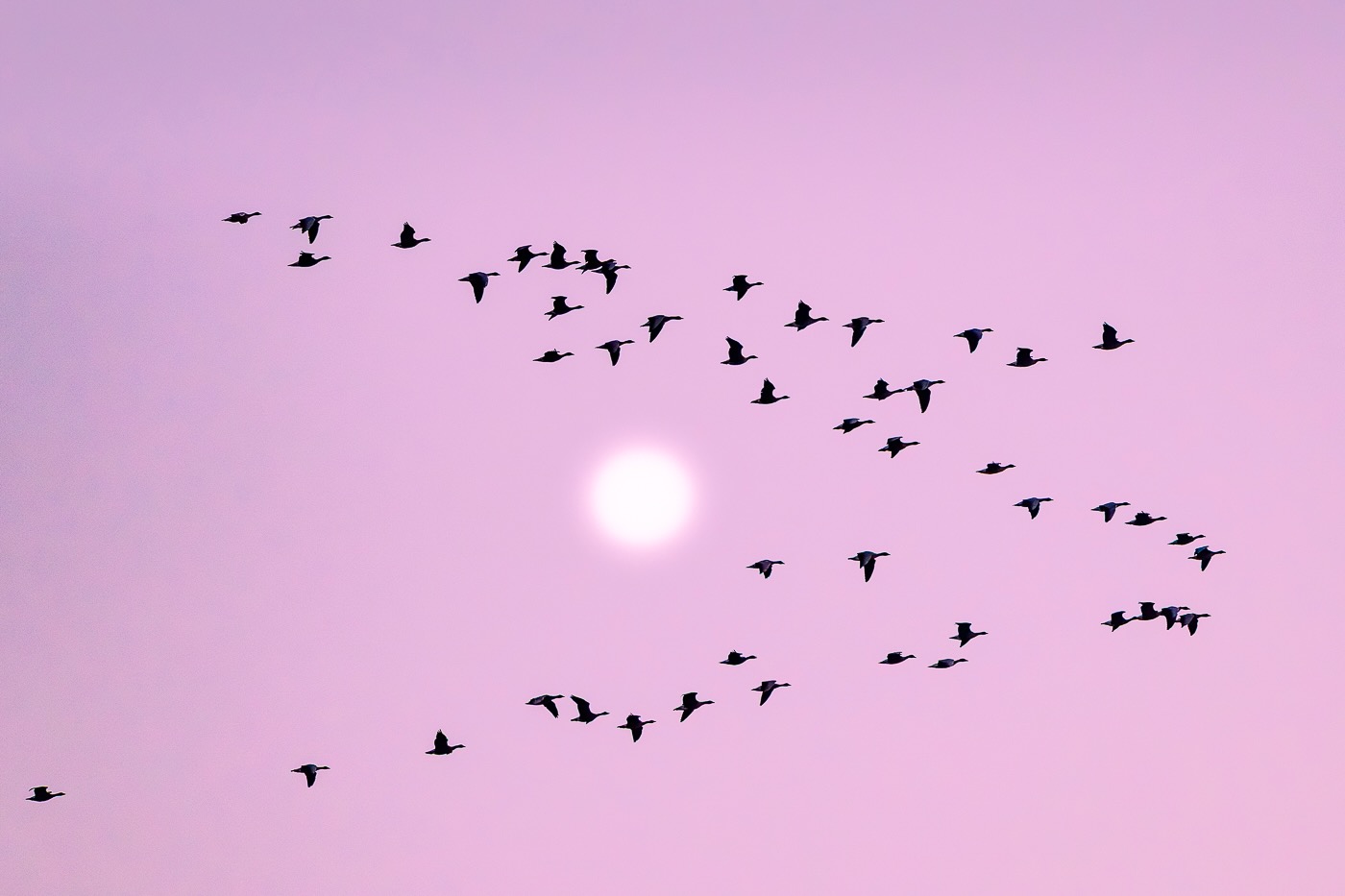
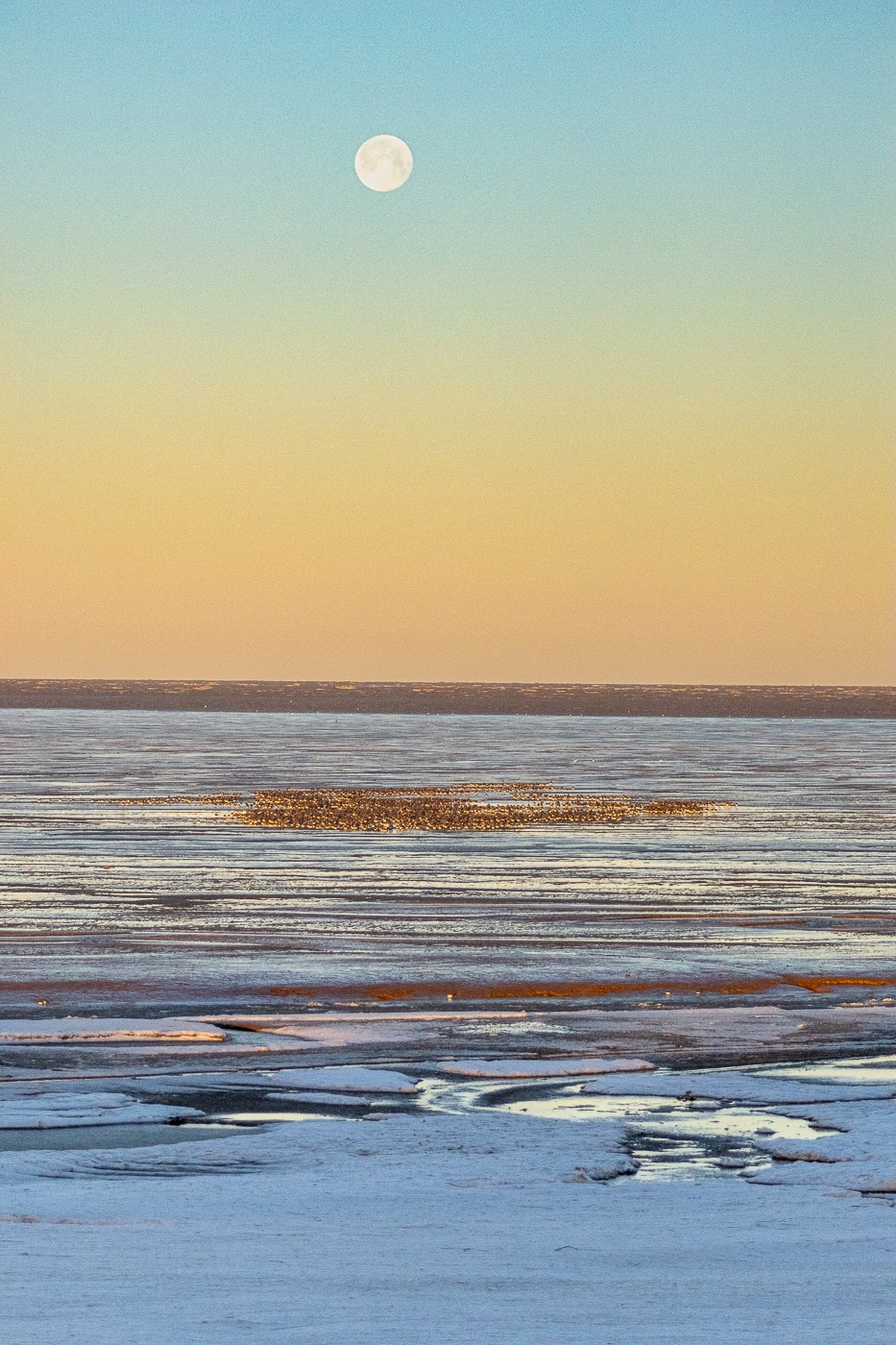
On the coldest mornings at Snettisham, when the temperature falls well below freezing and a hard wind drives across The Wash, the whole reserve can take on the aspect of a winter wilderness. Sea ice forms over the shallows of the mudflats, and the geese may choose the relative shelter of the salt marsh edge rather than the exposed flats beyond.
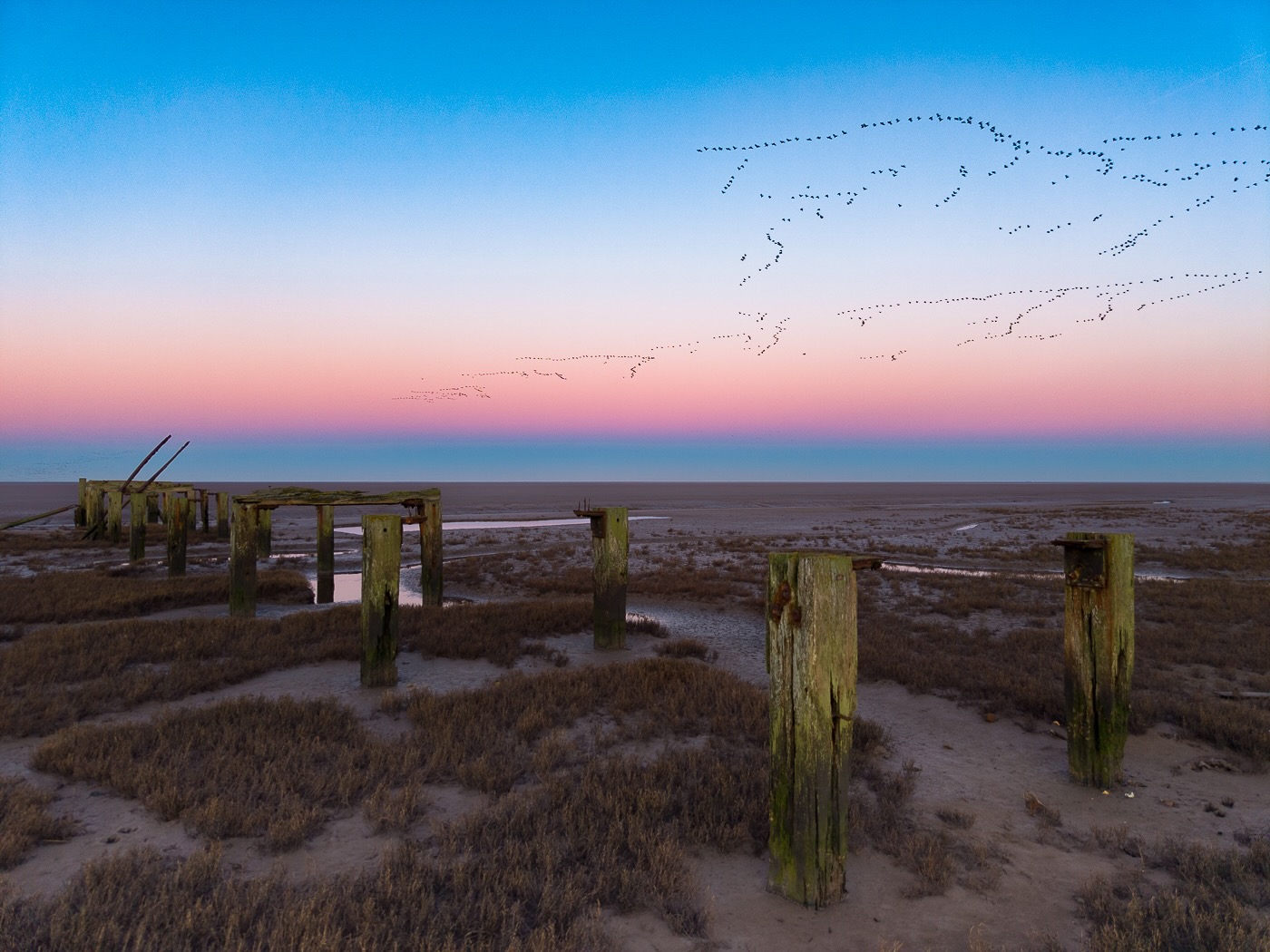
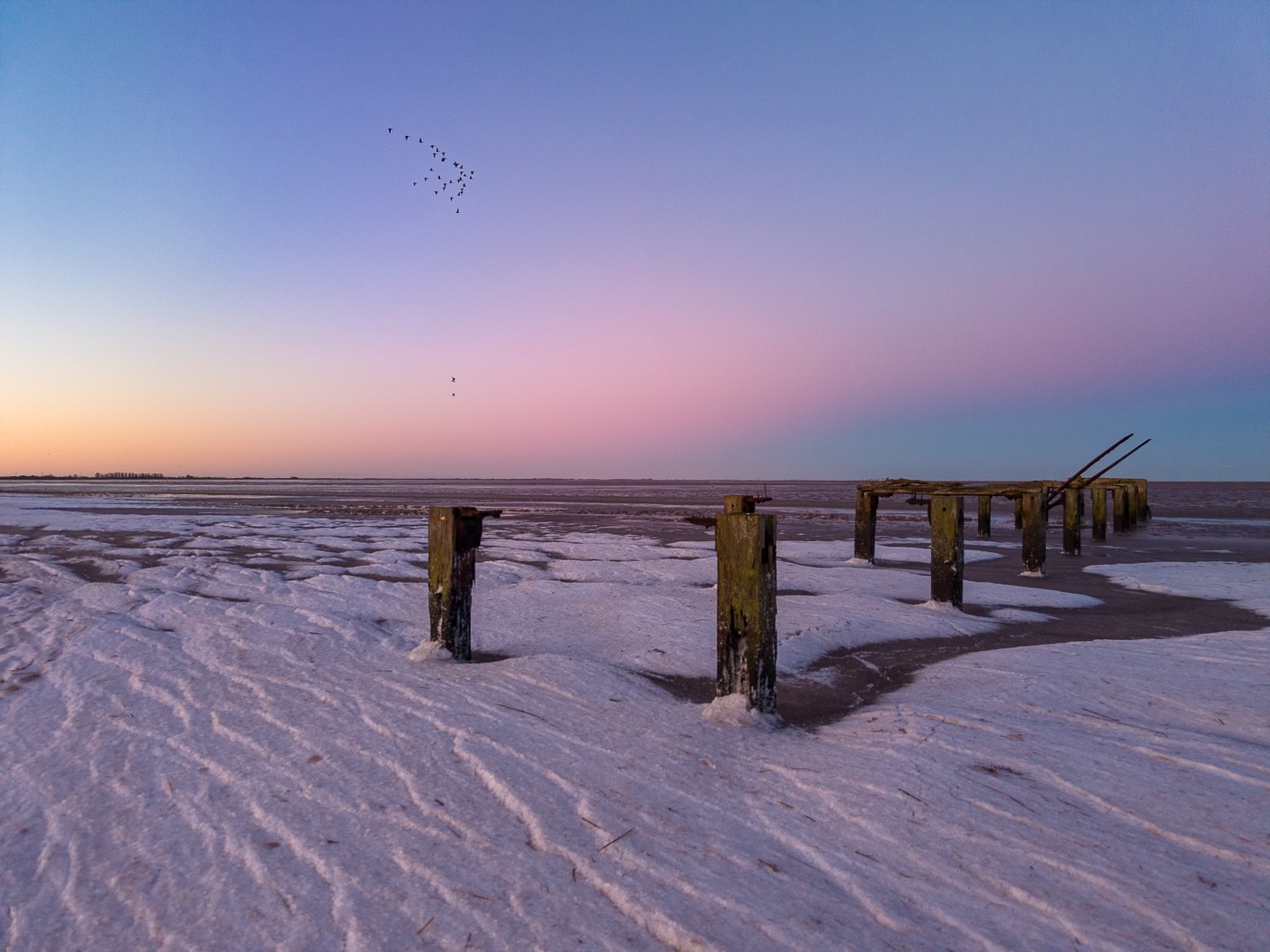
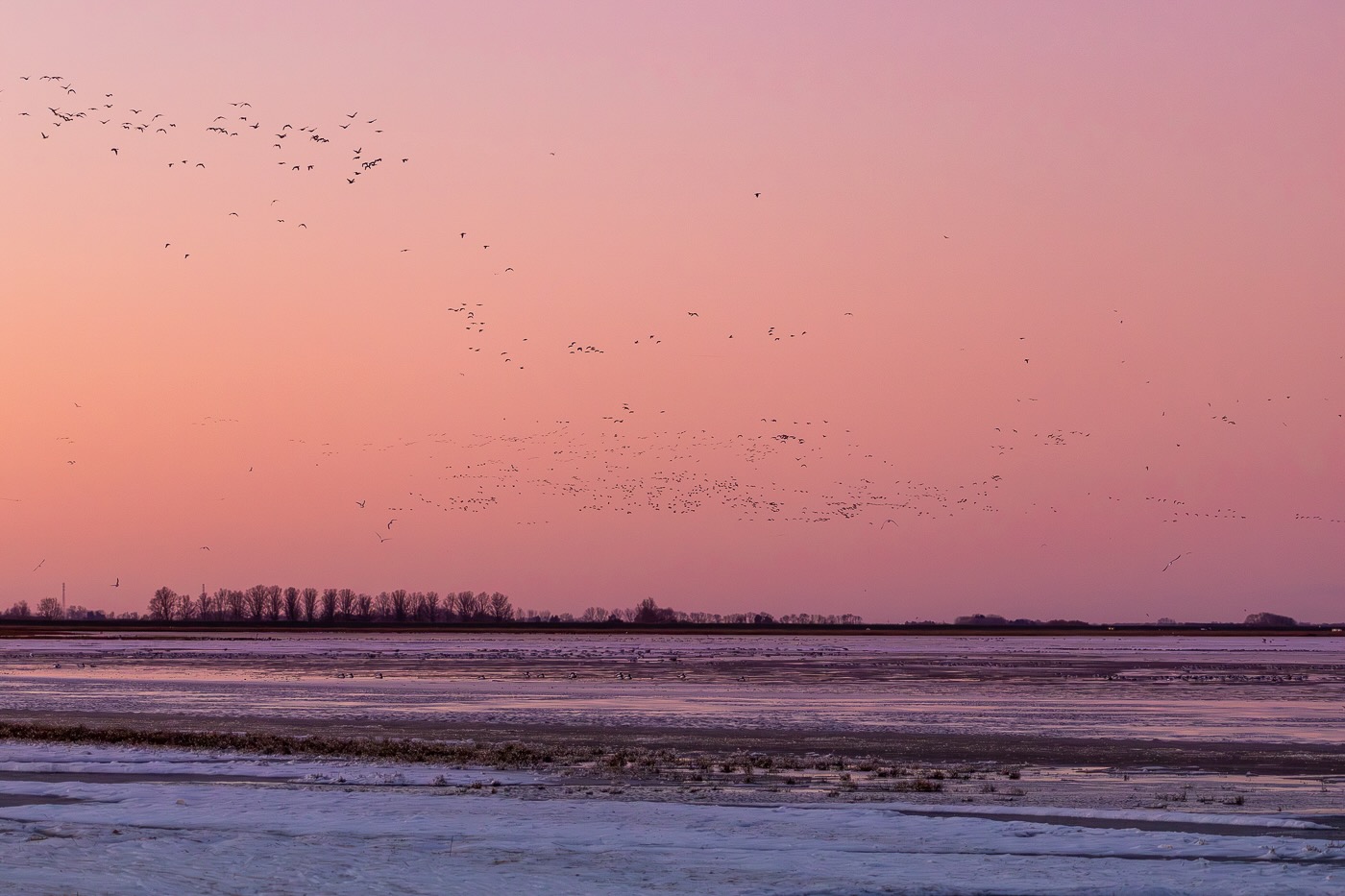
Such cold sharpens every detail of this desolate landscape: the rime on the marsh, the low rasp of waders, the first full moon of the year — the Cold Moon — hanging over roosting knot as the geese stir beyond them in the half-light.
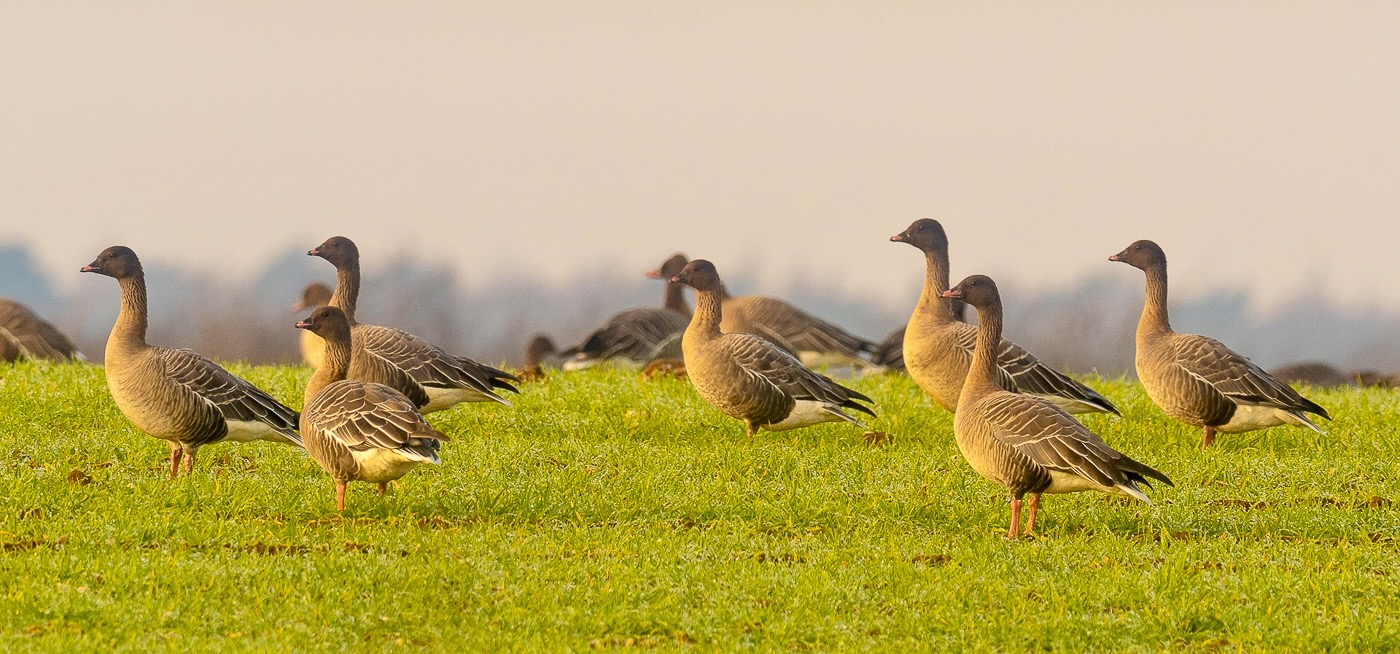
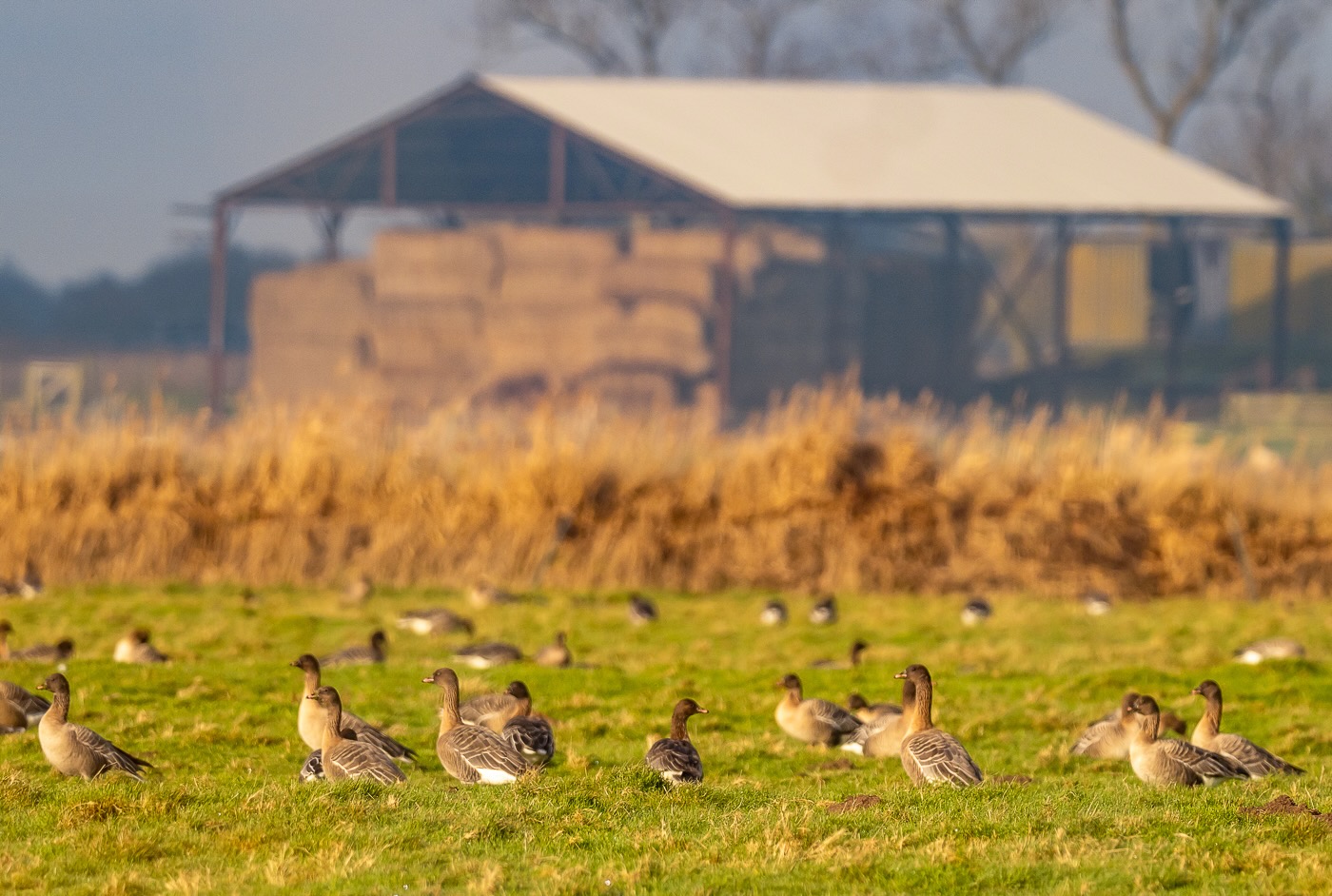
Pink feet have developed a significant, winter foraging relationship with sugar beet fields of North Norfolk.
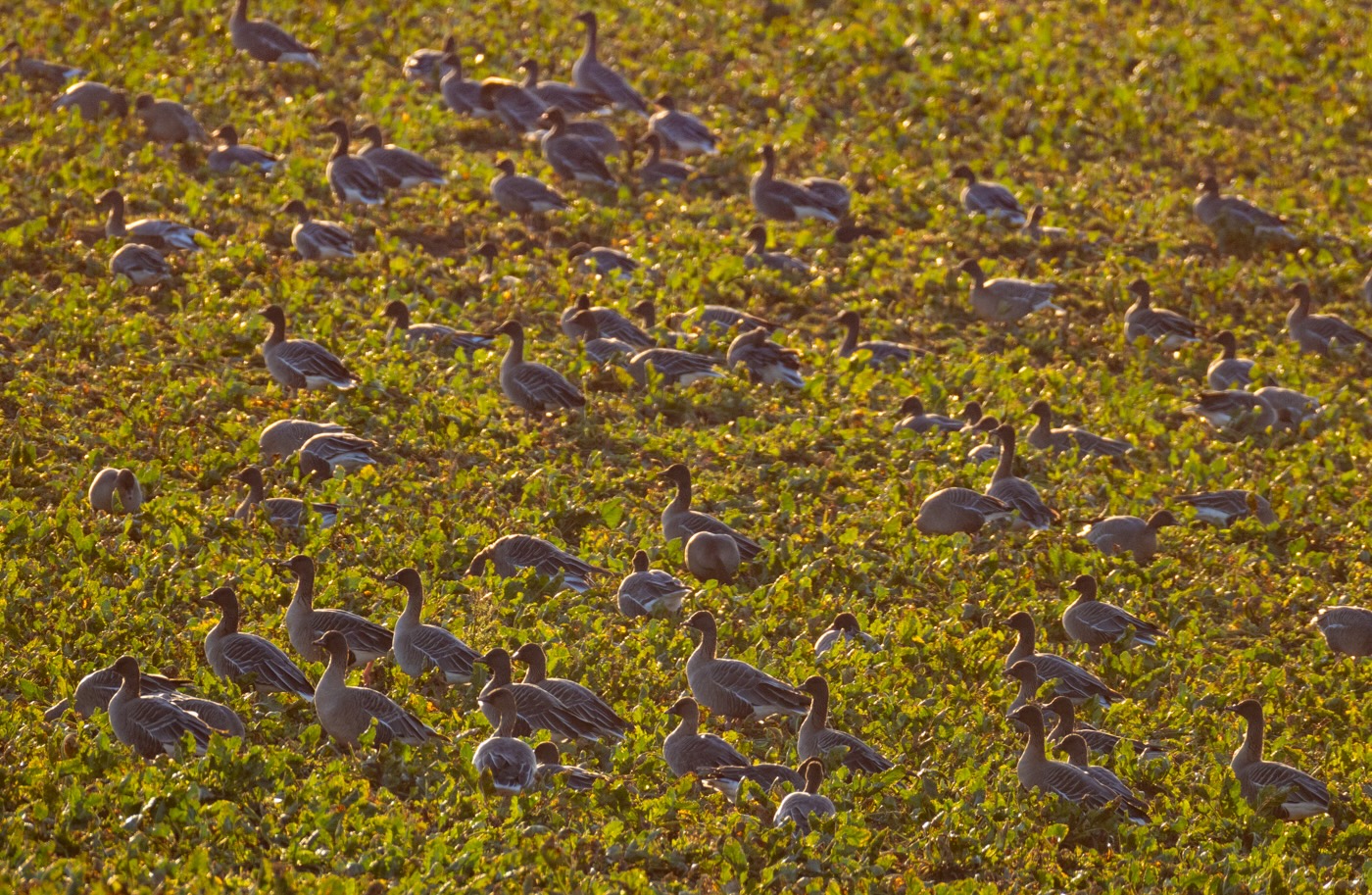
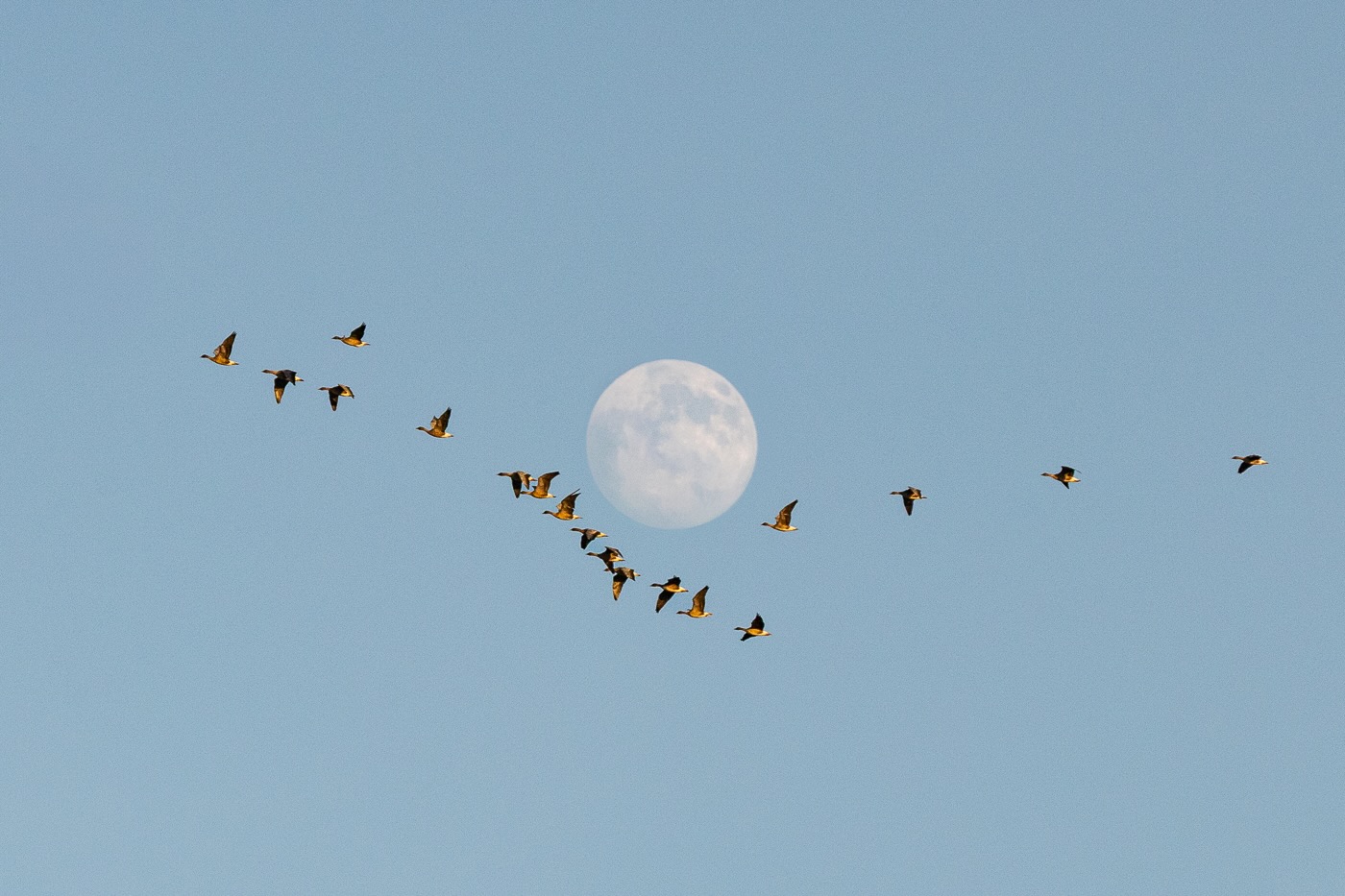
The geese are specifically drawn to Norfolk travelling in their characteristic skeins searching for fields to feed on the sugar beet tops left after the fields are harvested.
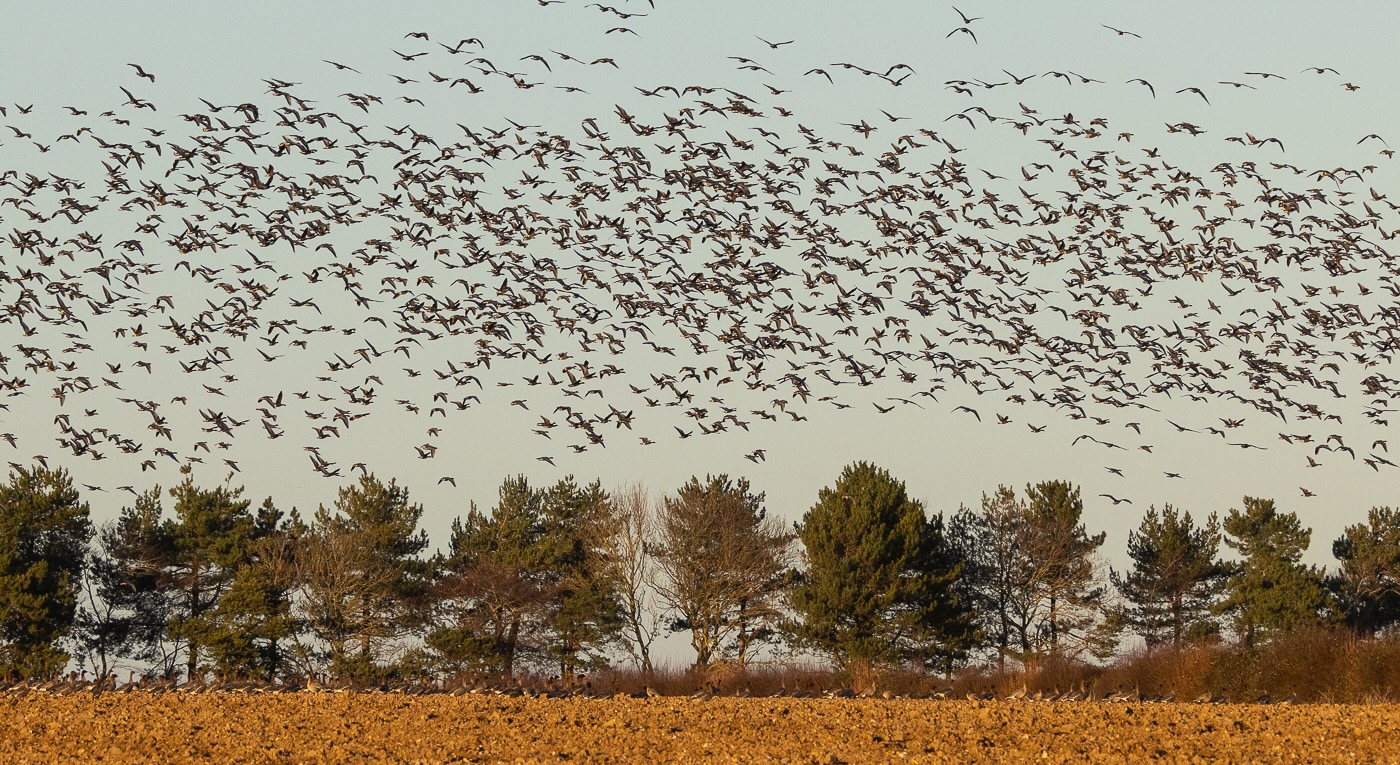
The geese rely on the discarded tops and remnants of harvested sugar beet as a rich food source during the harsh winter months.
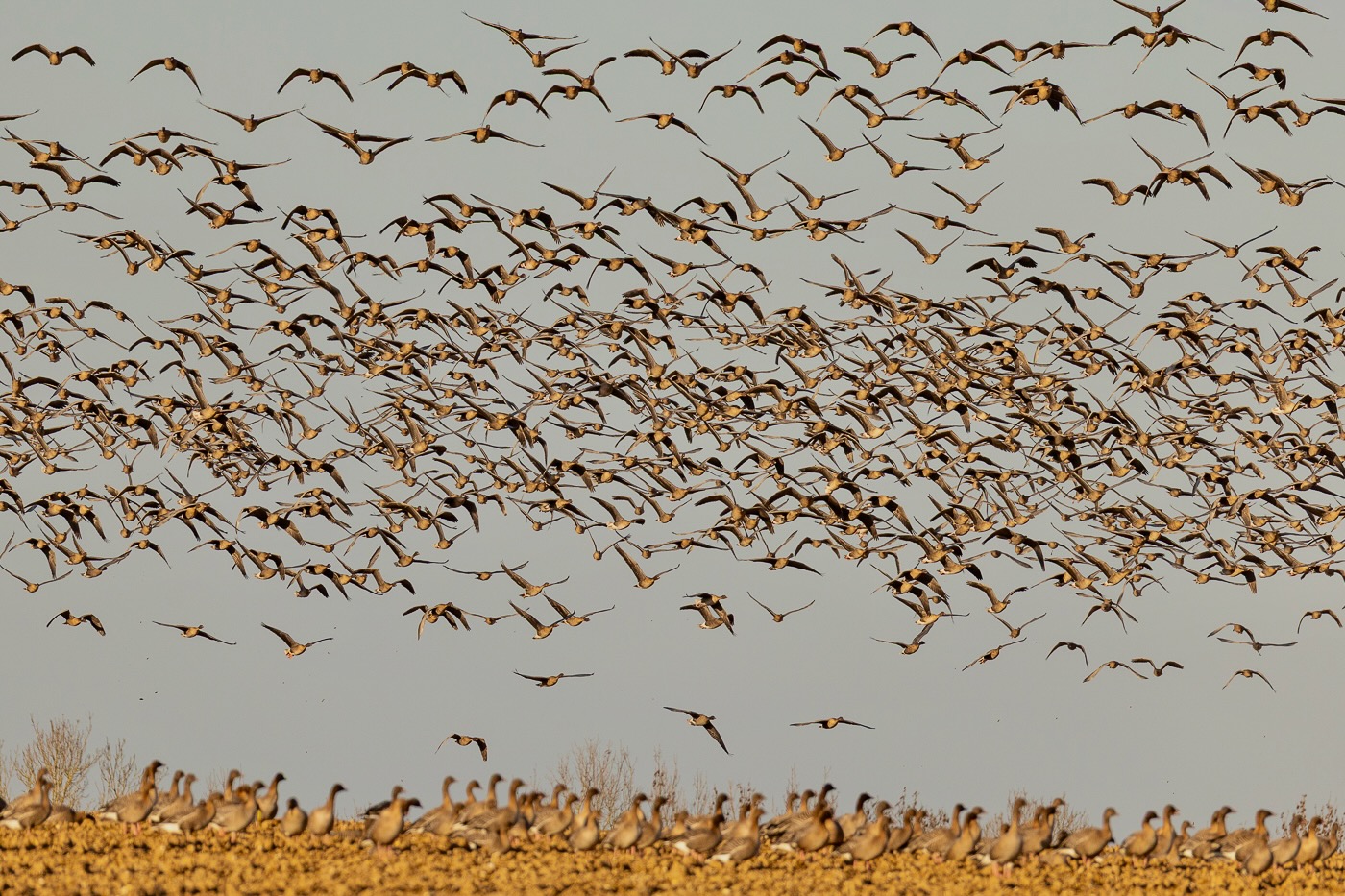
Sugar beet is harvested later than many other crops, which provides feeding opportunities well into the late autumn and early winter.
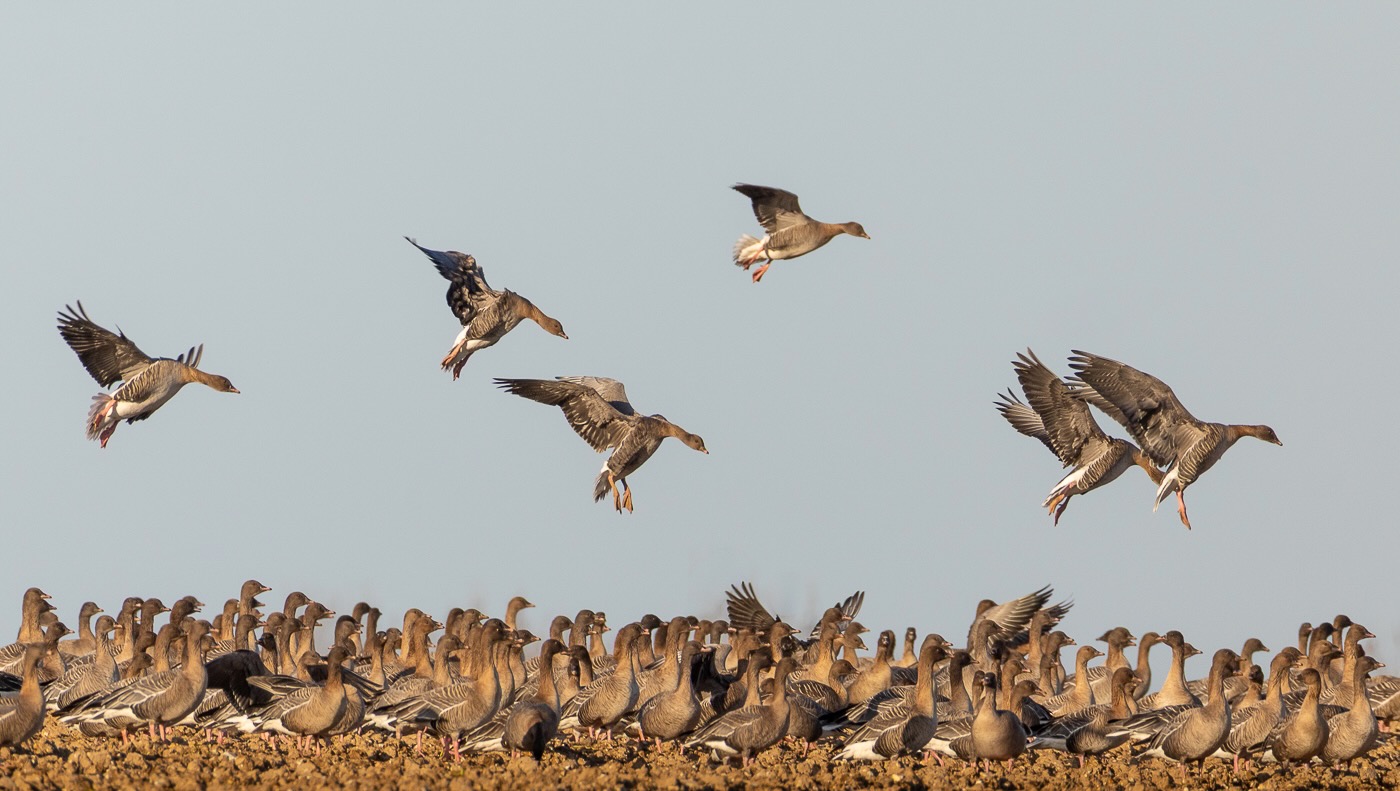
The geese have adapted to utilise them as a major winter food source, gathering in their thousands to feast in the farmers’ fields.
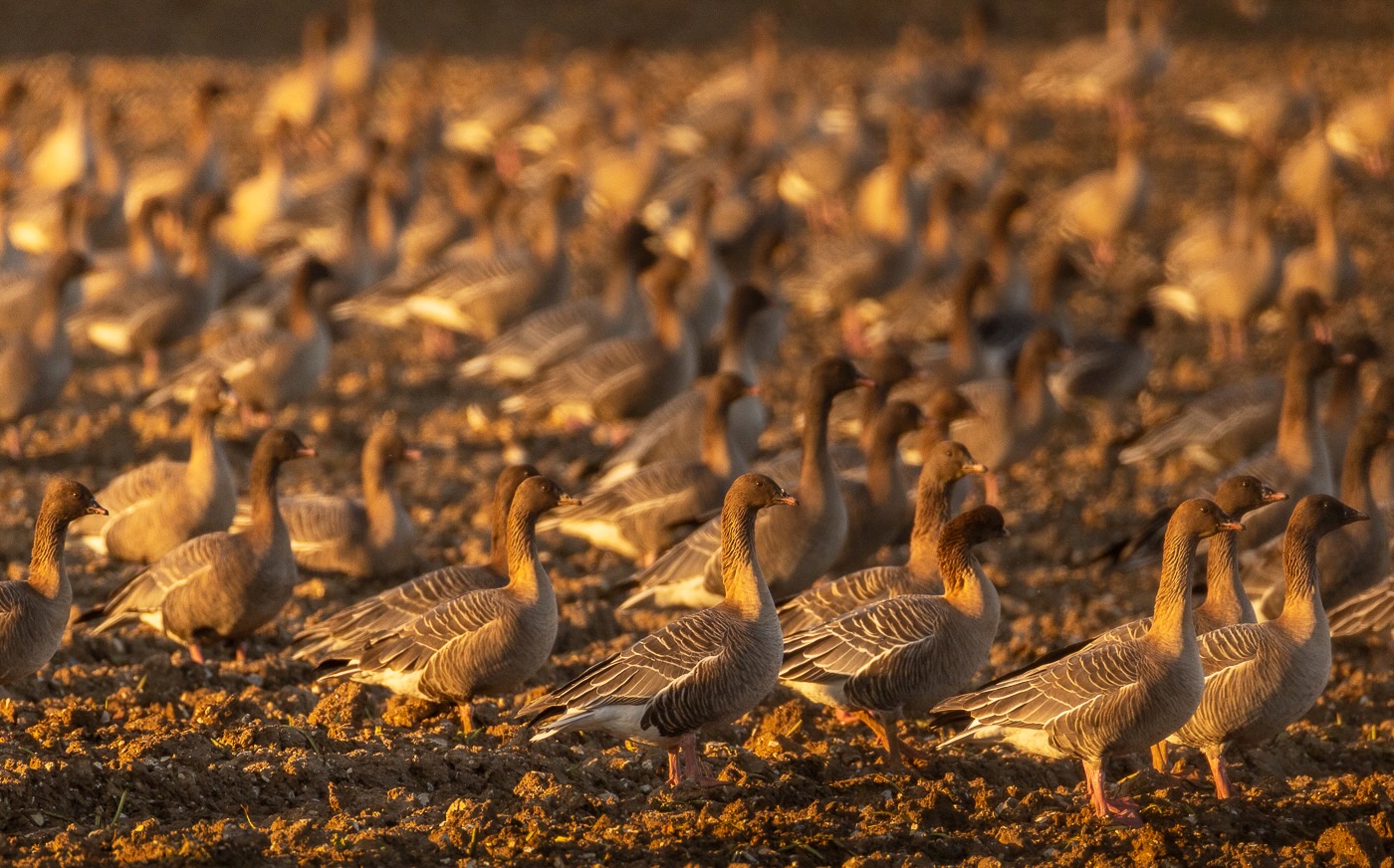
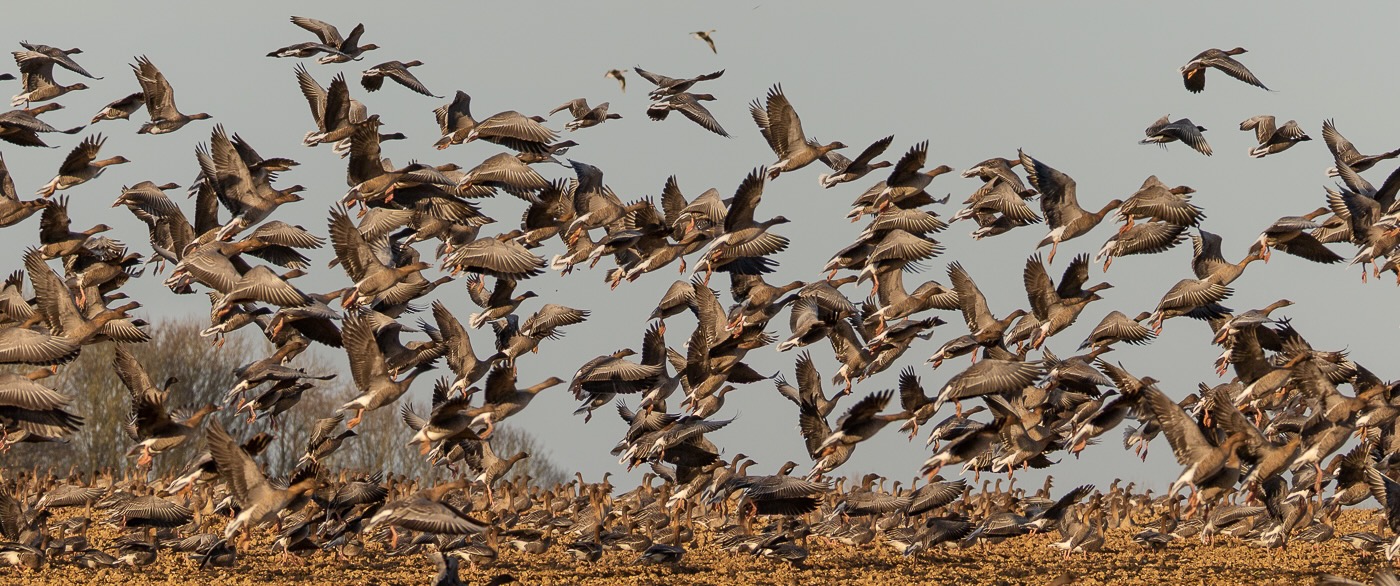
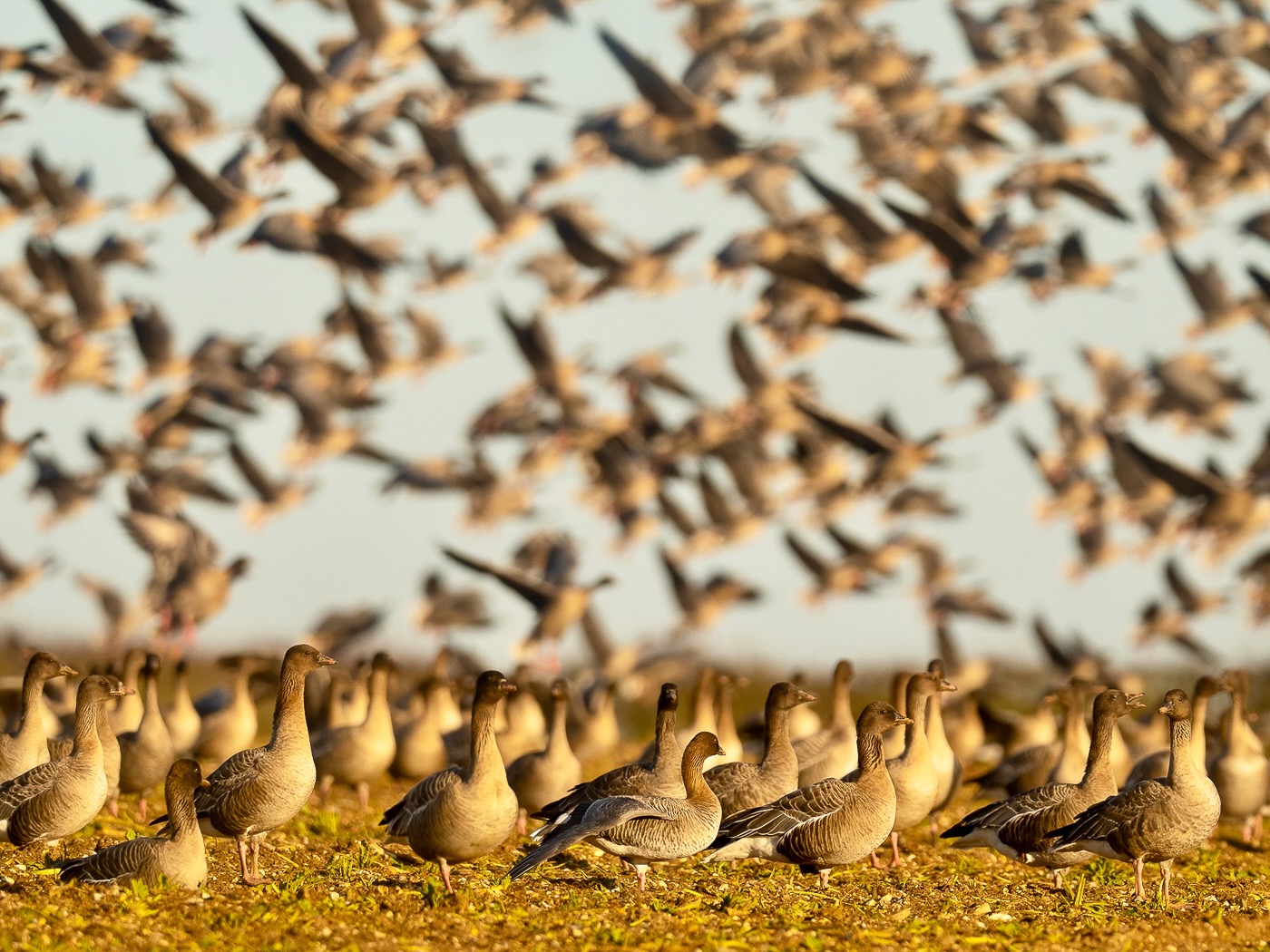
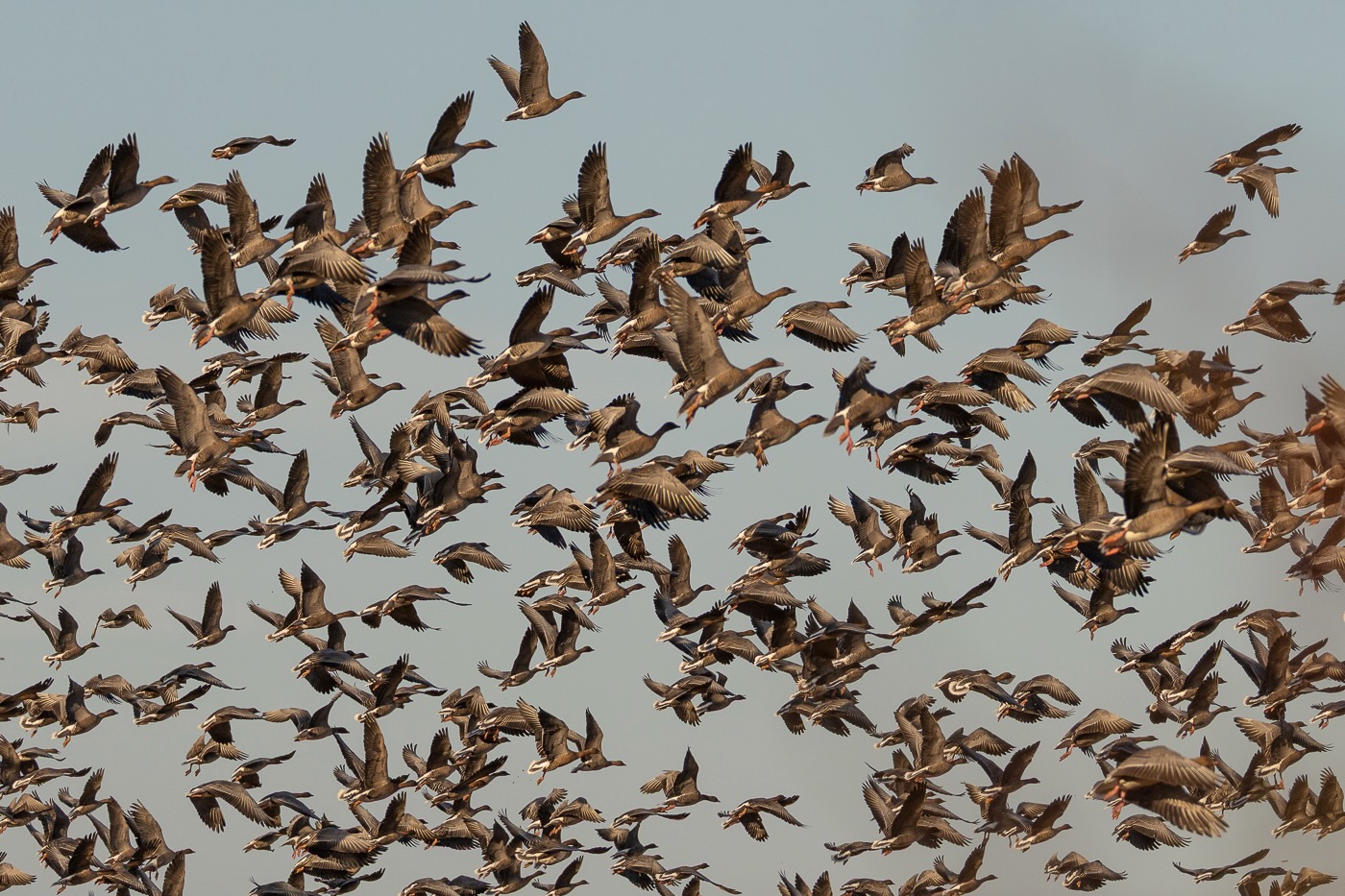
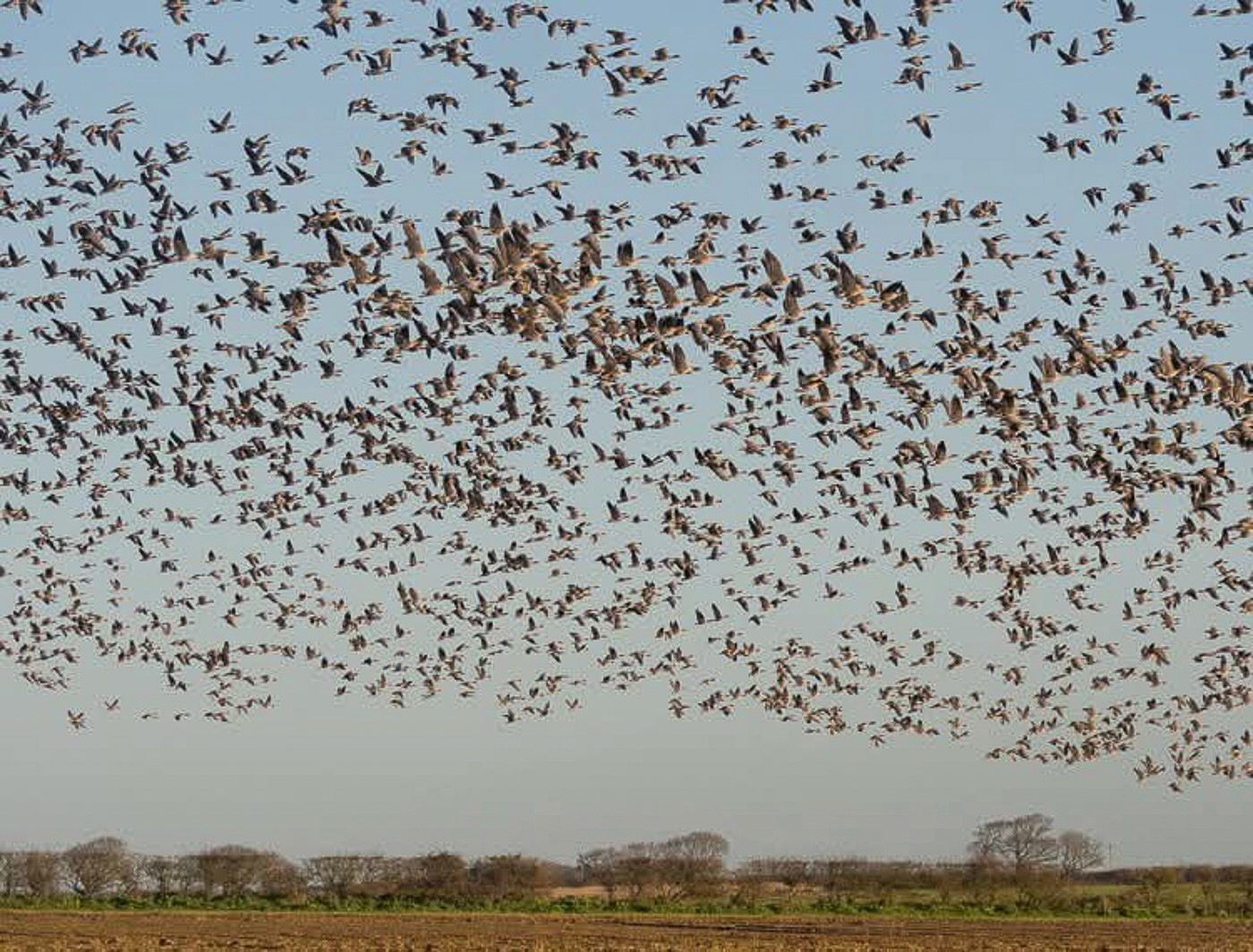
The pinkfeet also tell a wider story about the meeting of wildlife and farming. They feed largely on what remains after the sugar beet harvest — tops, fragments and discarded roots — while their droppings return nutrients to the soil. By drawing birds into harvested beet fields, this winter food source can also help reduce pressure on young winter wheat. It is an improvised seasonal bargain, shaped by agriculture but equally now part of the ecology of East Anglia.
In Norfolk, the return of the geese has become part of the county’s winter identity. Their arrival is written into the open fields and big skies, into the rhythm of harvest and frost, into the daily passage between feeding ground and roost. They are not visitors in the ordinary sense, but recurring presences in a landscape that seems to wait for them, as much as the community here awaits their return.
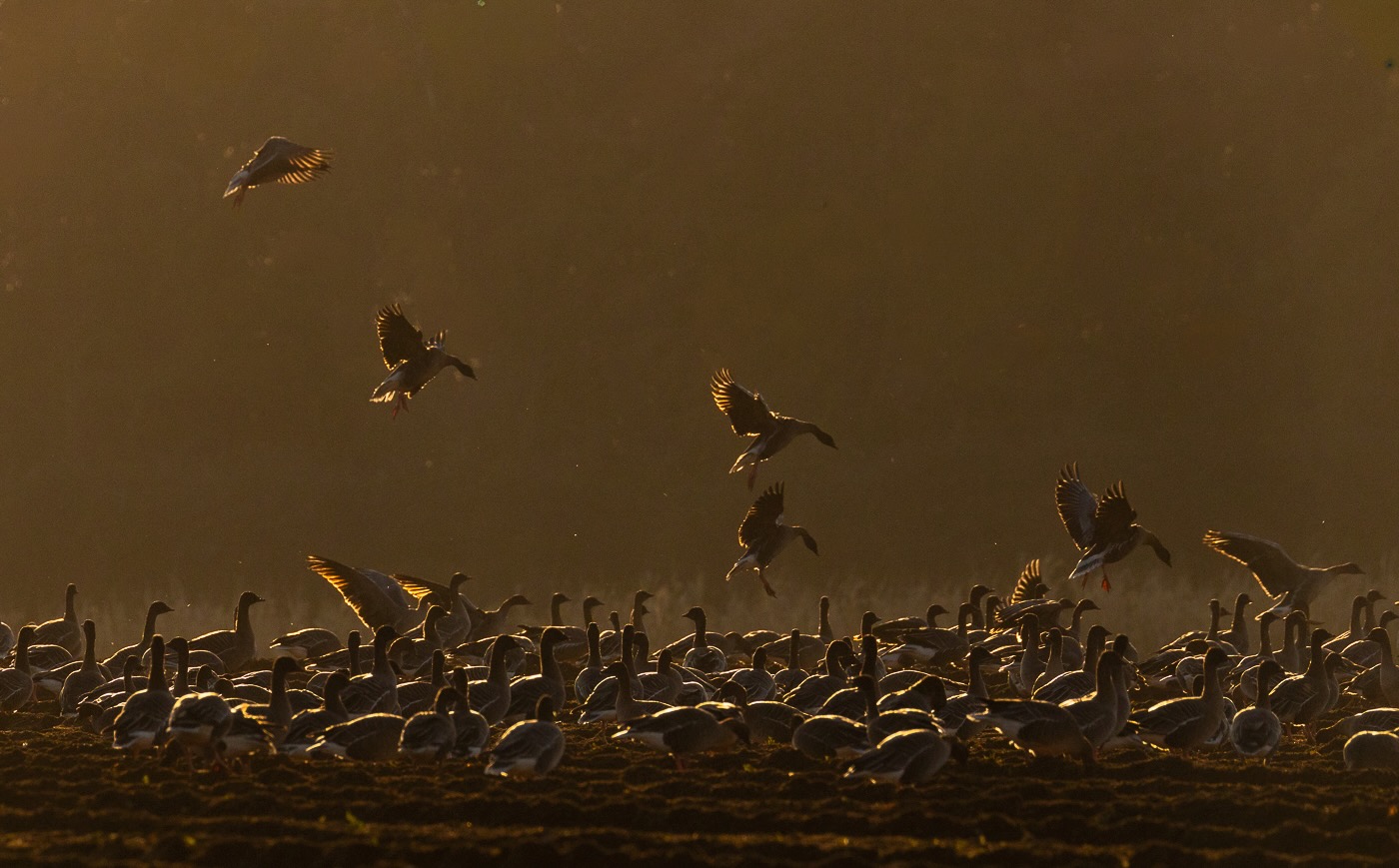
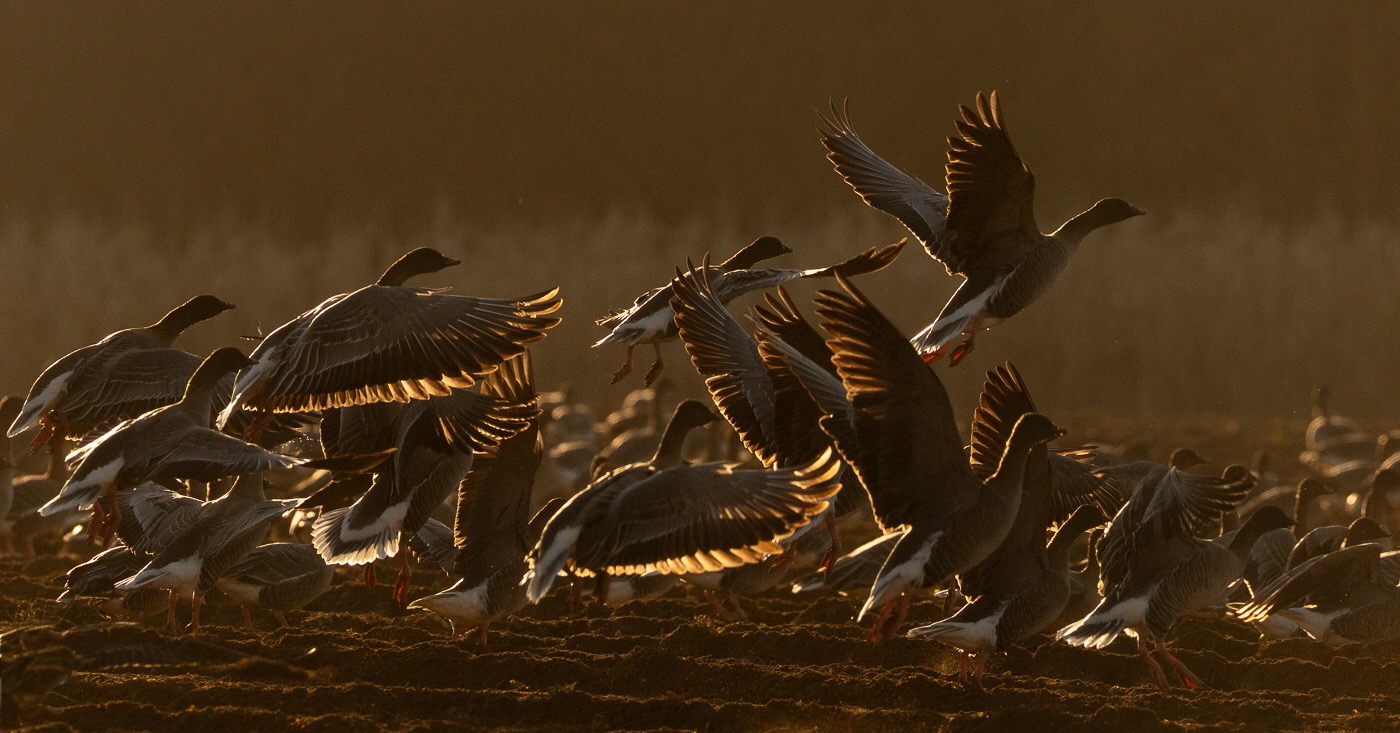
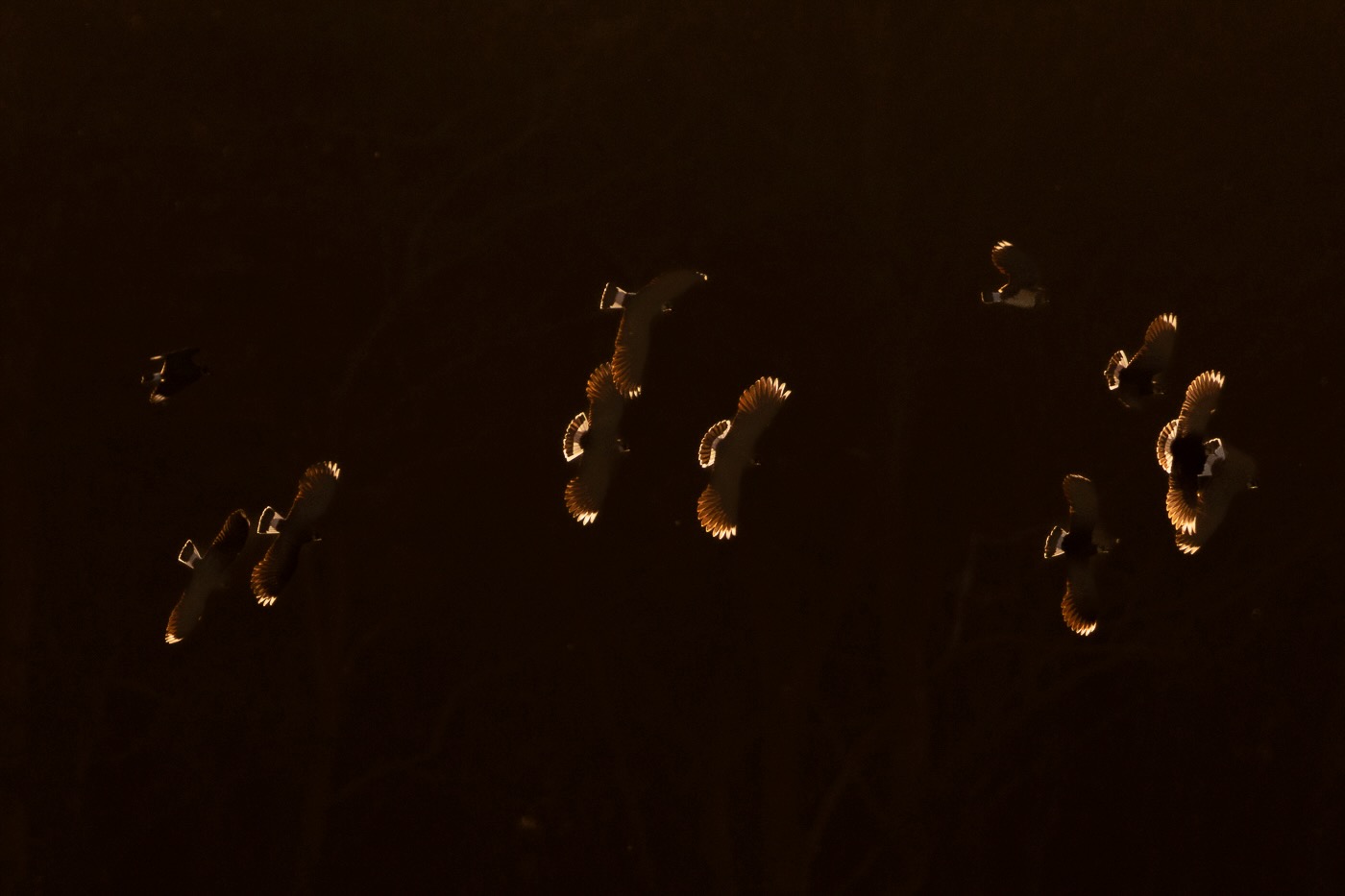
The geese share that landscape with other wildlife of course. Flocks of lapwing for one, a beautiful sight as they turn and bank in the low winter light.
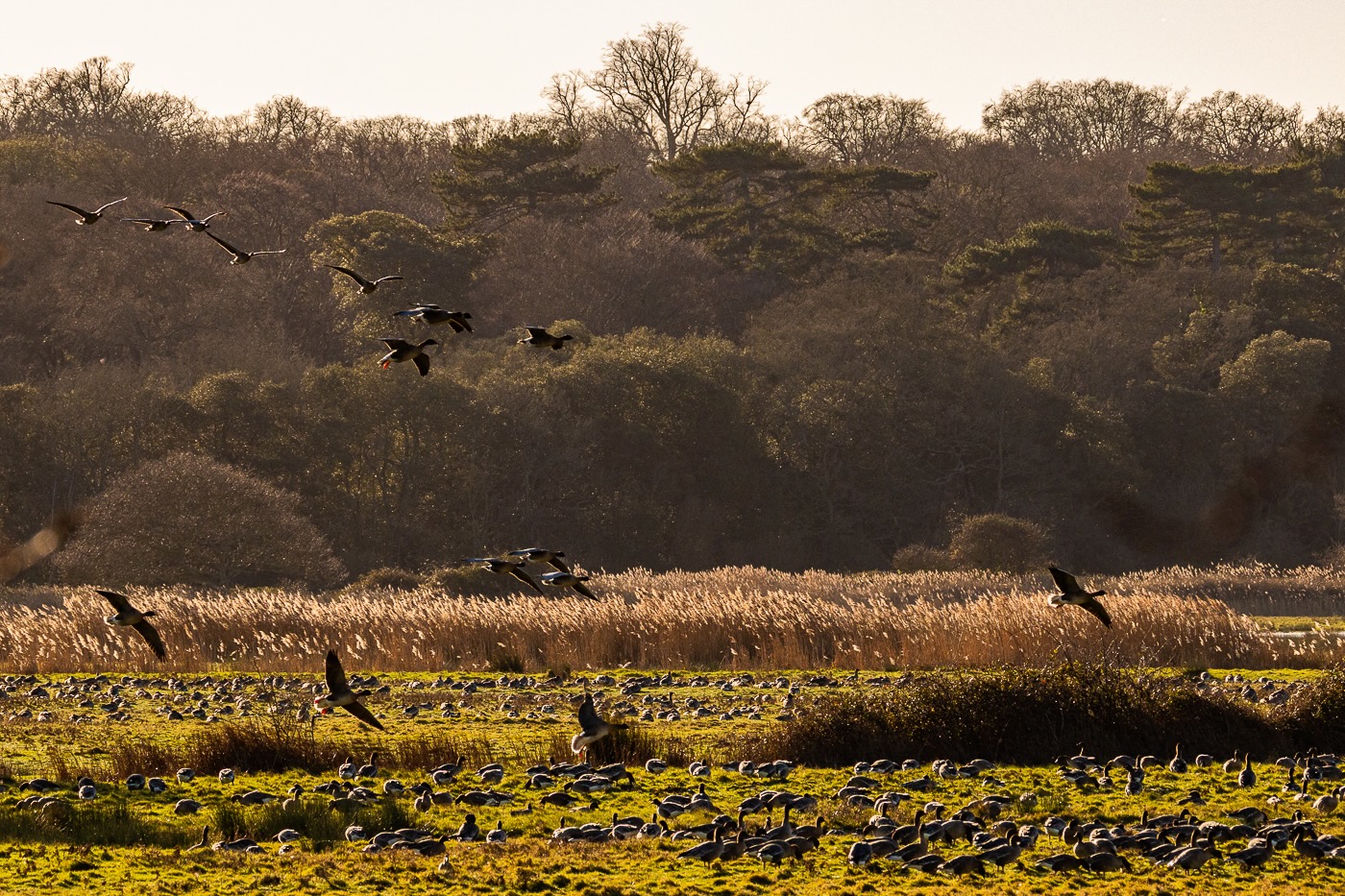
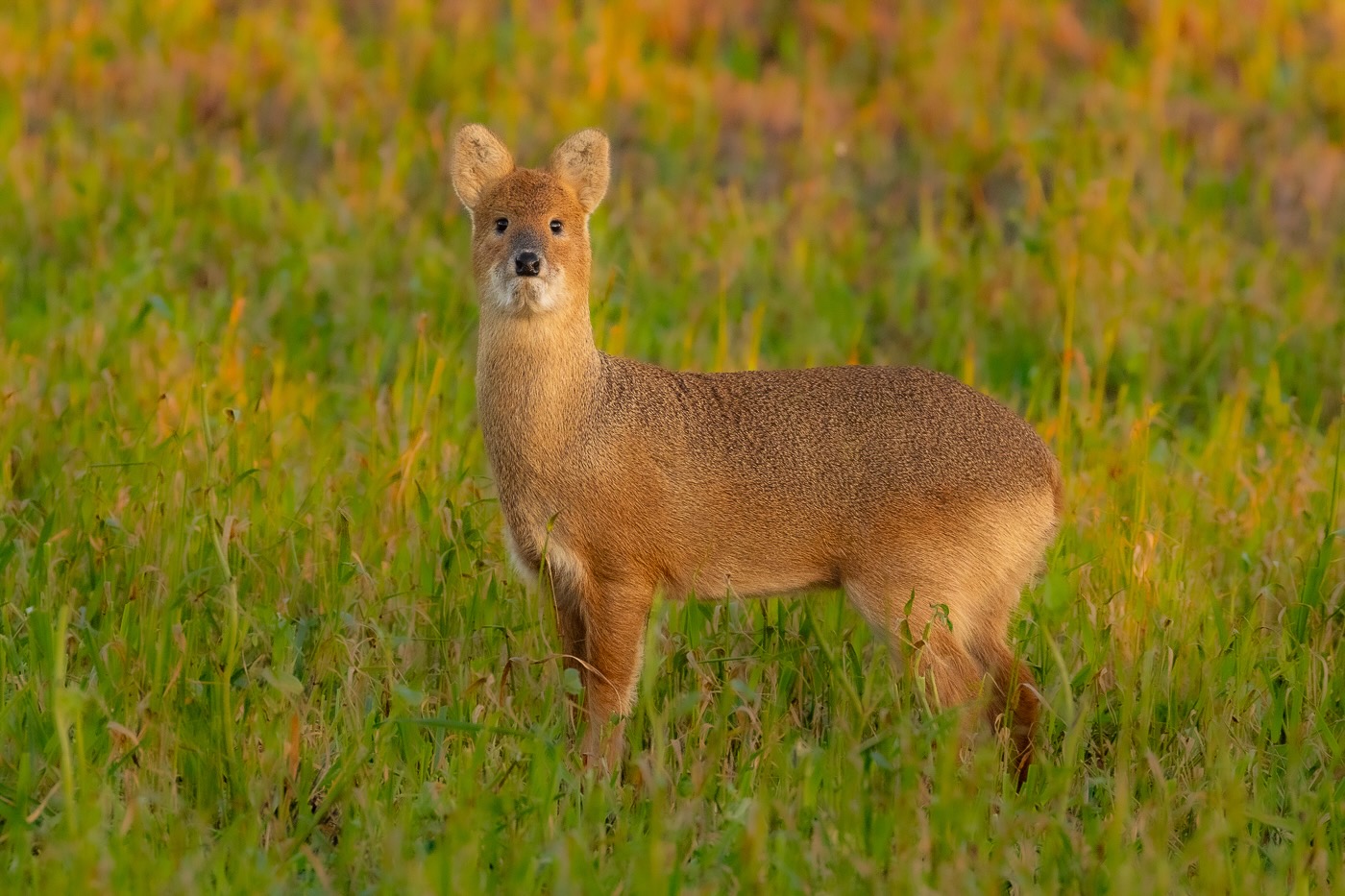
The journey reaches one of its most expansive expressions at Holkham National Nature Reserve, another important Norfolk roost. Here the geese share wide grazing marshes, dunes and saltmarsh with barn owls, kestrels, wigeon and Chinese water deer, each species as much a part of the same winter fabric as the geese.
By late winter, the sound of pinkfeet again carries with it a note of change. The flocks become unsettled once agains as the season turns, gathering themselves for the long northward pull. Soon the skeins will rise and take the old route back towards Iceland, Greenland and the Arctic tundra — a thousand-mile return to the breeding grounds where their cyclical year, always in motion, begins again.